Bexley, in south‑east London, offers a mix of green‑space‑led tranquillity, historic houses, and quiet riverside walks that make it ideal for a relaxing day away from the city. From landscaped gardens and ancient woodlands to calm park‑lake‑side paths and heritage houses, Bexley can be an under‑known but highly accessible escape for tourists, residents, and travellers with a few free hours. This guide covers the best‑known and most calming spots in the borough, how they connect to each other, and why they work well for a low‑key day out.
- What type of visitor is Bexley best suited for?
- What is the main benefit of choosing Bexley for a day out?
- Where should you start your day in Bexley?
- How does Danson Park create a relaxing atmosphere?
- What historic house and garden should you visit nearby?
- Where can you find ancient woodland and a ruined abbey?
- How does Red House fit into a relaxed day in Bexley?
- Where can you enjoy a peaceful riverside walk in Bexley?
- What more “hidden” or lesser‑known spots are worth visiting?
- How can you combine relaxation with light activity?
- How does Bexley compare with other south‑London boroughs for a relaxing day?
- How can digital nomads and business travellers use Bexley?
- What practical tips will make your day more relaxing?
- How does Bexley link to broader London‑wide green‑space networks?
- How can you build a sample one‑day Bexley itinerary for relaxation?
- What future developments might affect Bexley’s appeal for relaxation?
What type of visitor is Bexley best suited for?
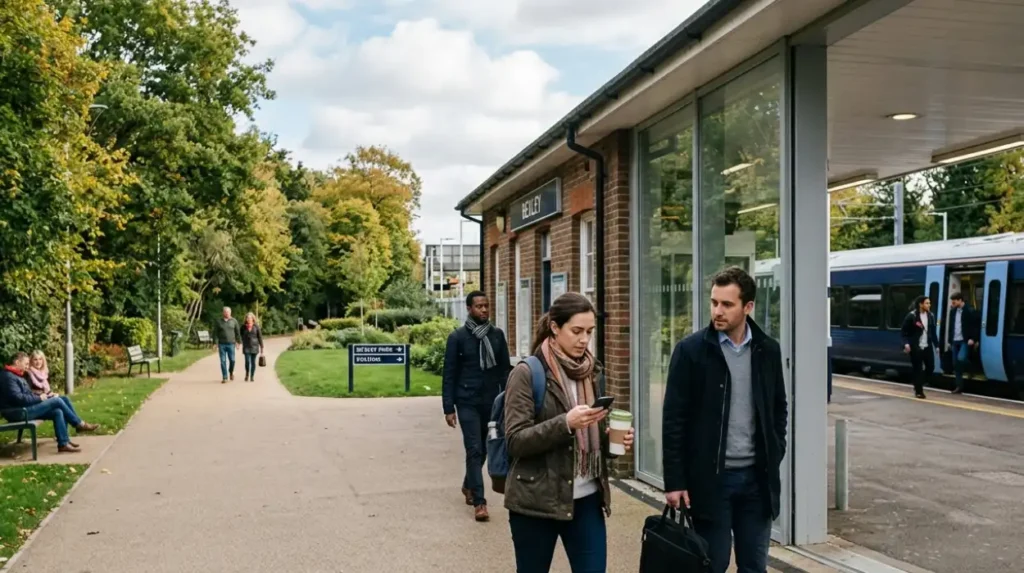
Bexley suits visitors who want a quieter, greener alternative to central London but still enjoy easy transport links. The borough is well served by Southeastern and Thameslink rail services, with multiple stations such as Bexleyheath, Slade Green, Barnehurst, and Erith giving quick access to central London terminals in under 30 minutes.
This positioning makes Bexley attractive for:
- Tourists planning a peripheral day trip from London who want green space and heritage without crowds.
- Local residents looking for a “local‑but‑different” change of scenery for a short break.
- Digital nomads and business travellers who can combine a short train ride with walks, cafés, and quiet work‑friendly spaces.
Because Bexley sits within the London National Park City framework, many of its key sites are managed as part of a wider green‑space network, so they usually have maintained paths, seating, and basic amenities.
What is the main benefit of choosing Bexley for a day out?
The main benefit of choosing Bexley is that it combines large, well‑maintained green spaces with relatively light crowds compared with central‑London parks. The borough has over 100 parks, open spaces, and woodlands, including several sites that are part of the London National Park City initiative.
Key advantages include:
- Tranquil greenery. Sites such as Danson Park, Foots Cray Meadows, and Lesnes Abbey Woods offer open lawns, tree‑lined paths, and water‑body‑side spots where you can sit quietly for an hour or more without feeling overwhelmed by crowds.
- Good transport connectivity. Most of these parks are within easy reach of Bexleyheath, Bexley, or Erith stations, with short bus or walking links, so you do not need a car to build a full‑day itinerary.
- Low‑cost or free access. Entry to the main parks and many of the historic houses is either free or low‑priced, which suits budget‑conscious tourists and families.
Choosing Bexley means you trade dense urban sights for slower‑paced walks, waterside benches, and shaded paths, which aligns well with the intent to “relax” rather than “sightsee intensively”.
Where should you start your day in Bexley?
For a relaxing day out, many visitors begin at Danson Park, one of Bexley’s flagship green spaces. Danson Park is an 80‑hectare landscaped park in the centre of the borough, originally laid out in the 18th century around Danson House, a Grade I‑listed Palladian villa.
Starting here works well because:
- There is free entry to the park and a large car park, making it easy to arrive by car or taxi.
- The lake, open lawns, and tree‑lined avenues provide multiple short‑walk options without needing maps or directions.
- Amenities such as toilets, cafés, and occasional seasonal facilities (for example, Danson Splash Park for families) are on site, so you can plan a flexible morning or late‑morning arrival.
As you explore the modern site, you are crossing land with a deep heritage. Read about the full historical background of how Danson Park and Danson House evolved from an 18th‑century private estate to today’s public park to understand its origins.
How does Danson Park create a relaxing atmosphere?
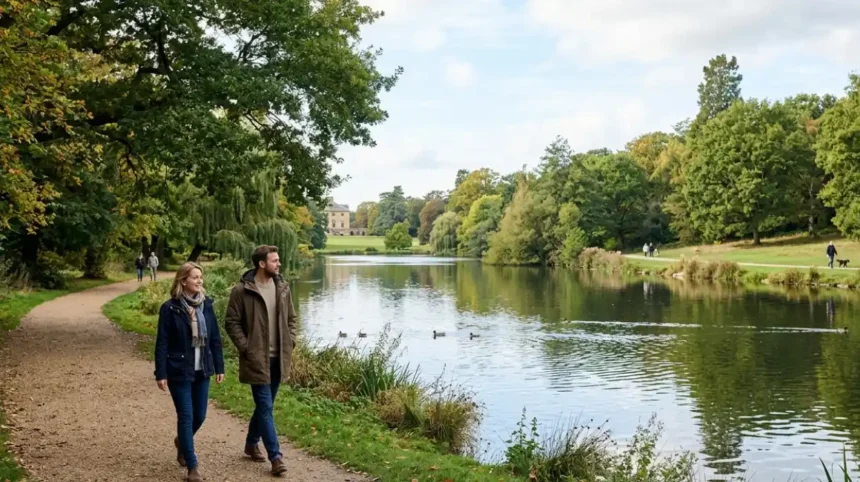
Danson Park creates a relaxing atmosphere through its combination of water, open space, and tree cover, all within a relatively low‑traffic setting. The park features a large serpentine lake, ornamental planting, mature trees, and formal lawns that soften the urban surroundings.
Elements that contribute to relaxation include:
- Water features. The lake provides a visual and auditory buffer from nearby roads, and the presence of ducks and other waterfowl adds a gentle, lived‑in feel.
- Variety of paths. You can choose between lakeside routes, woodland fringes, and more open grassland‑type walks, so you can tailor the pace and sensory input to your mood.
- Seating and greenery. Scattered benches and shaded areas allow you to pause without feeling exposed, and the park’s recognition as an award‑winning green space reflects its ongoing maintenance and aesthetic quality.
For a truly low‑intensity day, you can base your morning in Danson Park, perhaps with a coffee from a nearby café and a slow circumnavigation of the lake, then move on to a more heritage‑focused site later.
What historic house and garden should you visit nearby?
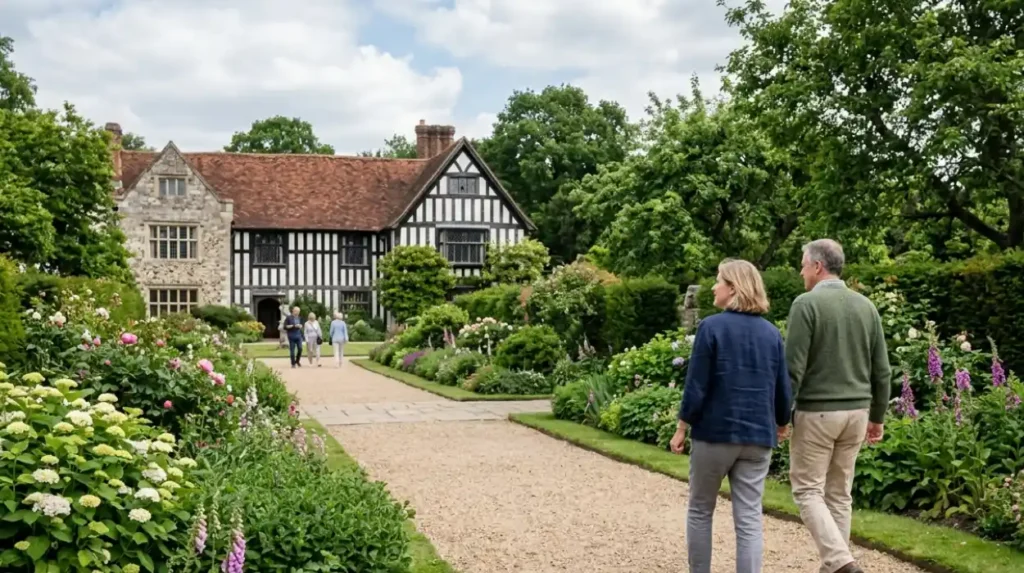
Hall Place and Gardens, located just north of Bexleyheath, is the most significant historic house and garden in Bexley that fits a relaxing day‑out profile. The house is a Grade I‑listed early‑17th‑century building that was substantially remodelled in the 1930s, and the gardens are a mix of formal design, lawns, and specimen planting.
Why Hall Place suits a “relaxing” itinerary:
- The walled garden and formal beds are visually calming rather than busy; you can walk along the main axis without feeling obliged to explore every side path.
- The site hosts regular exhibitions and events, but many of these are low‑pressure (for example, seasonal flower displays or craft events), so you can visit without feeling you “must see everything”.
- There is on‑site parking and café access, which helps keep the visit stress‑free and flexible.
As you explore the modern site, you are crossing land with a deep heritage. Read about the full historical background of how Hall Place and its gardens evolved from a private estate to a public‑facing cultural venue to understand its origins.
Where can you find ancient woodland and a ruined abbey?
Lesnes Abbey Woods offers both ancient woodland and a ruined abbey in one compact area, making it a good choice if you want a slightly more “wild” feeling day out. The site covers about 88 hectares and includes semi‑ancient woodland, park‑like areas, and the remains of Lesnes Abbey, founded in 1178 as a Cistercian monastery.
Key features for relaxation:
- Woodland paths. The network of paths through the trees provides shade and a sense of enclosure, which many visitors find calming compared with open‑sky spaces.
- Abbey remains. The abbey ruins are atmospheric but not heavily commercialised, so you can spend just a few minutes there or linger while reading the on‑site information boards.
- Wildlife and views. The site overlooks the Thames floodplain, and the mix of woodland and grassland supports a range of birds and plants, which can be a subtle but enjoyable background to a slow walk.
Lesnes Abbey Woods works particularly well for residents or visitors who want something that feels a bit more “country‑like” yet is still within easy reach of Bexley‑centric transport routes.
How does Red House fit into a relaxed day in Bexley?
Red House, located in Bexleyheath, is an Arts and Crafts‑style house built for William Morris in 1859–60 and is now cared for by the National Trust. The house and garden are set within a relatively quiet residential edge, which suits a slower, more contemplative visit.
Why it suits a relaxing day:
- Intimate scale. The house is modest in size, so you can see the main rooms without feeling rushed or overwhelmed by large museum‑style layouts.
- Garden access. The garden is a key part of the experience, with herbaceous borders, lawns, and a more enclosed, domestic feel that contrasts with the formality of Hall Place.
- Calm environment. Because Red House is a niche heritage site, visitor numbers are typically lower than at major London museums, which helps preserve a quieter atmosphere.
For a relaxed itinerary, you can pair a short visit to Red House with a walk through nearby residential streets or a short stroll to Bexleyheath town centre, where you can pick up coffee or light lunch.
Where can you enjoy a peaceful riverside walk in Bexley?
The Cray Riverway, following the River Cray through parts of Bexley, offers a good option if you want a riverside‑based, low‑intensity day out. The River Cray is a tributary of the River Ravensbourne and flows through several of Bexley’s open spaces, including Foots Cray Meadows.
Riverside‑related sites to consider:
- Foots Cray Meadows. This 19‑hectare park alongside the river includes meadow areas, tree‑lined paths, and access to the water, which is ideal for a slower, contemplative walk.
- Cray Riverway itself. Sections of the Cray Riverway footpath link Bexley’s green spaces and suburbs, allowing you to walk from one park into another without re‑entering busy streets.
Because the river is relatively small and the surrounding areas are not heavily developed for tourism, the ambience is more “local‑escape” than “tourist‑attraction”, which can enhance the sense of relaxation.
What more “hidden” or lesser‑known spots are worth visiting?
Beyond the main parks and listed houses, Bexley contains several “hidden gem”‑type sites that suit a slower, more exploratory day. These include smaller green spaces, local heritage venues, and community‑run hubs that see fewer visitors than the headline attractions.
Examples:
- The Exchange, Erith. This community‑owned cultural venue occupies Erith’s former public library and hosts regular events, exhibitions, and workshops. It is not a traditional tourist attraction, but it can be a quiet place to pause, attend a low‑pressure class, or enjoy a locally‑sourced drink.
- Lesser‑known woodland patches and local parks. Across Bexley there are smaller neighbourhood parks and green wedges that residents use for dog‑walking or short breaks; these are rarely crowded and can feel very private if you time your visit poorly.
For tourists and leisure travellers, weaving one of these quieter spots into a longer walk (for example, starting at Danson Park, looping through a side path, and ending at a small local café) can enhance the sense of a “local” experience without requiring dense planning.
How can you combine relaxation with light activity?
Bexley makes it easy to combine relaxation with light physical activity, since most of its main sites are walkable or have adjacent paths. For example, Danson Park, Hall Place, and parts of the Cray Riverway all have surfaced or compacted‑earth paths suitable for gentle exercise.
Options for light activity:
- Walking loops. You can build a loop that starts at one park entrance, circles the lake or central area, and returns without backtracking, which many people find mentally soothing.
- Family‑friendly additions. At Danson Park, the Splash Park or adventure‑style activities can be used to break up a longer walk for families, but adults can still stay in spectator‑mode if they prefer a very low‑energy day.
- Cycling‑adjacent routes. Some of the wider paths and park‑perimeter routes can be used for casual cycling, which offers a different pace and rhythm to a purely walking‑based day.
This mix means you can tailor the day to your own stamina: a fully gentle visit focused on sitting by water and strolling, or a slightly more active day that still feels relaxing because the environment is green and unhurried.
How does Bexley compare with other south‑London boroughs for a relaxing day?
Compared with other south‑London boroughs, Bexley offers a noticeably greener, more spread‑out feel, which can translate into a more relaxed atmosphere. Boroughs such as Lewisham, Southwark, or Lambeth have major riverside and park attractions, but they also have higher visitor densities and more intense urban pressures.
Distinguishing features of Bexley:
- Proportion of open space. Bexley has a higher ratio of parks and open land to built‑up area than many central and inner‑south London boroughs, so it is easier to find quieter corners.
- Lighter tourism footprint. Sites such as Danson Park and Hall Place are not on the same scale as Hyde Park or Kew Gardens, which means they attract fewer coach‑style tours and more local and semi‑local visitors.
- Riverside‑woodland mix. The combination of Cray‑fringed parks and the Lesnes Abbey Woods area gives you more woodland‑type ambience than you typically find in more central parts of south London.
For a visitor already in London, choosing Bexley as a day‑trip destination trades high‑profile attractions for a quieter, more diffuse experience where you can move at your own pace.
How can digital nomads and business travellers use Bexley?
Digital nomads and business travellers can use Bexley as a low‑pressure “day away from the desk” without needing to travel far from major rail lines. The borough’s parks and quieter cafés can function as informal work‑and‑rest hubs if you plan your route carefully.
Practical ways to integrate Bexley into work‑centric travel:
- Park‑adjacent cafés. Many Bexley sites have cafés or nearby high‑street coffee outlets where you can settle with a laptop for a short period, then step out into the park between tasks.
- Community spaces with events. Venues such as The Exchange in Erith run regular workshops and classes, some of which are low‑intensity and can function as a break‑type activity rather than a full‑day commitment.
- Easy return to London. Because Bexley stations connect directly to London terminals, you can structure your day as a half‑day escape (for example, 10:00–14:00) and still have time to return to meetings or flights later.
For someone who wants to work remotely but also squeeze in a bit of nature, Bexley offers a practical “work‑friendly enclave” within reach of central London.
What practical tips will make your day more relaxing?
To maximise relaxation on a Bexley‑based day out, a few simple planning choices can reduce friction and stress. These tips apply whether you are a tourist, a local resident, or a business traveller with spare hours.
Core practical tips:
- Check opening times. Major sites such as Hall Place, Red House, and Danson Park may have seasonal or event‑based variations in opening hours, so a quick online check before travel avoids closed‑gate frustration.
- Plan transport links. Use public‑transport maps (for example, TfL or Southeastern journey‑planner tools) to identify the nearest station to your chosen park or house, then allow at least 10–15 minutes for walking or a short bus ride.
- Pack light and flexible. Bring a water bottle, a light snack, and perhaps a compact chair or rug if you want to sit on grass; this reduces reliance on crowded cafés and lets you choose your own quiet spot.
- Time your visit. Mid‑week mornings or early afternoons usually bring fewer visitors than weekend afternoons, especially at popular parks such as Danson and Hall Place.
These steps help preserve the “relaxing” intent by minimising queues, last‑minute changes, and excessive walking in search of facilities.
How does Bexley link to broader London‑wide green‑space networks?
Bexley is part of the London National Park City initiative, which aims to make London greener, healthier, and more enjoyable by treating the whole city as a giant park. This framework connects Bexley’s parks and green spaces to wider routes such as the Cray Riverway and the broader network of London’s commons and nature reserves.
Implications for your visit:
- Path continuity. You can, in theory, walk or cycle from Bexley into neighbouring boroughs using linked‑path networks, though most day‑trippers will use only the Bexley‑side sections.
- Consistent standards. Participation in the National Park City scheme encourages maintenance of paths, signage, and basic amenities across Bexley’s sites, which makes the experience feel more consistent and predictable.
- Extended day‑trip options. If you have extra time, you can use Bexley as a launch‑point for slightly longer explorations into Kent‑side countryside or other green corridors, though this moves beyond a single‑day “relaxing” focus.
Understanding Bexley in this wider context helps you see it not as an isolated borough but as one node in a larger green‑space web that stretches across London and beyond.
How can you build a sample one‑day Bexley itinerary for relaxation?
A sample one‑day Bexley itinerary for a relaxing day out might look like this, assuming you start from central London and return by evening:
- Morning (10:00–12:30): Danson Park.
- Arrive at Bexleyheath or Bexley station, walk or take a short bus to Danson Park.
- Walk around the lake, sit on a bench, and perhaps have coffee from an on‑site or nearby café.
- Midday (12:30–14:00): Hall Place and Gardens.
- Take a short onward journey to Hall Place (by car, taxi, or bus from Bexleyheath).
- Walk the main garden axis, view the house from the outside, and enjoy a light lunch or snack on the premises.
- Afternoon (14:00–16:00): Lesnes Abbey Woods or Lesnes Abbey.
- Head to Lesnes Abbey Woods by bus or car and take a gentle woodland loop, with a short stop at the abbey ruins.
- Late afternoon (16:00–17:30): Foots Cray Meadows or Cray Riverway.
This structure keeps the day loose, green‑focused, and low‑pressure, while still allowing you to experience several distinct sites within the borough.
What future developments might affect Bexley’s appeal for relaxation?
Ongoing and planned developments in Bexley may influence how relaxing certain sites feel over the next decade. Local‑authority and borough‑wide planning documents highlight housing growth, transport upgrades, and green‑space investment as key themes.
Potential future impacts:
- Increased visitor numbers. As Bexley’s green spaces become better promoted and more integrated into London‑wide marketing, popular parks such as Danson and Lesnes Abbey Woods may see higher footfall, especially on weekends.
- New community facilities. Projects such as expanded community‑centre usage or new linked‑path schemes could improve access but also add more formal events and programmed activities to current “quiet” sites.
- Urban‑development pressure. Some peripheral areas of Bexley face housing and infrastructure projects, which may slightly alter the balance between green space and built‑up land if green‑space protections are not maintained.
From a visitor perspective, this means that Bexley’s current “under‑the‑radar” quality may slowly erode, so a relaxed day out today may feel subtly different from how it will feel in the middle of the 2030s.