Key Points
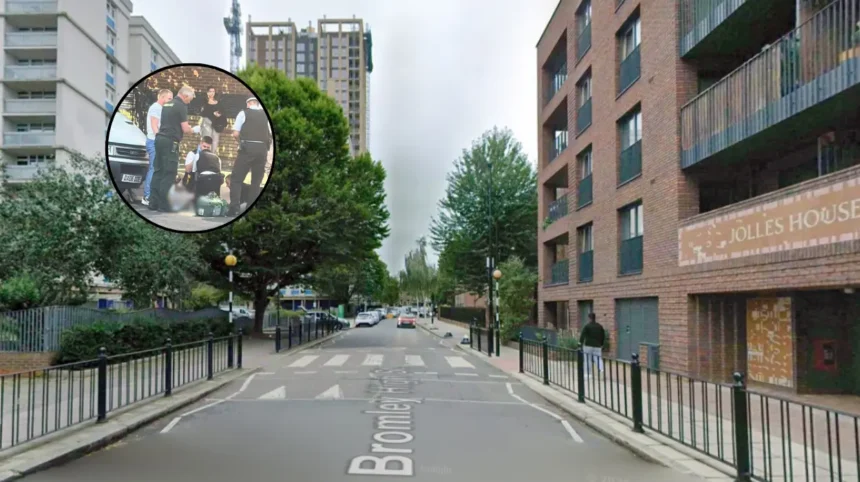
- Road Closure Implemented: The A222 Bromley High Street was closed to all traffic in both directions following an early morning emergency services incident.
- Affected Area Specified: The major traffic restriction was put in place between London Road at the Swan and Mitre traffic lights and Church Road.
- Public Transport Disrupted: A total of six bus routes, including five daytime services and one night bus, had to be placed on urgent diversions.
- Authorities Contacted: Local media reporters contacted both the Metropolitan Police Service and the London Ambulance Service for official statements regarding the nature of the emergency.
Bromley (South London News) May 23, 2026 – The major thoroughfare was blocked off by authorities between London Road, specifically at the Swan and Mitre traffic lights, and Church Road. Emergency responders were called to the scene in the early hours of the morning, prompting immediate traffic management interventions and the redirection of multiple public transport links.
What Is Happening on Bromley High Street?
The A222 Bromley High Street was completely shut down by emergency services early on Saturday morning, leading to an immediate operational response to secure the area.
As reported by journalist Poppy Huggett of London Now, the incident forced a total closure of the street in both directions, rendering the vital thoroughfare completely impassable for motorists and pedestrians alike.
According to data compiled from AA Maps, the active road closure stretched directly from the junction of London Road by the Swan and Mitre traffic lights up to Church Road.
Diversion routes were quickly established by traffic wardens and local police teams to manage the sudden accumulation of vehicles attempting to traverse the town centre.
Which Public Transport Services Are Affected by the Road Closure?
The closure of the main high street caused widespread logistics issues for Transport for London (TfL) services operating through the borough of Bromley. Local commuters and late-night travellers faced immediate delays as multiple transit corridors had to be bypassed entirely.
As detailed by Poppy Huggett of London Now, the bus routes confirmed to be on official diversion during the incident were:
- Route 208
- Route 227
- Route 320
- Route 354
- Route 358
- Route N199
Transport authorities advised passengers checking early morning services to plan for extended journey times and to locate alternative boarding points outside the established police perimeter.
How Have the Emergency Services Responded to the Incident?
Following the initial closure of the route, media representatives sought formal clarification from the emergency infrastructure serving the capital to establish the exact cause of the deployment.
Reporting live during the event, Poppy Huggett of London Now confirmed that “we’ve reached out to the Metropolitan Police Service and the London Ambulance Service for more information” regarding the ongoing operations.
The live logging of the incident noted that formal requests for information were logged around 1:15 am on May 23, as emergency personnel worked behind the established high street cordons.
Journalists covering the developing scene also reached out to the public for visual evidence and accounts, with the local news desk requesting that witnesses send pictures and relevant details directly to the newsroom to assist in mapping the exact scope of the disruption.
Background of the Particular Development
The closure of Bromley High Street highlights a recurring pattern of emergency interventions along this critical retail and transit corridor in Greater London.
High streets across the capital face complex infrastructure challenges, where a singular localized emergency—whether related to public safety, sudden medical incidents, or structural concerns—can completely paralyse local commerce and regional transport links.
In recent years, the A222 corridor through Bromley has seen multiple temporary closures due to its high pedestrian density and its status as a primary arterial link connecting South East London to the Kent borders. Because the high street is tightly framed by historic structures like the Swan and Mitre premises and intersecting secondary roads such as Church Road, emergency service operations within this zone frequently necessitate complete, multi-directional closures to ensure the safety of both responders and the public. This latest event underscores the vulnerability of the borough’s transport network to unexpected disruptions.
Prediction
This development is expected to have a multi-layered impact on local businesses, commuters, and weekend shoppers in the Bromley area. In the short term, the unexpected closure of a main thoroughfare will likely result in a noticeable drop in morning footfall for retailers, cafés, and markets operating on the high street, as consumers alter their weekend plans to avoid traffic congestion.
For daily commuters and transport users, the disruption to six major bus routes will inevitably cause delays, missed connections, and increased traffic volumes on surrounding residential roads as drivers navigate the established diversions.
Over the longer term, regular disruptions of this nature may prompt local transport planners and the London Borough of Bromley to review emergency diversion protocols and traffic management systems. This would ensure that the town centre can maintain economic resilience and transit continuity whenever emergency services require the closure of primary roads.