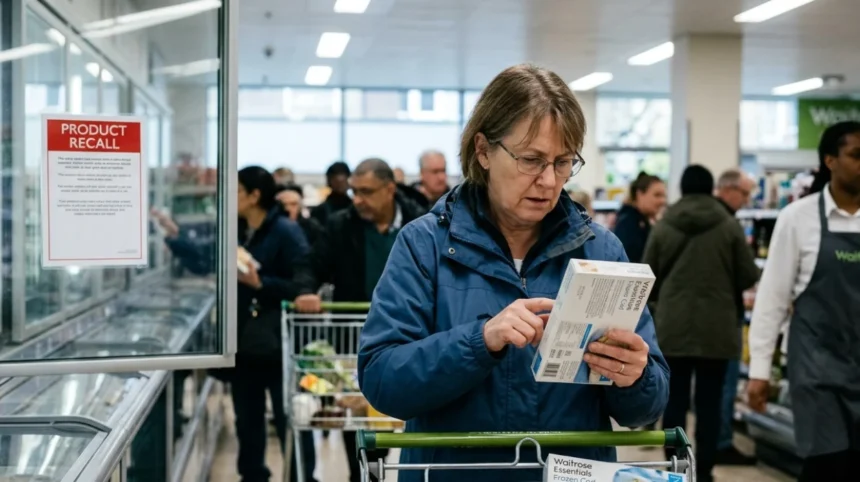
Tesco, Waitrose, and Morrisons have issued multiple food recalls in 2025–2026 for products containing glass shards, undeclared allergens (fish, peanuts, wheat, gluten, soya, milk), and salmonella contamination. South London shoppers must check batch codes and best-before dates immediately, return affected items for full refunds, and never consume recalled products due to serious health risks including anaphylaxis, internal injuries, and food poisoning.
- What Food Items Are Recalled at Tesco, Waitrose, and Morrisons Right Now?
- Why Do Supermarkets Issue Food Recalls in the UK?
- How Does the UK Food Recall System Work for Consumers?
- What Health Risks Do Recalled Food Products Pose to South London Shoppers?
- Which Batch Codes and Best-Before Dates Should South London Customers Check?
- What Should You Do If You Find a Recalled Product in Your South London Home?
- How Can South London Families Prevent Future Food Recall Incidents?
- What Is the History of Major Food Recalls at Tesco, Waitrose, and Morrisons?
What Food Items Are Recalled at Tesco, Waitrose, and Morrisons Right Now?
Three major UK supermarkets recall pasta sauce with glass shards, cashew nuts with undeclared fish, frozen desserts, breakfast cereal with peanuts, and free-from products with hidden wheat or gluten. Morrisons recalls pasta sauce and cashews; Tesco recalls free-from breadcrumbs and cooked beef slices; Waitrose recalls iced oat latte and daily supplements.
The recalls span multiple product categories including chilled ready meals, frozen desserts, dry goods, nuts, cereals, pasta sauces, coffee drinks, and deli pieces. Each recall carries specific batch codes, best-before dates, and pack sizes that determine eligibility for return.
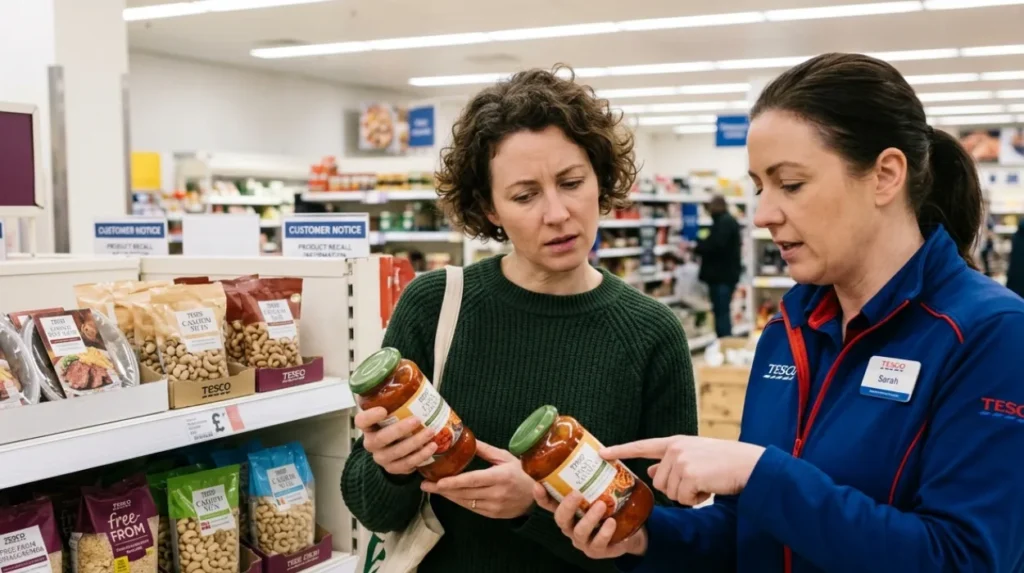
Morrisons currently highlights two active recalls on its website. The first involves pasta sauce where some packages may contain glass shards. The second concerns cashew nuts due to an undeclared fish ingredient on the label. Glass shards pose risks of cuts to the mouth, throat, and digestive tract, while undeclared fish triggers life-threatening allergic reactions in fish-allergic consumers.
Tesco recalls its Free From Breadcrumbs because wheat is not indicated on packaging, endangering people with wheat allergies or gluten intolerance. Tesco also recalled 10 Cooked Beef Slices (125g), Red Cabbage & Apple (300g), and 8 Chicken Tsukune Skewers (280g) during previous recall waves. Cookstown Kitchen Chinese Pork Steaks (400g) sold at Tesco contained salmonella confirmed through routine testing.
Waitrose recalls Grind Iced Vanilla Oat Latte Coffee (250ml) and ZOE Daily 30+ 7 Day supplements (112.5g). Spoon Cereals’ Cinnamon and Pecan Granola (400g) sold at Waitrose, Ocado, and Morrisons contains undeclared peanuts and oats with batch code M5244 and best-before dates of May 22, 2026, and May 26, 2026.
“This Isn’t Chicken Deli Pieces” sold at Waitrose, Sainsbury’s, Ocado, Morrisons, Tesco, and Asda contains undeclared soya and wheat (gluten). M&S Milk Chocolate Honeycomb (120g, lot 5242, best-before May 12, 2026) contains undeclared peanuts. Tesco Free From Breaded Mini Fillets contain undeclared milk.
Why Do Supermarkets Issue Food Recalls in the UK?
Food recalls occur when products contain physical contaminants (glass), undeclared allergens (fish, peanuts, wheat, gluten, soya, milk), or biological hazards (salmonella) that pose serious health risks to consumers. The Food Standards Agency (FSA) coordinates recalls when mislabelling, packaging errors, or contamination events create possible health risks.
Physical contaminants like glass shards enter food through broken equipment, damaged packaging, or manufacturing line failures. These contaminants cause immediate physical injury including lacerations to lips, tongue, esophagus, stomach, and intestines. Glass is invisible in many food matrices and cannot be detected by sight before consumption.
Undeclared allergens represent the most common recall cause in UK supermarkets. Allergen mislabelling occurs when packaging fails to list ingredients present in the product, when cross-contamination happens during production, or when recipe changes are not updated on labels. The UK recognizes 14 major allergens: celery, cereals containing gluten, crustaceans, eggs, fish, lupin, milk, molluscs, mustard, nuts, peanuts, sesame, soybeans, and sulphur dioxide/sulphites.
Fish allergens trigger reactions ranging from hives and swelling to anaphylactic shock requiring epinephrine injection. Peanuts cause similar severe reactions, with UK food allergy deaths predominantly linked to peanut exposure. Wheat and gluten endanger people with coeliac disease, wheat allergy, or non-coeliac gluten sensitivity, causing digestive damage, malabsorption, and immune responses.
Biological contaminants like salmonella originate from contaminated raw ingredients, inadequate cooking, or post-cooking contamination during packaging. Salmonella infection (salmonellosis) causes fever, diarrhoea, abdominal cramps, vomiting, and dehydration. Vulnerable groups including infants, elderly people, pregnant women, and immunocompromised individuals face higher risks of hospitalisation and death.
The Food Standards Agency describes recalls with “possible health risk” designations when mislabelling problems affect allergen disclosure. Urgent “do not eat” alerts accompany recalls involving life-threatening allergens or dangerous physical contaminants.
How Does the UK Food Recall System Work for Consumers?
The Food Standards Agency publishes recall notices on its website and sends press releases, while supermarkets post notices on their websites, in-store, and on product packaging with return instructions. Consumers check FSA alerts, supermarket pages, and news reports to identify affected products by name, batch code, and best-before date.
The recall process begins when a manufacturer or retailer identifies a safety issue through routine testing, customer complaints, or supplier notifications. The company contacts the Food Standards Agency, which assesses risk level and coordinates public notification. Risk levels range from voluntary withdrawal (low risk) to urgent recall (high risk with “do not eat” warnings).
Supermarkets implement recall procedures by removing affected products from shelves, isolating stock in warehouses, and posting visible notices at store entrances and relevant aisles. Staff receive training to identify batch codes and best-before dates. Return policies allow customers to return recalled items with or without receipts for full refunds.
South London shoppers access recall information through multiple channels. The FSA website maintains a searchable database of current recalls filtered by retailer, product type, and allergen. Tesco, Waitrose, and Morrisons each maintain dedicated recall pages listing all active recalls with product images, batch codes, and contact details.
Local news outlets including South London Press, Croyton Guardian, and BBC London report major recalls affecting multiple retailers. These reports provide summary lists and plain-language explanations for consumers who do not monitor FSA alerts directly.
Consumers identify affected products by comparing three key identifiers: product name and pack size, batch/lot number printed on packaging, and best-before or use-by date. A single recall may affect multiple batch codes spanning several weeks of production. Some recalls specify exact dates (e.g., May 22, 2026 and May 26, 2026) while others list date ranges.
Return procedures require customers to bring the product to any store branch of the recalling retailer. Staff verify batch codes and process refunds immediately. Customers without receipts still receive full refunds for recalled items due to the safety nature of the recall. Some retailers offer mail-back options for online purchases.
What Health Risks Do Recalled Food Products Pose to South London Shoppers?
Recalled foods cause anaphylactic shock from undeclared allergens, internal injuries from glass shards, and severe food poisoning from salmonella, with vulnerable groups facing hospitalisation or death. Fish, peanuts, wheat, gluten, soya, and milk allergens trigger immune responses ranging from mild hives to fatal airway closure.
Anaphylaxis occurs within minutes to hours after allergen exposure and requires immediate epinephrine injection. Symptoms include throat swelling, difficulty breathing, wheezing, drop in blood pressure, rapid pulse, dizziness, loss of consciousness, and collapse. Without treatment, anaphylaxis causes death within 15–30 minutes.
The UK records approximately 20–30 food allergy deaths annually, with peanuts and tree nuts responsible for most fatalities. Fish allergy affects 0.5–1% of adults and causes severe reactions even to trace amounts. Cross-contamination during production poses risks when facilities process multiple allergen-containing products on shared equipment.
Glass shard injuries range from minor mouth cuts to life-threatening internal damage. Shards as small as 1–2mm can pierce digestive tract walls, causing bleeding, infection, perforation, and sepsis. Children face higher risks due to smaller airways and digestive tracts.
Salmonella infection causes symptoms within 6 hours to 6 days after consumption, lasting 4–7 days. Typical symptoms include diarrhoea (sometimes bloody), fever (38°C or higher), abdominal cramps, nausea, vomiting, and headache. Most healthy adults recover without treatment, but dehydration requires oral rehydration salts or intravenous fluids in severe cases.
Vulnerable populations face significantly higher risks. Infants under 1 year, adults over 65, pregnant women, and people with weakened immune systems (cancer patients, HIV/AIDS, organ transplant recipients) face 5–10 times higher hospitalisation rates. Salmonella causes approximately 100 deaths annually in the UK, predominantly among elderly people.
Coeliac disease affects 1 in 100 people in the UK, with undiagnosed cases experiencing long-term complications including malnutrition, osteoporosis, infertility, and increased cancer risk. Even trace gluten exposure (as little as 20 parts per million) causes intestinal damage in coeliac patients.
Which Batch Codes and Best-Before Dates Should South London Customers Check?
Affected products carry specific batch codes like M5244 and 5242, with best-before dates including May 12, 2026, May 22, 2026, and May 26, 2026. Shoppers must match all three identifiers (product name, batch code, date) before determining if their item is recalled.
Spoon Cereals’ Cinnamon and Pecan Granola (400g) uses batch code M5244 with best-before dates May 22, 2026, and May 26, 2026. This product sells at Waitrose, Ocado, and Morrisons for up to £5.
M&S Milk Chocolate Honeycomb (120g) carries lot number 5242 with best-before May 12, 2026. While this is an M&S product, it appears in recall lists alongside Tesco, Waitrose, and Morrisons items due to similar allergen risks.
Tesco Free From Breadcrumbs contain undeclared wheat but batch codes vary by production run. Customers must check packaging for “Free From” labelling and verify against current FSA notices. Tesco Free From Breaded Mini Fillets also contain undeclared milk with varying batch codes.
Pasta sauce recalled at Morrisons does not disclose specific batch codes in public reports, requiring customers to check all pasta sauce bottles from recent purchases. Cashew nuts recalled at Morrisons and Poundland (Theasty Sn Co.asted and Salted Cashews) may contain glass shards with batch codes on packaging.
Grind Iced Vanilla Oat Latte Coffee (250ml) sold at Tesco and Waitrose appears in multiple recall waves, requiring date verification. ZOE Daily 30+ 7 Day (112.5g) sold at Waitrose and Aldi carries specific batch identifiers.
Batch codes appear on packaging as alphanumeric strings near best-before dates, typically on the bottom, back, or neck of bottles/cartons. Format varies by manufacturer: some use “BB: 220526” (day-month-year), others “M5244” or “LOT 5242”. Best-before dates use DD/MM/YY or DD MM YY format in the UK.
What Should You Do If You Find a Recalled Product in Your South London Home?
Stop eating the product immediately, do not taste it, isolate it from other food, and return it to any branch of the recalling supermarket for a full refund. Keep the packaging for batch code verification during return.
Do not consume even small amounts to “test” whether the product is safe. Undeclared allergens exist throughout the entire batch, not just in specific portions. Glass shards distribute unevenly but may appear in any packet from the affected batch.
Isolate the product in a sealed container or original packaging to prevent accidental consumption by other household members, especially children or people with allergies. Place it away from other food in a visible location with a warning note.
Return the product to any store branch of the retailer that sold it. Tesco, Waitrose, and Morrisans all accept returns at any UK location, not just the purchase store. Bring the product and packaging. Staff verify batch codes and process refunds immediately without requiring receipts for recalled items.
If you cannot return the product immediately, contact the retailer’s customer service line for mail-back instructions or further guidance. Tesco, Waitrose, and Morrisons maintain 24/7 customer service for recall-related queries.
Monitor for symptoms if you or a family member consumed the product. Allergic reactions require immediate emergency care (call 999). Symptoms include throat swelling, breathing difficulty, wheezing, hives, vomiting, dizziness, or collapse. Use an epinephrine auto-injector if prescribed.
Food poisoning symptoms requiring medical attention include fever above 38.5°C, bloody diarrhoea, dehydration (dry mouth, reduced urination, dizziness), symptoms lasting more than 3 days, or inability to keep fluids down. Vulnerable individuals should seek medical advice immediately after consuming recalled products.
Report adverse reactions to the Food Standards Agency via their website or phone line. This helps track the scope of contamination and identifies additional affected batches.
How Can South London Families Prevent Future Food Recall Incidents?
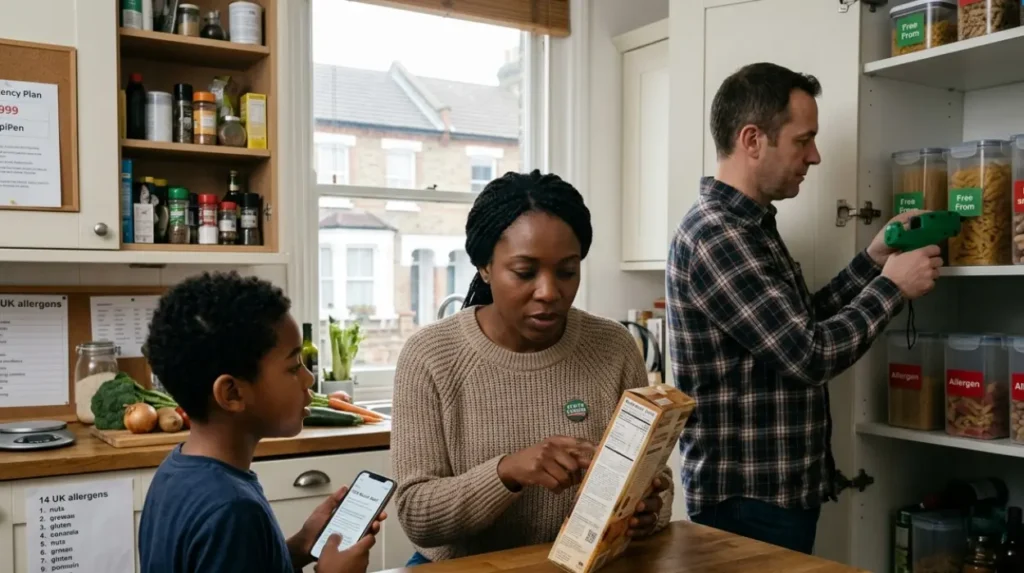
Check FSA recall alerts weekly, read ingredient labels carefully for all 14 UK allergens, verify batch codes and dates before consuming new products, and store allergen-free items separately from allergen-containing foods. Families with allergies maintain dedicated shelves and colour-coded storage.
Subscribe to FSA email alerts or follow FSA on social media for real-time recall notifications. Check supermarket recall pages monthly even without news reports, as recalls occur continuously.
Read labels every time you purchase a product, even familiar brands, because recipes and manufacturing processes change without advance notice. Look for allergen warnings in bold text within ingredient lists. Watch for precautionary labels like “may contain” or “produced in a facility that also processes” allergens.
Verify batch codes and best-before dates when trying new products or after hearing recall news. Take photos of packaging for home reference. This enables quick verification if recalls announce later.
Store free-from and allergen-free products on upper shelves to prevent cross-contamination from spills or crumbs falling from allergen-containing products below. Use sealed containers for bulk items like nuts, cereals, and flour.
Teach children to never share food with friends who have different allergy profiles. Educate caregivers, grandparents, and babysitters about household allergy rules and emergency procedures.
Maintain an emergency plan including epinephrine auto-injectors (if prescribed), knowing how to use them, and having 999 readily accessible. Keep antihistamines for mild reactions but never rely on them for severe reactions.
What Is the History of Major Food Recalls at Tesco, Waitrose, and Morrisons?
Tesco, Waitrose, and Morrisons have issued dozens of recalls since 2015, including the 2013 horsemeat scandal affecting 20+ products, Christmas recalls containing salmonella, and multiple 2024–2026 allergen recalls. The 2013 scandal led to stricter supply chain controls and enhanced testing protocols across UK supermarkets.
The 2013 horsemeat scandal revealed beef products containing up to 100% horsemeat, triggering the largest food fraud investigation in UK history. Tesco removed all affected lasagne and ready meals from shelves, recalled 20+ products, and commissioned independent supply chain audits. This event reshaped UK food safety regulations and increased FSA oversight powers.
Christmas 2024 recalls included Cookstown Kitchen Chinese Pork Steaks at Tesco containing salmonella, along with multiple aldí, Waitrose, and Tesco chilled and frozen items. Grind Iced Vanilla Oat Latte Coffee appeared in both Tesco and Waitrose recall lists during this period.
Throughout 2025, recalls increased in frequency due to tighter allergen labelling enforcement under EU Regulation 1169/2011 (retained in UK law). “This Isn’t Chicken Deli Pieces” recall across Waitrose, Sainsbury’s, Ocado, Morrisons, Tesco, and Asda in late 2025 involved undeclared soya and wheat.
The Food Standards Agency reported 150+ food recalls in 2025, with allergen mislabelling representing 60% of cases and physical contaminants (glass, metal, plastic) representing 20%. Salmonella and other biological contaminants accounted for 15%, with the remainder involving spoilage or foreign bodies.
May 2026 recalls demonstrate ongoing vigilance, with Morrisons, Tesco, and Waitrose simultaneously recalling pasta sauce, cashews, breadcrumbs, cereal, and supplements. This synchronised activity reflects improved industry communication and faster response times compared to previous years.
Which food products are currently recalled by Tesco, Waitrose, and Morrisons?
Several products have been recalled due to contamination or undeclared allergens, including pasta sauce, cashew nuts, breakfast cereal, free-from breadcrumbs, oat latte drinks, supplements, deli pieces, and breaded products. Shoppers should check official recall notices for the latest affected items.