Key Points
- Darren Wood, 43, from Carshalton, south London, became the first person globally to complete 1,000 parkruns
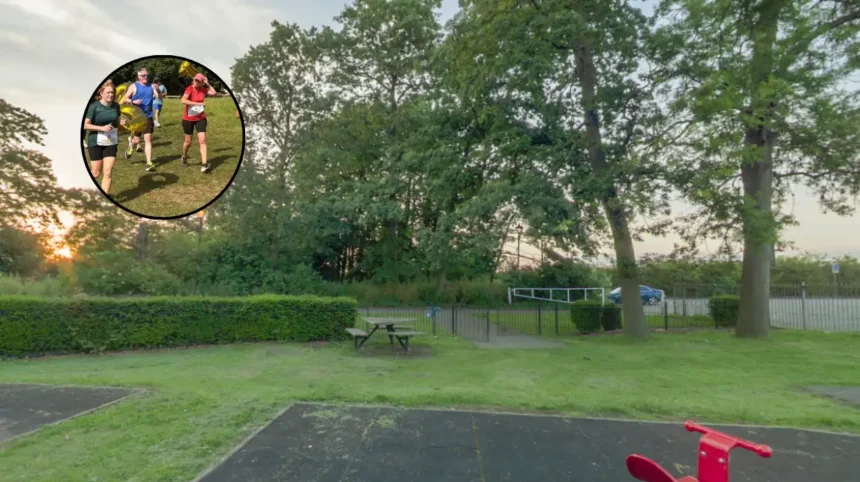
- Wood achieved his milestone at Morden parkrun in south London on a warm, sunny day, receiving a guard of honour from Sutton Runners
- He was presented with a yellow 1,000 parkrun T-shirt, cape, and crown, dubbed “the king of parkrun”
- Wood first participated in parkrun in October 2004 and has run at 119 different parkruns across seven countries
- He has volunteered 415 times at 5k or 2k junior parkrun events
- Wood is 36 parkruns ahead of his closest rival in the global race to 1,000
- The runner revealed parkrun “saved his life” during a period of mental health struggles, self-harm, divorce, and debt
- Parkrun began on October 2, 2004, as the Bushy Park Time Trial with 13 runners in south-west London
- There are now 913 parkrun locations in 23 countries with over four million participants globally
- Wood aims to reach 2,000 parkruns in another 20 years and wants to volunteer 500 times
Morden (South London News) June 3, 2026 — A runner from London has become the first person in the world to complete 1,000 parkruns, marking a historic milestone in the global community of free weekly running events. Darren Wood was given a guard of honour from his fellow Sutton Runners as he approached the finish line to achieve his milestone on a warm, sunny day at Morden parkrun in south London, surrounded by friends and family.
- Key Points
- How Long Has Darren Wood Been Running Parkruns?
- What Mental Health Struggles Did Wood Overcome?
- How Is Wood Using His Milestone to Help Others?
- What Is the History of Parkrun and How Has It Grown Globally?
- Where Does Wood Rank Globally Among Parkrun Participants?
- What Are Darren Wood’s Future Plans After Reaching 1,000 Parkruns?
- Background of the Development
- Prediction: How This Development Can Affect South London Runners and the Local Community
- Increased Participation at South London Parkruns
- Mental Health Awareness and Support Seeking
- Growth in Volunteer Participation
A stream of well-wishers took turns to congratulate Mr Wood and have photos taken with him before and after the event, and he was presented with a yellow 1,000 parkrun T-shirt, a cape and a crown as he was dubbed “the king of parkrun”.
How Long Has Darren Wood Been Running Parkruns?
Mr Wood, 43, from Carshalton, south London, first took part in October 2004 and has regularly participated in the free weekly event ever since, according to The Evening Standard. He has run at 119 different parkruns in seven countries and has also volunteered 415 times at the 5k or a 2k junior parkrun, ITV London reported.
As reported by the Press Association through The Independent, Mr Wood told the news agency:
“For me it’s a habit, I just rock up every week and I just do it. I love getting out and exploring new parkruns and meeting new communities”.
Mr Wood, who is 36 parkruns ahead of his closest rival, said the attention around being the first to 1,000 has been “a little bit overwhelming”, but added:
“It’s just a nice celebration. I don’t want the limelight. This is about a celebration of parkrun. Just because I’ve been the first person to get there, it could have been anyone”.
What Mental Health Struggles Did Wood Overcome?
Mr Wood struggled with his mental health and self-harmed when his marriage ended and he faced debt and problems at work, The Evening Standard reported. When he went to parkrun “everything felt normal”, he said, adding:
“I wasn’t judged any more, I could just be me and I could talk to people and explain how I was feeling”.
The BBC reported that Darren Wood, 43, from Carshalton in south London, expressed that participating in these free community gatherings had “saved [his] life” during a challenging period marked by mental health issues, and he aspires to inspire others in similar situations.
How Is Wood Using His Milestone to Help Others?
Mr Wood is using the interest in his milestone run to encourage other people who are struggling to seek support, saying:
“I’m doing this to hopefully save a life. If I can save somebody’s else’s life, that’s all I want out of this”.
He added:
“My key message would be that it’s important for people to talk and not to feel judged. I felt hopeless but I came across as being the happiest person around. We are all very good at hiding how we feel. If there’s one thing, be kind because you never know what somebody else is going through”.
As reported by the Press Association through The Independent, Mr Wood urged others to try parkrun, saying:
“Go and try it, you will not come away disappointed. Just build up that courage. Understand that you will not be judged, everyone is welcome, it doesn’t matter how fast or slow you are. Nobody is going to look at you funny because you are new to it. Everyone is welcome. There’s always a first timers briefing so if you don’t know the course, you’re going to a new course, you are made to feel welcome”.
“That’s the nice thing about parkrun, you’ve got the tailwalker so nobody’s going to come last. Register online, get your barcode and just rock up. It’s free, it’s for everyone, what’s not to like?” Wood continued.
What Is the History of Parkrun and How Has It Grown Globally?
Parkrun started on Saturday October 2, 2004, as the Bushy Park Time Trial when 13 runners joined a free timed 5k run in south-west London which was organised by runner Paul Sinton-Hewitt while he was recovering from injury, The Evening Standard reported.
There are now 913 different parkrun locations in 23 countries and more than four million people have taken part, according to both The Evening Standard and ITV London.
Junior parkruns take place on Sundays in the UK, Ireland and Australia, The Independent reported.
Like Mr Sinton-Hewitt, Mr Wood was a member of south-west London running club Ranelagh Harriers but he skipped the first event, thinking he was not fast enough to take part in a time trial, The Evening Standard noted. He joined in the following Saturday.
Where Does Wood Rank Globally Among Parkrun Participants?
Mr Wood, who is 36 parkruns ahead of his closest rival, holds a significant lead in the global parkrun community, as reported by The Evening Standard. The milestone represents over two decades of consistent participation in the weekly events.
What Are Darren Wood’s Future Plans After Reaching 1,000 Parkruns?
Mr Wood plans to continue his parkrun habit. “I’m going to aim big, I’m aiming for 2,000 in another 20 years,” he said, laughing, The Evening Standard reported.
“Aim high, you’ve got to be positive, you’ve got to have big dreams. Whether I get there or not is another matter, but aim big. Tour a little bit more, get round a few other places, enjoy it, go on lots of adventures, this is what it’s all about. About giving back as well, getting up to 500 volunteers as well. I’d love to do more volunteering”.
He added:
“This milestone isn’t about me, it’s about the parkrun community and what parkrun is doing for everyone. Parkrun is inclusive for everyone. Everyone is welcome and it will change and save lives if we can get more and more people involved. I’d love for others who have never been part of a parkrun to just pick up the courage to attend their first event and be there. Because parkrun has changed and saved my life and it will do that for others, I would almost guarantee that”.
Background of the Development
The development of Darren Wood becoming the first person to complete 1,000 parkruns occurred within the broader context of parkrun’s growth from a small local event to a global phenomenon. Parkrun was founded on October 2, 2004, when Paul Sinton-Hewitt organised the Bushy Park Time Trial with just 13 runners in south-west London while recovering from injury, as reported by The Evening Standard and The Independent.
Over the past 21 years, parkrun has expanded to 913 different locations across 23 countries, with more than four million people participating globally, according to multiple sources including ITV London and The Evening Standard.
The free, weekly, timed 5k events take place every Saturday, while junior parkruns (2k) occur on Sundays in the UK, Ireland, and Australia.
Wood’s journey began when he joined Ranelagh Harriers, the same running club as parkrun founder Paul Sinton-Hewitt.
He initially skipped the first Bushy Park Time Trial, believing he wasn’t fast enough for a time trial, but joined the following Saturday. From October 2004 onward, he has maintained consistent weekly participation, running at 119 different parkrun locations across seven countries and volunteering 415 times.
The milestone was achieved at Morden parkrun in south London on a warm, sunny day, with Wood’s Sutton Runners clubmates forming a guard of honour as he approached the finish line. Wood holds a 36-parkrun lead over his closest rival, demonstrating his consistent participation over two decades.
Prediction: How This Development Can Affect South London Runners and the Local Community
This development is likely to have several measurable effects on South London runners and the local parkrun community. Based on Wood’s own statements and the historical pattern of parkrun growth, the following impacts can be anticipated:
Increased Participation at South London Parkruns
Wood’s achievement and media coverage across The Evening Standard, BBC, ITV London, and The Independent will likely drive increased attendance at South London parkruns, particularly Morden parkrun where he achieved his milestone.
His message that “everyone is welcome” and “it doesn’t matter how fast or slow you are” may encourage first-time participants who previously felt intimidated.
Mental Health Awareness and Support Seeking
Wood’s openness about his mental health struggles, self-harm, divorce, and debt may encourage others in South London struggling with similar issues to seek support and try parkrun. His statement that
“parkrun has changed and saved my life and it will do that for others, I would almost guarantee that”
positions the events as a potential mental health resource.
As reported by the Press Association, Wood’s key message that
“it’s important for people to talk and not to feel judged”
combined with his admission that
“I felt hopeless but I came across as being the happiest person around”
may reduce stigma around mental health discussions in the local running community.
Growth in Volunteer Participation
Wood’s goal to reach 500 volunteer occurrences (currently at 415) may inspire more South London residents to volunteer at parkrun events. His statement “I’d love to do more volunteering” and emphasis on “giving back” could catalyse increased volunteer recruitment at local parkruns.