Key Points
- Imminent Pool Closure Paused: A planned two-month shutdown of the main swimming pool at Putney Leisure Centre, originally scheduled to begin on 1 July 2026, has been officially suspended by Wandsworth Council following widespread public opposition.
- Controversial Redesign Strategy: The council’s commercial contractor, Places Leisure, notified facility users via email on Tuesday, 2 June 2026, that the rare 33-metre pool would be permanently reconfigured and shortened into a standard 25-metre pool alongside a separate teaching pool.
- Rapid Public Mobilisation: Local residents and pool members launched an online petition titled “Save Putney’s 33-metre pool” on the 38 Degrees platform, which rapidly amassed over 1,000 signatures within 48 hours of the initial announcement.
- Lack of Community Consultation: Campaigners and local users expressed shock and anger at the sudden notification, stating that a permanent alteration to a publicly funded asset had been planned behind closed doors without community engagement.
- Political Intervention and Apology: Six hours after the provider’s email was distributed, the newly appointed Conservative administration at Wandsworth Council intervened to halt the project, apologizing for communication issued without municipal oversight and promising a comprehensive public engagement reset.
- Contractual Discrepancies: Local investigative reports indicate that the physical changes may have been written into a long-term contract signed under the previous Labour administration in June 2025, which also included modifications to the centre’s café, sauna facilities, and health suites.
Putney (South London News) June 5, 2026 – Places Leisure, acting in partnership with Wandsworth Borough Council, June 5, 2026 — A controversial proposal to permanently reduce the length of the historic 33-metre swimming pool at Putney Leisure Centre by eight metres has been abruptly paused following an intense wave of public backlash and a rapid local petition that garnered more than 1,000 signatures in less than two days. The private leisure contractor had initially informed members on Tuesday, 2 June 2026, that the main pool would close completely from 1 July until early September to undergo structural division into a standard 25-metre lane pool and a separate teaching space. However, following a severe public outcry regarding a total absence of community consultation, Wandsworth Council intervened within six hours of the announcement to halt the closure, offering an official apology for the handling of the notice and pledging to execute an open, transparent engagement process with local residents before any permanent architectural changes are made to the facility.
- Key Points
- Why Was the Putney Leisure Centre Pool Closure Paused?
- What Exactly Were the Proposed Structural Changes to the Leisure Centre?
- How Did Local Swimmers and Campaigners Respond to the Announcement?
- What Is the Official Position of Wandsworth Borough Council and Places Leisure?
- Background of the Putney Leisure Centre Redesign
- Prediction: How Will This Project Affect Local Service Users and Residents?
Why Was the Putney Leisure Centre Pool Closure Paused?
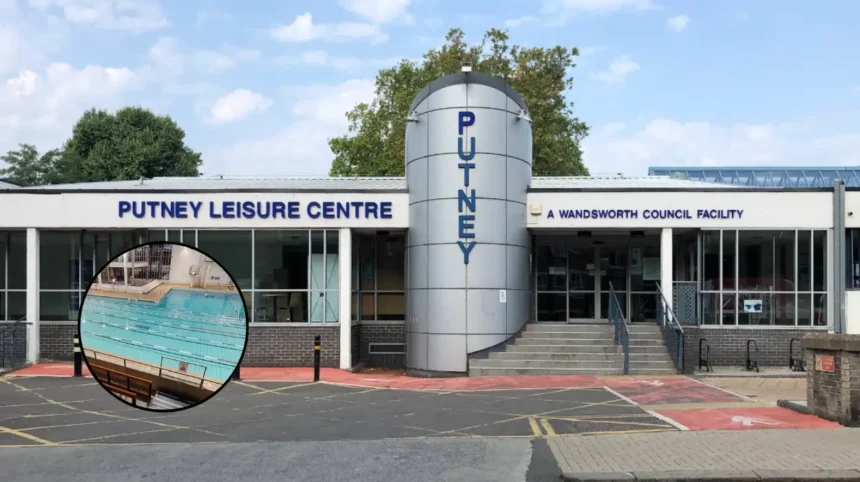
As reported by journalist Kieren McCarthy of Putney.news, the decision to suspend the structural works came directly from local government leadership following an immediate flood of complaints directed at municipal representatives. The 33-metre swimming facility, located on Dryburgh Road in the SW15 postal district, is widely recognized as an increasingly rare public asset, with local swimmers noting that there are no comparable alternative facilities of that length within a reasonable commuting distance.
The immediate catalyst for the suspension was an online petition created on the 38 Degrees campaigning platform by local resident Dan Hawtrey, a regular user who has swum at the centre for more than 16 years. The petition, which demanded that the local authority halt the reconfiguration until a full public inquiry and consultation could be conducted, quickly crossed its critical milestone of 1,000 signatures.
According to coverage published by the Local Lines Daily and verified through civic correspondence, the local authority admitted that the commercial provider had distributed the operational closure timeline directly to members using the council’s branding but entirely without the explicit authorization or final oversight of elected officials.
This breakdown in administrative protocol forced the council to demand an immediate operational standstill on the afternoon of 2 June.
What Exactly Were the Proposed Structural Changes to the Leisure Centre?
According to the official informational circular distributed by Places Leisure to its subscription members, the intended project was framed as part of a wider, multi-million-pound investment strategy designed to modernize the aging municipal building.
The primary structural objective of the work scheduled for 1 July was to permanently truncate the 33-metre pool down to 25 metres by installing a permanent dividing structure. The remaining eight metres of space, which includes the distinctive deep-water well beneath the centre’s existing diving platforms, was slated to be transformed into an enclosed, standalone instruction pool for children and beginners.
In addition to the physical alterations to the pool deck, the broader modernization scheme encompassed an array of interior reconfigurations across the site. As detailed by reporters covering the Local Democracy Reporting Service (LDRS), the project specifications included:
- A comprehensive refurbishment of the existing communal and group changing village.
- An overhaul of the front reception lobby and entry turnstiles.
- A modernization program for the on-site community café.
- The construction of a newly designed health and wellbeing suite.
However, updates published within the community petition revealed that the scope of the modernization extended to moving the existing ground-floor sauna and steam rooms upstairs. This particular element of the plan drew further complaints from regular visitors, who argued that shifting thermal facilities away from the immediate poolside area would create distinct logistical and accessibility hurdles for specific user groups.
How Did Local Swimmers and Campaigners Respond to the Announcement?
The response from the local community was characterized by immediate resistance, with users expressing deep frustration over the secretive nature of the decision-making process. In the text of the formal petition, organizer Dan Hawtrey argued that a permanent modification to an award-winning, publicly owned asset should never have been decided behind closed doors.
Reflecting on the unique value of the current configuration, Hawtrey stated:
“I’ll be honest: the centre is run down and tired, and it badly needs modernising. But the one thing that’s kept me here all these years is the 33-metre pool. There aren’t many pools like it left in the country. It’s an increasingly scarce thing, and once it’s gone, it’s gone — because nobody builds 33-metre pools any more.”
Campaigners also challenged the operational logic put forward by the private operator regarding lane capacity and crowd control. According to statements retrieved from the campaign group, Places Leisure intended to enforce a strict regulatory cap of 14 swimmers per lane within the newly designed 25-metre pool to manage bather density.
Hawtrey countered this rationale by highlighting the physical spatial limitations of shortening the facility:
“Our 33-metre lanes comfortably take 14 swimmers as it is. Cram those same 14 into a lane eight metres shorter and it stops being swimming and starts being queuing. Shrink it to 25 metres and that breathing space disappears.”
Public feedback recorded by Putney.news across local communication channels reinforced these sentiments. Public user Gavin Laidlaw noted a logical inconsistency in the operator’s rationale, pointing out that an independent teaching pool already exists within an adjacent room at the site, stating,
“There is a teaching pool, a separate one in another room. I spend many Sundays in it with the kids… has this gone?”
Concurrently, facility member Melissa H suggested that the underlying motivation for the reconfiguration was commercial rather than community-oriented, stating:
“I love the 33m pool, it really stretches you. If you want to swim 25m they offer this during the day across the diving pool. So why do they need to cut the long pool as well? I suspect it all boils down to making profit out of lessons at the expense of members!”
Further concerns were raised regarding the potential destruction of the centre’s specialized diving infrastructure. Commenting on the historical value of the site, resident Stephanie Rayburn argued:
“This building is listed and should be protected against the vandalism of greedy commercial operators. Next thing they’ll be destroying one of the few remaining diving complexes left in the UK.”
What Is the Official Position of Wandsworth Borough Council and Places Leisure?
Following the widespread circulation of the petition and a deluge of direct correspondence to civic chambers, Wandsworth Borough Council moved swiftly to distance itself from the immediate closure timeline.
In an official statement delivered directly to the LDRS, Councillor Ethan Brooks, the newly appointed Cabinet Member for Environment (with responsibility for leisure and sport), announced the formal suspension of the engineering works:
“Wandsworth Council has informed Places Leisure that the planned closure of Putney Pool must be paused. This reflects concerns that there has not been sufficient engagement with residents and regular users on the proposed works. While investment is needed to secure the pool’s long-term future, we are not currently confident that adequate engagement has taken place.”
Recognizing the public distress caused by the automated email notification distributed by the contractor on 2 June, Councillor Brooks added an explicit apology regarding the lack of municipal oversight:
“We also recognise that recent communications, shared without council oversight, have caused concern, and we apologise for this. We will now reset the approach, working with Places Leisure to deliver a more robust and transparent engagement process. The council remains committed to investing in Putney Leisure Centre and delivering an ambitious refurbishment that improves the quality, accessibility and sustainability of the facility for the future.”
Journalistic investigations into the administrative history of the facility reveal an intricate political context behind the disputed plans. As reported by Putney.news, the overarching 10-year management contract held by Places Leisure was originally finalized and awarded in June 2025 under a previous Labour-led council administration.
Because the full technical annexes of that commercial contract have not been fully released to the public, local reporters indicate it is highly probable that the specific mandates to close the cafe, alter the thermal suites, and downsize the main pool layout were legally locked into the agreement over a year ago.
The current Conservative-led administration, which assumed operational control of the local authority in May 2026 after local elections left the council in no overall control, inherited the contract pre-packaged. Representatives from both Places Leisure and Wandsworth Council’s administrative offices have been contacted repeatedly by independent journalists to clarify who signed off on the original architectural briefs and what will happen to the deep-water diving boards, but neither party has provided a formal response on those specific points at the time of publication.
Background of the Putney Leisure Centre Redesign
The architectural controversy surrounding Putney Leisure Centre is deeply tied to changing standards in British public pool design and long-term funding pressures facing municipal budgets across London. Built during an era when local authorities frequently constructed non-standard pool lengths—such as 33.3 metres (representing exactly three laps per 100 metres) or 33 metres—the Putney facility stands as a structural anomaly in modern aquatics.
In contemporary sports management, Sport England and national governing bodies heavily favor standardized 25-metre or 50-metre rectangular layouts.
Standardized pools are significantly cheaper to heat, treat, and maintain, and they conform strictly to the competitive pacing requirements used in national swimming programs. Consequently, private leisure management companies frequently push to “standardize away” older, non-standard pools when taking over public contracts to optimize operational efficiency and maximize lane revenue.
Financially, municipal leisure provision across the United Kingdom has undergone a widespread shift toward outsourcing over the last decade. Local councils, balancing tight statutory budgets, regularly lease their capital assets to specialized private management firms like Places Leisure under long-term operational arrangements.
These contracts often shift financial risk away from the taxpayer but require the operator to find commercial efficiencies to remain profitable.
At Putney, the drive to carve out an independent teaching pool from the existing 33-metre footprint reflects an industry-wide trend: dedicated children’s swim schools and private group lessons generate significantly higher hourly profit margins per square metre than public lane swimming.
This commercial reality has created ongoing tension between local user groups, who value historic, open-water exercise spaces, and operators tasked with maintaining aging infrastructure under strict financial targets.
Prediction: How Will This Project Affect Local Service Users and Residents?
The ongoing dispute over the Putney Leisure Centre redesign is expected to have multi-layered effects on the local community, depending on how the promised public consultation plays out.
If Wandsworth Council bows to public pressure and permanently blocks the plan to shorten the pool, fitness swimmers and long-term club members will preserve an increasingly rare training environment.
The maintenance of the full 33-metre length ensures that high-density periods remain manageable, allowing rapid and slow swimmers sufficient physical separation to avoid chronic lane congestion. Furthermore, preserving the deep-water well keeps specialized sports, such as high-board diving and synchronized swimming, viable within the borough.
However, retaining the larger pool layout may force the council or the operator to find alternative financial compromises, potentially resulting in higher membership fees or scaled-back improvements to the gym and changing rooms.
Conversely, if the pause proves to be temporary and the structural reduction to 25 metres proceeds after the consultation, the daily experience of casual and competitive swimmers will change considerably. Peak-hour lane swimming will inevitably become more congested, as identical numbers of users are compressed into an area roughly 24% smaller.
This spatial reduction could lead to longer waiting lists for peak slots, stricter booking windows, and a decline in membership renewals from long-distance enthusiasts.
On the other hand, a dedicated, warm-water teaching pool would significantly expand local capacity for infant swim lessons. This change would directly benefit families with young children and local primary schools, who currently face long waitlists for basic swimming instruction.