Key Points
- Network Milestone: Ubitricity has successfully rolled out 400 new on-street lamppost Electric Vehicle (EV) charge points across the London Borough of Bexley.
- Total Borough Capacity: This newest deployment builds directly upon an initial batch of 100 charge points established in 2025, expanding Bexley’s overall local network to 500 active charge points.
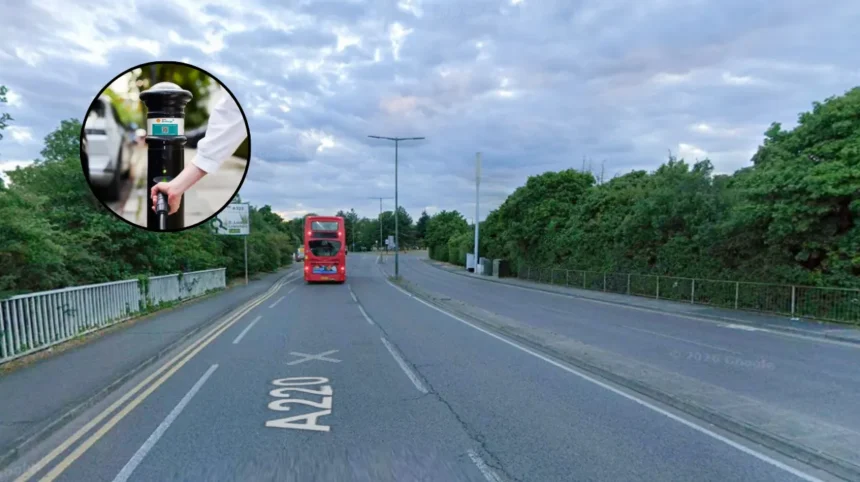
- Asset Retrofitting: The infrastructure utilizes existing residential street light columns, meaning zero additional street clutter or pavement-crossing cords for local pedestrians.
- Smart Software Integration: All newly installed units feature integrated Smart Charging software designed to automatically select cheaper tariff windows for vehicle owners.
- Operational Control: Ubitricity, functioning as a wholly owned subsidiary of Shell, retains full responsibility for the continuous supply, installation, operation, and maintenance of the borough’s infrastructure.
- National Standing: With this regional rollout complete, Ubitricity expands its footprint to maintain over 14,600 public charge points across the United Kingdom.
Bexley (South London News) June 5, 2026 – Public electric vehicle charging provider Ubitricity has officially finalized the deployment of 400 on-street lamppost charging units across the London Borough of Bexley, substantially elevating local charging access for residential motorists without private driveways.
- Key Points
- How Will the New On-Street Charging Infrastructure Work in Bexley?
- When Were the Bexley Lamppost EV Chargers Installed?
- What Financial Controls and Smart Software Features Do the New Chargers Provide?
- Who Is Responsible for Maintaining the Expanding Bexley EV Charger Network?
- How Have Local Authority and Corporate Leaders Reacted to the Expansion?
- Background of the Electric Vehicle Infrastructure Development in Bexley
- Predictions: How This Development Will Affect Residential EV Owners and Local Motorists
- Financial Impacts via Automated Cost Management
How Will the New On-Street Charging Infrastructure Work in Bexley?
As reported by journalist James Evison of Transport + Energy, the newly commissioned public charging network relies on retrofitting specialized Type 2 (5kW) charging units directly into the pre-existing street light infrastructure on local residential streets.
According to documentation supplied by the London Borough of Bexley’s municipal transport division, the physical installation process for these specific column-based units requires less than 30 minutes per lamppost because the electrical feed is drawn straight from the existing utility connection.
This infrastructure choice ensures that local pavements remain fully accessible and free of long, exposed charging cables that could otherwise pose trip hazards to pedestrians, wheelchair users, or individuals with pushchairs.
Motorists wanting to utilize the system can connect their vehicles using standard charging adaptors, with transactions and power delivery monitored via Ubitricity’s central online platform, the Shell Recharge application, or by scanning a localized QR code on the lamp column.
When Were the Bexley Lamppost EV Chargers Installed?
The deployment timeline revealed by municipal records shows that the physical installations occurred in stages over several months. James Evison of Transport + Energy noted that the 400 charging units were systematically fitted into local lamp columns between November 2025 and March 2026.
A significant surge in the rollout occurred during December 2025 alone, a period in which technicians completed more than 200 individual street installations to bring immediate near-home charging access to residential clusters ahead of the new year.
This phase of development follows a separate, foundational contract executed by Bexley Council in 2025, which initially established 100 functioning charging hubs within the borough boundary.
What Financial Controls and Smart Software Features Do the New Chargers Provide?
A core component of the newly deployed hardware is the standardized inclusion of Ubitricity’s proprietary Smart Charging software. According to public specifications published by the operator, the software interface communicates directly with the vehicle and the grid to allow motorists to configure optimized charging schedules.
Instead of drawing high-cost power immediately upon plug-in during peak evening hours, the system selectively activates power transmission during off-peak windows when wholesale electricity tariffs drop significantly.
Data tracked by the Zapmap network registry indicates that off-peak public charging rates on the standard Ubitricity network can fall to lower rates during early morning windows compared to daytime peak intervals, allowing local drivers to mitigate utility costs while parked overnight.
Who Is Responsible for Maintaining the Expanding Bexley EV Charger Network?
Under the current long-term partnership agreement formalized between the local authority and the private sector, Ubitricity assumes complete commercial responsibility for the lifecycles of the units.
The firm, which operates as a wholly owned subsidiary of energy multinational Shell, handles the equipment supply, structural installation, daily digital operation, and ongoing physical maintenance on behalf of the London Borough of Bexley.
The successful completion of the Bexley rollout cements Ubitricity’s market position as the largest single public electric vehicle charging operator in the United Kingdom, pushing its total domestic footprint to a registered network of over 14,600 operational public charge points across the nation.
How Have Local Authority and Corporate Leaders Reacted to the Expansion?
The conclusion of the installation project drew formal statements from leadership figures overseeing both the corporate execution and the public infrastructure strategy. Stuart Wilson, the United Kingdom Managing Director of Ubitricity, emphasized the structural convenience of utilizing established street assets to drive zero-emission vehicle usage. As stated by Stuart Wilson of Ubitricity:
“We are proud to work on this project alongside The London Borough of Bexley to expand access to EV charging across the community. By installing charge points into existing street light infrastructure, we are making it easy for residents to charge right outside their homes which we hope will further encourage EV adoption across the borough.”
From the local government perspective, Councillor Cameron Smith, Bexley’s Deputy Leader and Cabinet Member for Economic Growth and Infrastructure, framed the development as a crucial measure for long-term urban planning and environmental protection. As stated by Councillor Cameron Smith of Bexley Council:
“These new charging points will make it easier to charge electric vehicles across Bexley with a smart charging option to save money. Working in partnership with ubitricity, the public chargers have been installed in existing lamp columns, meaning no extra street clutter nor charging cables crossing pavements. As more residents switch to electric vehicles, we’re committed to delivering the charging infrastructure our borough needs to keep moving.”
Background of the Electric Vehicle Infrastructure Development in Bexley
The realization of the 500-point public charging network follows an extended infrastructure procurement strategy launched by the London Borough of Bexley to address acute imbalances in home-charging access.
In late 2023, Bexley Borough Council formally selected Ubitricity to establish its initial public charging footprint, specifically targeting neighborhoods dominated by terraced housing, multi-family flats, and properties entirely lacking private driveways or off-street garages.
This localized push aligns with broader UK statutory frameworks, including the Department for Transport’s Local Electric Vehicle Infrastructure (LEVI) fund, which provides capital funding to local authorities to accelerate the deployment of low-power, residential street charging for motorists without private parking access.
By utilizing pre-existing roadside structures like lamp columns and bollards, the borough bypassed costly, disruptive civil engineering works such as extensive pavement trenching, allowing for rapid network scaling between 2025 and 2026 to keep pace with the UK’s scheduled transition toward zero-emission transport models.
Explore More Bexley News
Bexley Voters Pick Tories or Reform UK Bexley 2026
Bexley Voters Choose Conservatives vs Reform UK Challenge
Predictions: How This Development Will Affect Residential EV Owners and Local Motorists
The full activation of the 400 new charging points is expected to directly impact the day-to-day routine and financial planning of local vehicle owners living within the London Borough of Bexley, particularly those residing in high-density urban zones.
For residential EV owners who lack a dedicated private driveway, the expansion effectively removes a primary barrier to electric vehicle ownership: the reliance on expensive, high-powered rapid charging hubs located at commercial fuel stations or retail parks.
By providing a 5kW Type 2 slow-charging alternative within walking distance of residential front doors, the infrastructure allows local motorists to treat street parking as a functional overnight charging bay. This shifts local vehicle ownership patterns by bridging the convenience gap that previously separated suburban homeowners with private garages from urban residents reliant on the public highway.
Financial Impacts via Automated Cost Management
Because every newly installed lamppost charger contains integrated smart scheduling software, users will be able to alter their weekly transportation expenditures. Motorists utilizing the system can plug in their vehicles after evening commutes but delay actual power consumption until the grid enters low-demand hours. This prevents automatic billing at peak evening utility rates.
Over an annualized period, this capability to selectively consume lower-cost energy during off-peak windows will materially lower the total cost of ownership for Bexley EV motorists, providing predictable, localized utility costs that mirror the charging economic advantages long enjoyed by drivers with private home charging setups.