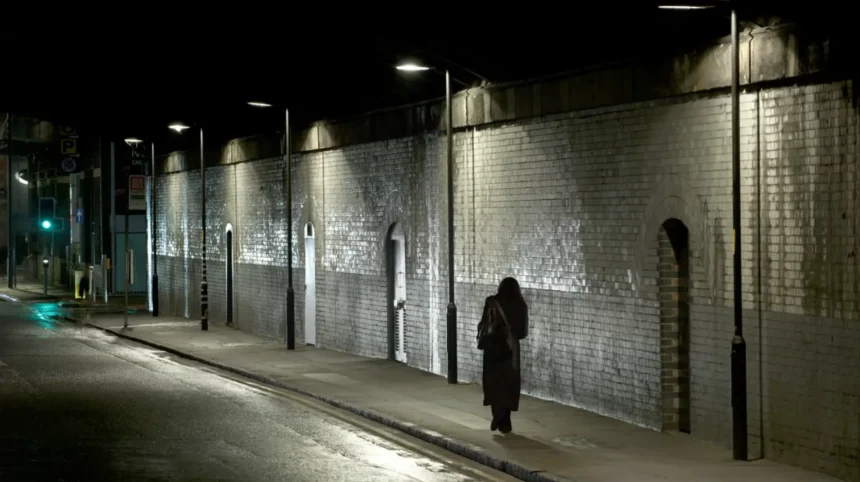
Women and girls in South London should be able to get home, meet friends and use public spaces after dark without fear, yet many still change routes, speed up their pace or avoid certain streets altogether. The issue is not just about crime; it is also about lighting, transport, busy public spaces, harassment and whether people feel they will be believed if they report abuse.
London-wide data and campaigning show how common that unease is. Research cited by organisations working on violence against women found that one in two women felt unsafe walking alone after dark in a quiet street near home, and one in two felt unsafe in a busy public place, compared with lower levels among men. Reports gathered through the Met’s StreetSafe system also show that many concerns are linked to poor lighting, lack of CCTV, harassment and hotspots around town centres and transport hubs.
For South London, those anxieties are especially relevant around stations, late-night bus routes, high streets and the edges of busy nightlife areas. Places such as Croydon, Brixton, Clapham, Peckham, Lewisham and Wimbledon all have strong evening economies, but the journey from train platform or bus stop to front door can still feel vulnerable when streets thin out, lighting fades or anti-social behaviour rises.
The policy response in London has moved in the right direction, but it remains uneven. The Mayor’s Women’s Night Safety Charter is built around reporting, response, responsibility and redesign, with the aim of making public spaces safer and more usable for women and girls. It encourages better staff training, clearer routes for reporting harassment, and design changes that make places easier to navigate and less intimidating after dark.
That matters for South London because safety is often decided in small but practical ways: whether a bus stop is well lit, whether there is a staffed venue nearby, whether a shortcut is isolated, and whether transport runs frequently enough to avoid long waits. A safer night-time environment is not only about enforcement; it is also about planning, active frontages, clear sightlines and streets that stay busy enough to deter harassment.
Councils in London have started to treat women’s safety as a design and licensing issue as well as a policing issue. Westminster’s “After Dark” strategy, for example, pairs better lighting and CCTV with tougher licensing expectations and a zero-tolerance approach to predatory behaviour. South London boroughs could take a similar approach by focusing on station approaches, bus interchanges, town-centre side streets and the routes women most commonly used to travel home.
For South London, the question is no longer whether women and girls should feel safe after dark, but whether the streets, stations and night-time spaces they use are finally designed to make that a reality.