Key Points
- Southwark Council confirmed it took possession of Fatima Jabbe-Bio’s two-bedroom council flat in Walworth this week following a year-long investigation
- Fatima Jabbe-Bio, the first lady of Sierra Leone, had lived in the taxpayer-subsidised home for more than a decade but left London in 2018 when her husband Julius Maada Bio was elected president
- The couple now resides in a lavish presidential lodge in Freetown featuring a swimming pool, tennis court, and helipad, along with other luxury properties
- Ms Jabbe-Bio retained tenancy of the south London flat, claiming it was used by her children who are all British citizens
- In a BBC interview last month, Ms Jabbe-Bio defended holding the flat, stating “I’m paying for my council house myself. I have not committed any crime”
- Records show Ms Jabbe-Bio has been listed on the tenancy since 2007 and continued being the tenant after relocating to Sierra Leone in 2018
- An OCCRP investigation published in May 2025 revealed Bio, her mother, and half-brothers spent over $2.1 million on at least 10 real estate purchases in Gambia
- The UK’s Organized Crime and Corruption Reporting Project (OCCRP) and The Times jointly published revelations about Bio’s continued council flat rental
- Southwark Council’s eligibility rules for social housing require tenants to use properties as their primary residence
- Southwark alone has over 18,000 households on its housing waiting list, with average waits exceeding five years for council homes
- Former Alliance Democratic Party Chairman Mohamed Kamarainba condemned the situation as “morally and completely wrong”
- APC politician Sylvia Blyden defended Jabbe-Bio’s occupancy, stating paying full rent does not violate legal or ethical standards
- Neighbors claim Jabbe-Bio visited the London flat as recently as late 2024, and her daughter collects mail addressed to the First Family
- The controversy intensified as the First Family faces allegations of ties to Dutch drug trafficker Jos Leijdekkers, who married President Bio’s daughter Agnes
- A British lawmaker has urged Southwark Council to launch an investigation into the tenancy after Bio publicly admitted continued use
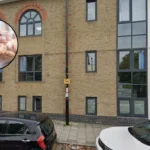
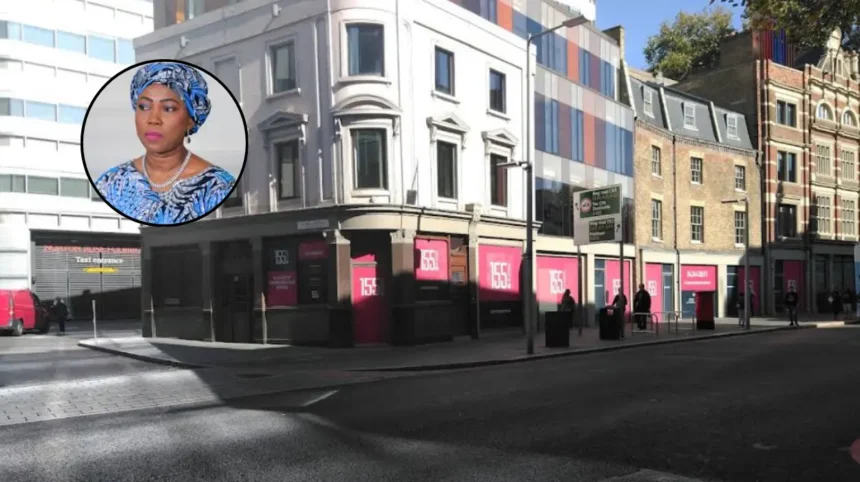
Walworth (South London News) June 11, 2026 – Southwark Council has taken possession of Fatima Jabbe-Bio’s two-bedroom council flat in Walworth this week, ending more than a decade of tenancy by the first lady of Sierra Leone following a year-long investigation into the property’s eligibility status.
- Key Points
- Why does the first lady of Sierra Leone continue to hold tenancy of a London council flat while residing in a presidential palace?
- How does the first lady’s luxury property portfolio in Africa compare to her retained council flat in London?
- What are Southwark Council’s eligibility rules for social housing and why does the first lady’s tenancy violate them?
- How has the British public and political community reacted to the first lady retaining a council flat amid London’s housing crisis?
- What additional controversy surrounds the First Family beyond the council flat issue?
- What action has a British lawmaker taken regarding the first lady’s council flat tenancy?
- Background of the Development
- Prediction: How This Development Can affect South London Residents Waiting for Council Housing
The council confirmed it had taken possession of the taxpayer-subsidised property after determining Jabbe-Bio no longer met eligibility requirements for social housing. As reported by the London Evening Standard, Ms Jabbe-Bio had lived in the flat for more than a decade but left the capital in 2018 when her husband, Julius Maada Bio, was elected president of Sierra Leone.
Why does the first lady of Sierra Leone continue to hold tenancy of a London council flat while residing in a presidential palace?
Ms Jabbe-Bio retained the tenancy on the south London flat after relocating to Sierra Leone, claiming the property was used by her children. As reported by BBC in their “Global Women” series interview last month, she stated:
“My children are all British citizens. I’m paying for my council house myself. I have not committed any crime”.
The former model and actress, who moved into the council flat in Southwark in 2007, said she had “not committed any crime” by continuing to rent the property where she has been listed on the tenancy since 2007. She told the BBC that her children now live in her Southwark flat.
However, records show Ms Jabbe-Bio has continued to be listed as the tenant of the modest two-bedroom council flat since 2007, despite leaving London in 2018 when her husband became president. Southwark council confirmed that the flat has had the same tenant since 2007, indicating that Jabbe-Bio continues to rent the property.
How does the first lady’s luxury property portfolio in Africa compare to her retained council flat in London?
The couple now shares a lavish presidential lodge in Freetown, complete with swimming pool, tennis court, and helipad, as well as other luxury properties. This contrasts sharply with the taxpayer-subsidised two-bedroom flat in Walworth that Ms Jabbe-Bio retained.
An investigation by the Organized Crime and Corruption Reporting Project (OCCRP), published jointly with The Times in May 2025, revealed that since President Julius Maada Bio assumed office in April 2018, his wife Fatima Bio along with close relatives have acquired multiple luxury properties in The Gambia.
As reported by OCCRP, the purchases included four properties purchased by Fatima Bio herself and a $500,000 villa registered under her mother’s name.
Sale records and other documents obtained by reporters showed the properties included villas, beachfront apartments, and a four-storey apartment building, plus development of a 70-bedroom hotel. All together, the relatives spent just over $2.1 million on at least 10 real estate transactions between 2020 and 2024.
Notably, a prominent Sierra Leonean government contractor was involved in signing key documents for three of the property purchases, including the villa owned by the first lady’s mother.
The first family has not provided explanations regarding the funding sources for these real estate investments.
Further scrutiny reveals that Fatima Bio has received substantial government funds during her tenure as first lady. Reports indicate she received nearly Le30 billion (approximately US$3 million) in direct government funds between June 2018 and December 2020, despite Sierra Leone’s finance laws prohibiting the first lady from receiving public funds for personal initiatives.
What are Southwark Council’s eligibility rules for social housing and why does the first lady’s tenancy violate them?
Southwark Council’s eligibility rules for social housing require tenants to use the property as their primary residence. As reported by Mohamed Kamarainba, former Chairman of the Alliance Democratic Party (ADP), the situation contravenes these rules.
Kamarainba described the situation as “morally and completely wrong,” citing Southwark Council’s eligibility rules which require tenants to use properties as their primary residence.
The UK’s social housing regulations require such properties to be a tenant’s primary residence, raising concerns about potential breaches.
Neighbors claim Jabbe-Bio has visited the London flat as recently as late 2024, and her daughter has been seen collecting mail addressed to the First Family. This is the south London council flat in the name of Sierra Leone’s first lady that’s been empty for three years despite her claiming her children live there, according to records.
How has the British public and political community reacted to the first lady retaining a council flat amid London’s housing crisis?
The revelation has prompted uproar on social media, and rightly so, according to Hugo Timms, a staff writer at spiked. Timms wrote that Bio doesn’t live in London any more but in a sumptuous palace in Freetown, yet still holds on to a property whose rents are subsidised by the British taxpayer.
Meanwhile, London’s social-housing waiting list is at a 10-year high. Across the capital, nearly half of social housing—48 per cent—is occupied by a head of household who wasn’t born in the UK, well above the national average of 19 per cent. In areas like Westminster, this is as high as 59 per cent.
More grating still, 35 per cent of those heads of household who are foreign-born and in social housing in London are either unemployed or economically inactive. In other words, a non-negligible proportion of social housing in the most prosperous, expensive areas is allocated to those not from the UK who do not contribute to the UK.
In Sierra Leone, Mohamed Kamarainba has condemned the first lady for continuing to occupy the taxpayer-subsidized council flat despite owning multiple luxury properties in Africa.
The arrangement has drawn criticism amid London’s severe housing crisis—Southwark alone has over 18,000 households on its waiting list, with average waits exceeding five years for council homes.
However, the criticism has drawn pushback from supporters of the First Lady. APC politician Sylvia Blyden defended Jabbe-Bio’s occupancy in a Facebook post, stating that paying full rent for a flat does not violate any legal or ethical standard especially not for a British citizen. Blyden insisted:
“There is no moral or criminal lapse in doing so. No one knows tomorrow”.
What additional controversy surrounds the First Family beyond the council flat issue?
The controversy has intensified as the First Family faces separate allegations of ties to Dutch drug trafficker Jos Leijdekkers. As reported by multiple sources, Leijdekkers reportedly shifted his cocaine operations to Sierra Leone and has been seen with President Bio’s associates.
Jos Leijdekkers, known as “Bolle Jos” or “Chubby Jos,” is a 33-year-old Dutch national wanted since 2023, convicted of smuggling over 1,000 kg of cocaine valued at €50 million. He evaded capture by relocating to Sierra Leone, marrying Bio’s daughter Agnes in early 2024, and integrating into the president’s inner circle.
The meeting between Netherlands Prime Minister Dick Schoof and President Bio was particularly heated because Bio is also the father-in-law of the Netherlands’ most wanted criminal.
Dutch officials view this as state-sponsored protection for a major European drug trafficker, potentially affecting Sierra Leone’s international aid and cooperation.
Explore More Southwark Council News
NatWest T20 Blast 2014 Cricket Finals Announced: Southwark 2026
Greens Surge as Southwark Council Faces No Overall Control 2026
What action has a British lawmaker taken regarding the first lady’s council flat tenancy?
A British lawmaker has urged Southwark Council to launch an investigation into the tenancy of Sierra Leone’s First Lady after she publicly admitted she is holding onto a taxpayer-subsidized apartment designed for the city’s most vulnerable residents. As reported by OCCRP, this call for investigation came more than a year following the exposure by investigative journalists.
London, 25 May 2026 — A British Member of Parliament has called on Southwark Council to launch an investigation into the tenancy of Sierra Leone’s First Lady, Fatima Bio, after she publicly admitted to retaining a subsidised two-bedroom council flat in the borough more than a year following its exposure.
The controversy first erupted in May 2025 when OCCRP, in collaboration with The Times, revealed that Bio continued to hold the tenancy of the Southwark flat despite moving into the presidential palace in Freetown in 2018.
Background of the Development
Fatima Jabbe-Bio, a former Nollywood actress and model, moved to London in the early 2000s after escaping an attempted child marriage at age 13 in Sierra Leone. She arrived in London in 1996 at age 16 and slogged away in film and modelling before moving into the council flat in Southwark in 2007.
She lived in the flat until 2018, when she returned to Sierra Leone with her husband Julius Maada Bio after he was elected president.
Records indicate Jabbe-Bio has held the tenancy since at least 2007, though she relocated to Sierra Leone in 2018. She registered to vote at the two-bedroom council flat in Southwark several times since 2009.
Prior to 2018, Fatima Bio and her family had modest financial means, making the scale of her subsequent property acquisitions particularly striking. The revelations about Bio’s use of council housing were first published jointly by OCCRP and The Times in May 2025 as part of OCCRP’s investigation into the first lady’s acquisitions of high-end properties in Gambia.
The UK’s international welfare state has faced criticism for allowing foreign heads of state’s wives to retain council housing.
In October 2023, The Times revealed that Muhammad Qassem Sawalha, a high-ranking member of Hamas, owns a two-storey council house with a garden in north London, bought with help from a £112,000 ‘right to buy’ discount from Barnet Council.
Prediction: How This Development Can affect South London Residents Waiting for Council Housing
This development can significantly affect South London residents waiting for council housing in several ways. The immediate impact is that the two-bedroom flat in Walworth will now become available for allocation to households on Southwark’s waiting list, which currently exceeds 18,000 households.
For residents currently waiting, this represents one property among thousands on the waiting list. With average waits exceeding five years for council homes in Southwark, the release of this flat may provide relief to a single family but does not substantially address the borough’s housing crisis.
The council has assured that over 100 newly built homes will be added to the system in coming months, amid very high demand and desperately short supply.
The controversy may also strengthen public support for stricter eligibility enforcement. Southwark Council’s new annual lettings policy, introduced amid high demand, means they can offer homes directly to persons or families alongside the bidding system, making direct allocations to those in temporary accommodation with young children. This precedent could lead to more rigorous monitoring of tenant eligibility across the borough.
However, the development may also increase scrutiny on foreign tenants in social housing. With 48 per cent of social housing across London occupied by foreign-born heads of household, this case could fuel debates about allocation priorities. Residents may face increased verification requirements for their residence status and primary residence claims.
The political fallout could also influence future housing policy. As Hugo Timms wrote, the first lady’s Southwark council flat confirms that the UK’s welfare state is fundamentally broken, especially when it comes to social housing.
This perception may lead to policy reforms affecting all social housing tenants, potentially making the application and maintenance process more restrictive for everyone.