Key Points
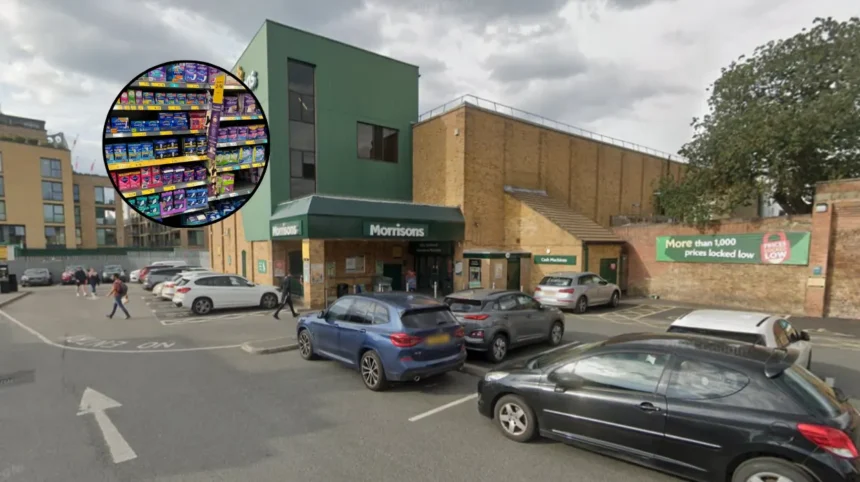
- A comprehensive review of grocery options across Croydon has identified Morrisons as the borough’s premier choice for supermarket shopping.
- Croydon, the largest London borough by population, functions visually and economically as a self-contained “city within a city,” demanding robust retail infrastructure.
- Consumer assessments focused heavily on the product range, quality of fresh counters, competitive pricing models, and specific store navigation layouts.
- Competitive analyses from regional journalists highlight that Morrisons holds a distinct advantage in specialised services, notably its dynamic Market Street fresh food counters.
- Budget comparison data indicates that while German discounters remain highly competitive on core essentials, Morrisons balances value through selective price-matching initiatives and promotional loyalty schemes.
- Industry analysts note that ongoing infrastructure projects and cost-of-living constraints are reshaping customer footfall patterns within the major commercial sectors of South London.
Croydon (South London News) June 12, 2026 — As reported by retail analysts and investigative journalists at regional media titles including MyLondon, consumers in the London Borough of Croydon have evaluated major grocery chains, with Morrisons emerging at the forefront of the area’s retail choices. Writing for MyLondon, Content Editor Matt Spivey noted that the compounding cost-of-living crisis across the capital has forced residents to scrutinise everyday outgoings, transforming grocery selections into a major financial consideration.
- Key Points
- What Makes Croydon’s Grocery Market Uniquely Competitive?
- How Does Morrisons Compare Directly to Discounter Competitors?
- When Are the Best and Worst Times to Shop in Croydon?
- Background of the Supermarket Sector in Croydon
- Prediction: How This Trend Will Affect Croydon Shoppers
- 1. Intensified Price War Dynamics
- 2. Shifts in Footfall Patterns and High Street Impact
- 3. Supply Chain Adaptations to the Cost-of-Living Emergency
Data compiled across the borough reveals that the massive Morrisons superstore situated at Fiveways on Purley Way achieves the highest balance of product variety, specialised service execution, and logistics management, rendering it the benchmark for regional competitors.
What Makes Croydon’s Grocery Market Uniquely Competitive?
To comprehend how Morrisons secured this leading position, it remains necessary to evaluate the specific demographic footprint of the region. Local reporters frequently observe that Croydon operates virtually as its own distinct city within a city, populated by a dense, diverse commuter demographic that requires a vast retail infrastructure to maintain daily supply chains.
The retail landscape is split between massive outer-centre superstores along the Purley Way commercial corridor and smaller, urban express formats within the central high streets. Because footprint dynamics vary dramatically, shoppers penalise retailers that offer restrictive layouts or limited stock depth.
The primary Morrisons location at Fiveways benefits from an expansive footprint featuring specialized internal butcheries, fishmongers, and a prominent scratch bakery, allowing it to function as a one-stop destination that discounter formats struggle to match in sheer variety.
How Does Morrisons Compare Directly to Discounter Competitors?
In a systematic pricing tracking assessment executed by Matt Spivey of MyLondon, journalists scoured the supermarket aisles across London to evaluate which brands offered the maximum savings on foundational grocery items.
The investigation tracked five basic daily essentials—bread, milk, toilet roll, and standard pantry staples—comparing mid-tier supermarkets directly against German discounters Lidl and Aldi.
The tracking data revealed that the total cost for baseline essential items hovered within a tightly constrained window of between £5 and £8 across all assessed networks.
However, the exact pricing breakdown showed that minor adjustments in baseline selections yield noticeable shifts:
- Discounter Margins: Aldi and Lidl maintained the absolute lowest entry-price configurations for basic white bread loaves and standard semi-skimmed milk containers.
- The Mid-Tier Gap: The baseline basket at Morrisons was initially calculated as roughly £1.54 more expensive than its cheapest discounter equivalent when evaluating standard middle-tier house brands.
- The Savers Intervention: The analytical reporting noted that when Morrisons’ budget-focused “Savers” range is actively integrated into the basket selection, the pricing discrepancy between the mid-tier giant and the discount chains effectively evaporates.
Consequently, while discounters present an automated low-cost basket, Morrisons requires savvy shopping methods from consumers but rewards them with significantly deeper product depth and brand variations that cannot physically fit onto discounter shelves.
When Are the Best and Worst Times to Shop in Croydon?
Footfall management has emerged as another core metric determining consumer satisfaction within Croydon’s busy retail ecosystem. In an operational study compiled by the editorial team at MyLondon, analysts investigated the peak operating hours and optimal shopping intervals across the major chains, including Tesco, Asda, Aldi, Lidl, and Morrisons.
The data gathered explicitly from the Croydon branches indicates distinct consumer traffic waves:
“The quietest days across the London stores, including the major Croydon installations, occur consistently during the mid-week brackets of Tuesday and Wednesday,” the MyLondon shopping analysis details. “For those seeking to avoid congested aisles and depleted shelves, the absolute optimum time to execute a grocery shop is strictly before 10:00 am.”
Conversely, the data underscores that Saturday afternoons generate severe logistical friction at the Fiveways node, with parking lot wait times and check-out queues peaking between 12:00 pm and 4:00 pm.
Morrisons has mitigated this by preserving a generous two-hour maximum free parking window at its Purley Way site, an operational asset that local commuters cite as a deciding factor over central town stores where parking fees apply.
Background of the Supermarket Sector in Croydon
The evolution of Croydon’s retail sector is deeply tied to post-war urban development and the rise of the Purley Way as a primary industrial and retail bypass. During the late 20th century, as Croydon’s population expanded to position it as London’s most populous borough, major grocery syndicates targeted the region for experimental mega-formats.
The site at Fiveways became a critical commercial hub, drawing shoppers from central Croydon, Purley, Shirley, and South Croydon.
Over the past decade, the rapid expansion of discount retailers Aldi and Lidl altered local market shares, prompting mid-market majors like Morrisons, Sainsbury’s, and Tesco to restructure their service propositions. Morrisons specifically relied on its corporate identity as a northern-born fresh food specialist, launching its “Market Street” format to preserve an experiential advantage over pure value-driven automation.
This preservation of skilled counter service (live butchers and fishmongers) alongside aggressive price-matching with discounters represents the modern defensive strategy of mid-market retail survival in working-class London hubs.
Explore More Croydon News
Croydon Man Sold Fighter Jets to War Zones – Croydon, 2026
Croydon Lottery Winner Risks Losing £120,000 | Croydon 2026
Prediction: How This Trend Will Affect Croydon Shoppers
This development is anticipated to trigger several direct socio-economic shifts that will structurally affect Croydon’s diverse consumer base, local retail employment, and transport logistics.
1. Intensified Price War Dynamics
As Morrisons consolidates its reputation as the top-tier balanced choice, direct competitors—particularly the nearby Asda on Beddington Lane and local Lidl branches—will likely introduce localized promotional mechanisms.
For the Croydon shopper, this means an escalation in hyper-local vouchers, fuel-perk syndicates, and rapid adjustments to targeted loyalty applications like the “Morrisons More” matrix. Shoppers willing to split their loyalty will capture maximum value as mid-market operators fight to stop discounter defection.
2. Shifts in Footfall Patterns and High Street Impact
With the Purley Way out-of-town format proving highly successful due to infrastructure conveniences like free parking and vast stock capacity, central Croydon high-street retailers face a structural migration of middle-class capital to the periphery.
This could accelerate the conversion of central urban grocery spaces into smaller, premium convenience formats (such as Morrisons Daily or Little Tesco installations), changing the accessibility of complete, affordable food baskets for residents without private vehicles.
3. Supply Chain Adaptations to the Cost-of-Living Emergency
As grocery expenditure remains a focal point for household budgets, Morrisons’ reliance on its “Savers” inventory will expand. Analysts predict that shelf allocations within the Croydon store will increasingly tilt toward high-volume budget lines rather than premium tiers.
This ensures that lower-income demographics within the borough can continue to access large-format stores without facing premium price premiums, helping preserve food security stability across South London.
To see a practical breakdown of food shops in the UK, you can view this Morrisons Grocery Haul Video, which offers a first-hand look at the product selections and no-cook meal components available within a standard UK store footprint.