A Belfast stabbing and the disorder that followed have shaken the city, but the facts so far point to a criminal attack first and a wave of unrest second. Police say a 30-year-old man has been charged with attempted murder after a “brutal” knife assault in north Belfast left Stephen Ogilvy critically injured and reportedly losing an eye.
According to police and BBC reporting, the attack took place on Monday evening in north Belfast. The suspect, identified in reporting as Hadi Alodid, appeared before Belfast Magistrates’ Court and was remanded in custody on an attempted murder charge. Police have also said the man arrested at the scene is believed to be Sudanese.
The victim’s injuries were severe, and the case quickly became the focus of local and national attention because of the scale of the violence and the speed with which rumours spread online.
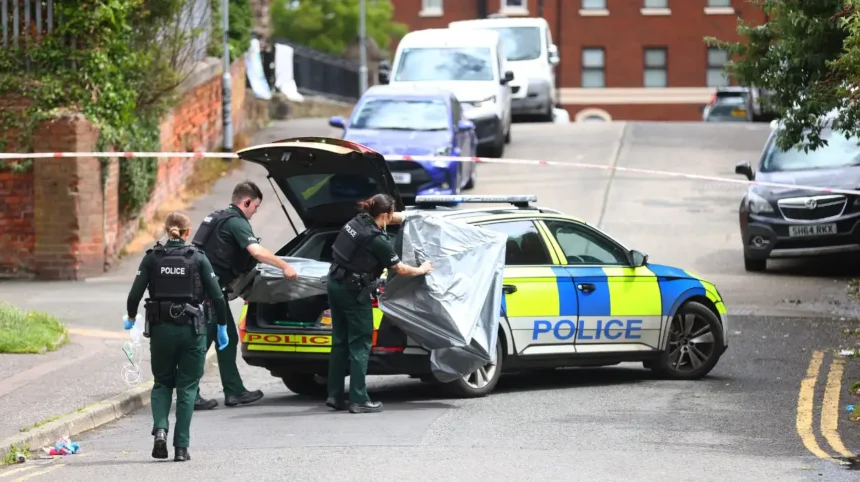
In the hours and days after the stabbing, Belfast saw serious disorder, including fires set to homes and vehicles, and clashes with police. BBC reporting says extra officers were deployed, public transport closed early, and police used water cannon to disperse crowds as unrest continued into a second night.
Northern Ireland Secretary Hilary Benn said 12 police officers were injured and 16 people were arrested during the second night of violence. That figure underlines how quickly a single violent crime escalated into wider public disorder.
The victim’s family has urged calm, saying “unrest is not welcome” and that peaceful protest is the only acceptable response. That message matters, because it draws a clear line between concern about the attack and the criminality of rioting, arson, and intimidation.
The case has also reignited debate about migration, public safety, and how online misinformation can fuel tensions before the facts are established. At the same time, police reporting and court action show the legal process is still ongoing, so any broader political claims should be treated cautiously until the case is fully heard.