
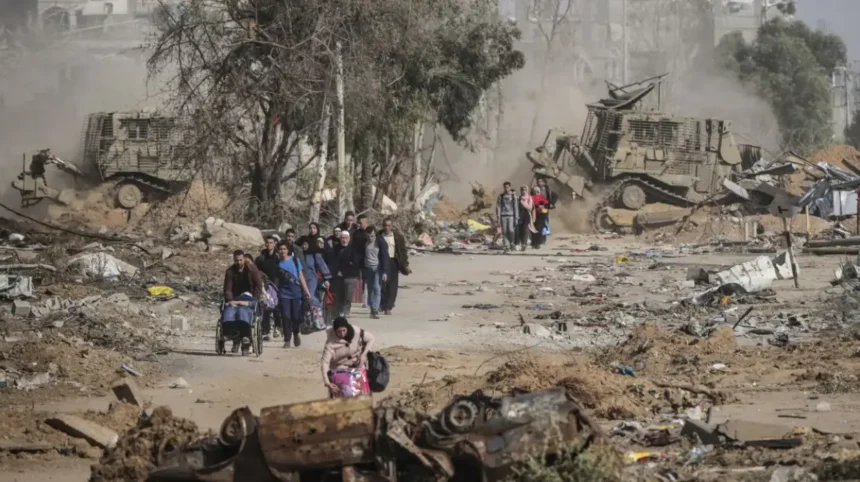
For much of late 2023 and early 2024, images and updates from Gaza dominated international headlines, sparked protests around the world and fuelled intense political debate. Yet more than two years into the war, some media observers and press freedom organisations are asking whether the world’s attention has shifted and whether the shrinking flow of information from inside Gaza is partly to blame.
The concern comes as Gaza has become the deadliest conflict ever recorded for journalists, according to the Committee to Protect Journalists (CPJ), while foreign reporters remain largely unable to enter the territory independently.
CPJ said at least 260 journalists and media workers had been killed by April 2026, the overwhelming majority of them Palestinians. Earlier figures published by the UN human rights office found at least 247 Palestinian journalists had died by August 2025. Although the totals differ because they were compiled at different times, both point to an unprecedented toll on the profession.
“The number of journalists killed in Gaza is without precedent in modern conflict,”
press freedom advocates have repeatedly warned.
The losses have prompted concerns extending beyond the media industry itself. Rights organisations argue that when journalists are killed, detained or prevented from reporting freely, the public’s ability to understand what is happening inside a war zone also suffers.
Since the start of the conflict in October 2023, foreign journalists have largely been barred from entering Gaza independently. Limited visits have taken place under Israeli military escort, but more than 30 international news organisations and press freedom groups have called for unrestricted access, arguing that independent reporting is essential to verifying events on the ground.
Reporters Without Borders (RSF) has described the restrictions as unprecedented and has repeatedly called for foreign correspondents to be granted access. The organisation has also filed complaints with the International Criminal Court over the deaths of Palestinian journalists.
As a result, much of the reporting from Gaza has fallen to local journalists, many of whom have continued working despite repeated displacement, shortages of food and fuel and the loss of family members and colleagues.
Among those killed was journalist Mohammed Samir Washah, whose death in April 2026 was reported by CPJ. Al Jazeera later said the attack brought the number of its journalists and media workers killed since the war began to 12.
UN bodies have also raised concerns. UNESCO condemned the killing of six journalists in Gaza in August 2025 and called for transparent investigations, while the office of UN Secretary-General António Guterres said reports that the journalists had been deliberately targeted should be independently examined.
Israel has repeatedly denied deliberately targeting journalists and says its military operations are aimed at Hamas. Israeli authorities have argued that restrictions on foreign media access are necessary for security reasons and to protect military operations.
Yet for many advocates of press freedom, the issue goes beyond the deaths themselves. They argue that the combination of mounting casualties among local reporters and restrictions on outside access risks creating what some have described as an “information blackout”, making it increasingly difficult for the international community to independently verify events inside the enclave.
Media analysts note that public attention naturally shifts over time as conflicts become prolonged and other global crises emerge. Russia’s invasion of Ukraine, tensions involving Iran and Israel, and domestic political developments across Europe and the United States have all competed for space on front pages and television bulletins.
But press freedom organisations warn that the decline in visibility should not be mistaken for an end to the suffering or the fighting.
“The absence of headlines does not mean the absence of a story,”
they argue. For journalists and rights groups, the question is not simply why conversations about Gaza have become quieter. It is whether the people documenting the war are disappearing faster than the world is able to hear them.
And as the conflict enters its third year, they say, ensuring that reporters can work safely and independently may prove just as important as the information they bring back.