Key Points
- Four organisations shortlisted: Hackitt CIC, Liquid Listening, RUSS (Rural Urban Synthesis Society), and Turner Works have been selected by Lewisham Council to advance to the next stage of the restoration process for the historic Ladywell Playtower.
- Community involvement: The council received feedback from over 500 residents through a public survey, which has helped shape the evaluation of potential proposals.
- Process transparency: While the council has announced the four bidders, it has withheld specific details of their proposals to ensure a “fair and robust” process as bidders move into the detailed submission phase.
- Failed previous attempts: This new search follows the collapse of a previous agreement with developer Guildmore, whose plans to convert the site into a cinema and housing stalled due to funding and market pressures.
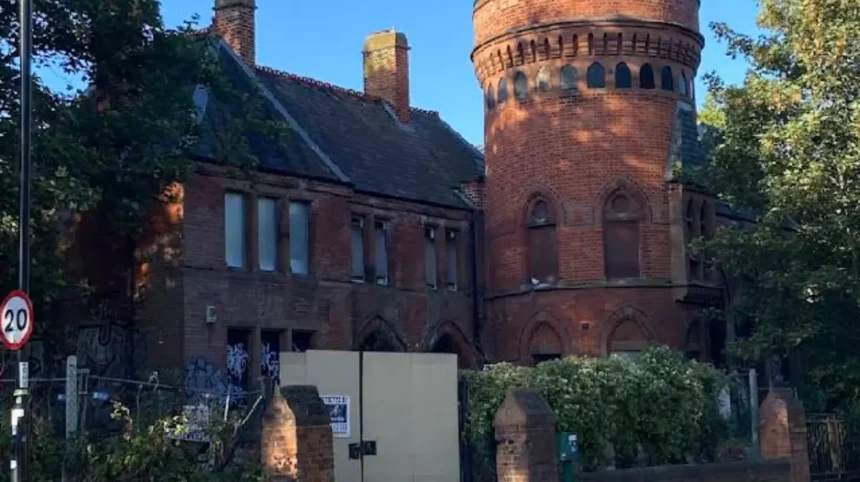
- Heritage status: The building, a Grade II-listed Victorian bathhouse dating back to 1884, is currently on Historic England’s “Heritage at Risk” register, suffering from extensive neglect and structural decline.
- Future steps: Public consultation will occur over the summer of 2026, where residents will have the opportunity to review the final two options before a decision is reached.
Ladywell (South London News) June 15, 2026 – Lewisham Council has officially moved into the next phase of its efforts to secure the future of the Ladywell Playtower, confirming that four organisations have been shortlisted to act as potential partners for the site’s restoration. The council announced the selection of Hackitt CIC, Liquid Listening, RUSS (Rural Urban Synthesis Society), and Turner Works following an expression of interest process aimed at finding a viable long-term use for the derelict, Grade II-listed landmark located on Ladywell Road.
Who are the four groups selected to lead the restoration?
The shortlisted organisations represent a diverse range of specialisations, each offering distinct approaches to the building’s future.
As reported by Dorothy Stein of Salamander News, Hackitt CIC is a social enterprise founded in late 2023 that focuses on remediation, engineering design, and accessible interior organisation for individuals with disabilities and mental health challenges.
Liquid Listening, another of the selected bidders, is a charity established in 2010. According to Ladywell Live, the organisation specialises in musical hydrotherapy and training for staff in special schools, utilising aquatic environments to assist children with profound disabilities.
RUSS (Rural Urban Synthesis Society), a well-known community land trust in the borough, is also on the shortlist.
As noted in reports by Ladywell Live, RUSS is recognised for its sustainable, community-led housing projects, such as the Church Grove site, and aims to create affordable, low-carbon environments.
The fourth bidder, Turner Works, is a London-based architecture and design studio. Salamander News notes that the firm is known for its focus on adaptable, community-driven spaces, micro-planning, and urban regeneration, including recent work on Lewisham Council’s Thomas Lane Yard development in Catford.
What is the next stage in the procurement process?
The council has emphasised the need for transparency, yet it has opted to keep the specific details of these four proposals confidential for the time being. As stated in an official announcement from Lewisham Council, this is to ensure the process remains “fair and robust” while bidders prepare their more comprehensive submissions.
During this next phase, the selected organisations will be required to submit detailed works schedules, delivery strategies, timescales, and long-term business plans. According to London Now, the council is seeking a proposal that is not only “deliverable” and “financially viable” but also deeply aligned with local priorities identified through community engagement.
Councillor Daniel Dream, the Cabinet Member for Inclusive Regeneration and Planning, stated, as quoted by the official Lewisham Council news portal,
“Working with my new Ladywell ward councillors, we’ll make sure local people are right at the heart of what happens next, so it becomes a place we can all feel proud of for generations to come.”
Following the submission of these detailed plans, the council intends to narrow the field down to two final options.
As reported by Dorothy Stein of Salamander News, a public consultation is scheduled for the summer of 2026, allowing residents to weigh in on these final contenders before a definitive partner is chosen.
Why is this development significant for the Ladywell Playtower?
The progress marks a shift for the site, which has been vacant for more than two decades. The Ladywell Playtower, originally named Ladywell Baths, opened in 1884 as a public bathhouse.
Its distinctive Gothic Revival architecture, including its prominent red-brick cylindrical tower, remains a local landmark.
However, the building’s history has been marred by disrepair. Following its closure as a community centre in 2004 and significant fire damage in 2006, the building was placed on Historic England’s “Heritage at Risk” register.
Previous efforts to secure its future, most notably a 2017 deal with Guildmore to transform the site into a four-screen cinema and housing, were rescinded by the council in 2025.
According to Building Design, the previous project collapsed because the developer was unable to secure the necessary funding amidst rising construction costs and a challenging housing market.
Background of the particular development
The Ladywell Playtower represents a complex piece of Victorian civic heritage. Built in 1884, it functioned as one of the country’s first public swimming pools, serving a population that largely lacked indoor bathing facilities in their own homes.
The architectural design, attributed to Wilson, Son and Aldwinkle, features a “Venetian Gothic” style that was highly fashionable for public institutions of the era.
Beyond the main pool halls, the site historically included offices, changing rooms, and living quarters for the staff responsible for operating the building’s boilers.
The site also includes the Ladywell Coroners Court and Mortuary buildings, which are likewise listed at Grade II. While these structures are separate, their proximity makes them part of the broader civic heritage of the area.
Over the last 20 years, the building has suffered from vandalism, water ingress, and the aftermath of a major fire in 2006, which destroyed the rear pool hall. While the council conducted roof repairs in 2012, the structure has remained a point of local concern due to its decaying state.
The current search for a partner is the latest in a series of efforts to balance the preservation of the historic fabric with the modern need for a financially sustainable community use.
Explore More Lewisham Council News
Green Party wins Lewisham Council and mayoral race, Lewisham 2026
Greens Oust Labour in Historic Council Election Landslide, Lewisham 2026
Prediction: How will this development affect local residents and the community?
For the residents of Ladywell and the wider Lewisham borough, this new phase of the restoration process brings both renewed hope and a requirement for continued vigilance.
In the short term, the primary impact will be an increase in public engagement opportunities. With the council’s commitment to public consultation in the summer of 2026, local residents will move from being observers to active participants in the design selection.
As reported by Ladywell Live, there is a high level of community interest, evidenced by the 500+ residents who contributed to the initial feedback survey. The outcome will likely determine whether the site remains a community-focused asset or transitions into a commercial-led venue, a tension that has defined previous failed attempts to renovate the site.
From a socio-economic perspective, the selection of one of these four groups—whether it be a community-led organisation like RUSS or a design-focused studio like Turner Works—will dictate the long-term utility of the building.
If a successful partner is selected, it could resolve the “at-risk” status of a key local landmark, potentially acting as a catalyst for further footfall and economic activity in the Ladywell Road area. Conversely, should the process face further delays, the building will continue to deteriorate, posing a risk that the historic structure could eventually reach a point of no return where restoration becomes prohibitively expensive or structurally impossible.
The community’s influence, exerted through the upcoming consultation phases, will be the decisive factor in whether the eventual partner aligns with local needs or faces the same hurdles as previous developers.