Key Points
- Southwark Council has repossessed a two-bedroom social housing flat in Walworth, South London, previously rented by Fatima Jabbe-Bio, the First Lady of Sierra Leone.
- The recovery follows a comprehensive 12-month investigation by the local authority’s Housing Investigations Team regarding principal residency rules.
- Conservative peer Lord Jamieson has urged government ministers to clarify regulations regarding social housing eligibility for foreign public office holders and their spouses, suggesting a limitation to British citizens.
- Under standard UK local authority tenancy agreements, council properties must serve as the tenant’s primary or principal residence, with a mandatory notification required for absences exceeding 42 days.
- Mrs Jabbe-Bio has strongly defended her tenancy, stating she paid the rent herself, committed no crime, and maintained the home for her children, who hold British citizenship.
- Southwark Council currently faces severe housing pressures, with more than 18,000 households on its social housing waiting list and approximately 4,000 families placed in temporary accommodation.
Walworth (South London News) June 18, 2026 — In a significant development drawing international attention to London’s strained social housing sector, Southwark Council has taken formal possession of a two-bedroom municipal flat in Walworth linked directly to the First Lady of Sierra Leone, Fatima Jabbe-Bio. The decisive action by the local authority follows a meticulous 12-month probe into the property’s occupancy status and has triggered immediate political ramifications in Westminster. Highlighting the broader policy implications, Conservative peer Lord Jamieson has formally petitioned government ministers to review and tighten rules surrounding social housing allocations, recommending that taxpayer-subsidised council properties be legally restricted to British citizens to prevent foreign dignitaries from maintaining local tenancies while living abroad.
- Key Points
- Why Did Southwark Council Repossess the Walworth Property?
- What Statements Have Been Issued by Local Government Officials?
- How Has the First Lady of Sierra Leone Responded to the Investigation?
- What Are the Legislative Demands Facing the UK Government?
- Background of the Walworth Tenancy Development
- Prediction: How This Development Affects London Housing Applicants and Eligible Tenants
Why Did Southwark Council Repossess the Walworth Property?
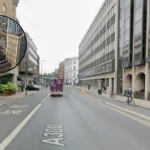
The legal repossession of the municipal flat on a residential street in Walworth comes amid intensified scrutiny over the utilisation of public housing stock across the capital.
As reported by the Sierra Leone Telegraph, the tenancy held by Mrs Fatima Jabbe-Bio has been the subject of persistent local and national investigation since her connection to the property was first brought to light.
As documented by journalists at The Times, voter registration records indicate that Mrs Jabbe-Bio had registered to vote at the South London address multiple times since 2009. Municipal authorities subsequently confirmed that the specific tenancy agreement had been consistently held under the same name since 2007. However, administrative guidelines enforced by Southwark Council demand that all social housing units must remain the “only or principal home” of the designated tenant.
According to an investigative report compiled by Business Insider Africa, standard council frameworks dictate that tenants must formally notify their housing officer if they intend to be absent from their property for a continuous period exceeding 42 days. Local neighbours interviewed during the initial media inquiries indicated that the First Lady was rarely seen at the premises following her husband’s ascension to power.
What Statements Have Been Issued by Local Government Officials?
In an official public declaration following the conclusion of the municipal inquiry, Councillor Reginald Popoola, Southwark Council’s executive member for council homes, detailed the outcome of the local authority’s actions. As recorded by the Press Association and the BBC, Councillor Popoola stated:
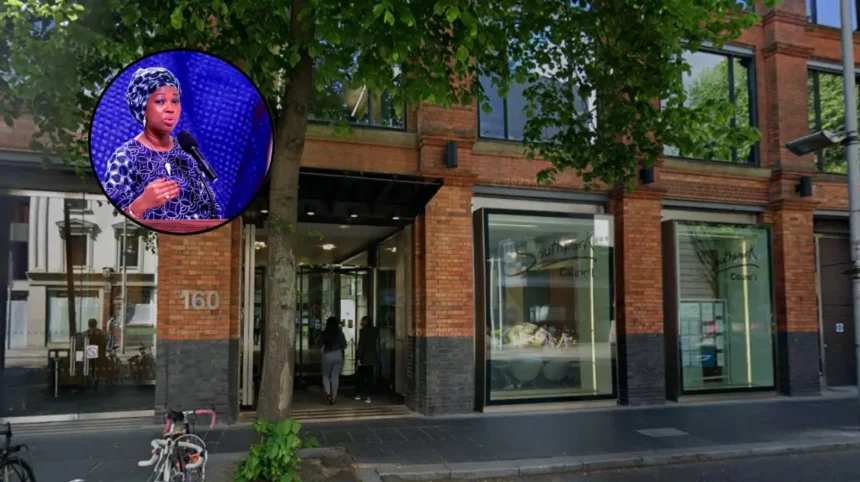
“We can confirm we have taken possession of a property in Walworth following a 12-month investigation by our housing investigations team. I look forward to bringing this council property back to its original purpose which is to provide a safe and secure home for people with legitimate housing need on the council’s waiting list.”
Councillor Popoola further emphasised that the recovered flat would be reallocated immediately, adding that
“this property will be swiftly allocated to a local family in genuine housing need.”
Crucially, as clarified by BBC News, Southwark Council has maintained a strict legal neutrality throughout the process.
The local authority has explicitly stated that the First Lady was not subject to a forcible eviction, nor has the borough council alleged any form of criminal wrongdoing or fraudulent misrepresentation against her.
The recovery is framed strictly as an administrative enforcement of tenancy conditions relating to primary residency.
How Has the First Lady of Sierra Leone Responded to the Investigation?
Mrs Fatima Jabbe-Bio, 46, has robustly defended her actions and rejected any implications of administrative or legal impropriety.
Her husband, Julius Maada Bio, has served as the President of Sierra Leone since 2018, requiring the family to reside predominantly at the Presidential Lodge in Freetown—a state residence featuring expansive grounds, tennis courts, and a helipad.
In a recent broadcast interview conducted by the BBC Global Women program, Mrs Jabbe-Bio addressed the ongoing controversy surrounding her British social housing asset directly. Speaking to the broadcaster, Mrs Jabbe-Bio stated:
“My children are all British citizens. I’m paying for my council house myself. I have not committed any crime.”
The First Lady, who originally arrived in the United Kingdom as a 16-year-old asylum seeker in 1996 after fleeing a forced marriage before establishing a successful career as an actor, model, and film producer, maintained that her financial contributions to the property were fully up to date.
Following the formal announcement of the property’s repossession by Southwark Council, journalists from the Guardian contacted Mrs Jabbe-Bio’s official office in Freetown for an updated response. A spokesperson responded on her behalf, stating:
“I am not aware of this report and I am afraid I am not in a position to comment with a response.”
What Are the Legislative Demands Facing the UK Government?
The cross-border nature of the housing dispute has prompted senior political figures to demand comprehensive structural adjustments from central government ministers.
Leading the legislative critique, Conservative peer Lord Jamieson has used the development to challenge current statutory definitions regarding eligibility for state-subsidised accommodation.
Lord Jamieson has formally called upon the Ministry of Housing, Communities and Local Government to explicitly clarify the parameters governing council housing access for foreign public office holders and their respective spouses.
The peer is advocating for a definitive legislative overhaul that would strictly limit social housing eligibility to British citizens, arguing that the current system allows for an unsustainable exploitation of limited local authority resources by wealthy international figures who maintain substantial properties in their home countries.
Background of the Walworth Tenancy Development
The administrative repossession of the Walworth flat marks the culmination of a multi-year debate regarding the intersection of international diplomacy, asylum history, and local government accountability.
Mrs Fatima Jabbe-Bio’s connection to the borough of Southwark spans nearly two decades, commencing long before her husband achieved the presidency in West Africa.
After securing legal status in the United Kingdom during the late 1990s, she was allocated the municipal property in 2007 under standard homelessness and vulnerability metrics.
She resided continuously in the South London district until 2018, when her domestic circumstances altered fundamentally upon her husband winning the Sierra Leonean presidential election.
The case gained significant momentum following an extensive investigation by The Times, which highlighted the stark contrast between a taxpayer-subsidised, two-bedroom flat in an expensive London market—where private rent for a comparable property exceeds £2,300 per month and purchase values hover around £385,000—and the luxury of the presidential estate in Freetown.
The development coincides with an aggressive, borough-wide crackdown on tenancy non-compliance within Southwark. Facing unprecedented demand, the local authority has significantly expanded its Housing Investigations Team.
According to data released by Southwark Council, the borough has successfully recovered 107 council properties over the past 24 months through targeted audits, indicating that the investigation into the First Lady’s residence was part of a wider systematic effort to reclaim empty or sublet social housing stock.
Prediction: How This Development Affects London Housing Applicants and Eligible Tenants
This development is anticipated to significantly accelerate policy shifts and enforcement mechanisms across London’s local authorities, directly impacting thousands of applicants currently on social housing waiting lists, as well as existing tenants with international ties.
For the 18,000 households currently waiting for housing within Southwark alone, and the 4,000 families confined to temporary accommodation, this high-profile recovery serves as an immediate catalyst. It will likely pressure municipal leaders to redirect more funding toward investigative housing teams, resulting in a faster turnover of non-compliant properties and shortening wait times for local families in genuine, acute need.
For existing social housing tenants and future applicants, the political intervention spearheaded by Lord Jamieson is highly likely to result in tighter statutory guidance from the central government. Tenants can expect:
- Stricter Residency Audits: Local authorities will implement more rigorous cross-checks of voter registries, border entry-exit logs, and utility usage to verify that the council flat remains the tenant’s “principal home.”
- Tightened Absence Regulations: The enforcement of the 42-day absence rule will become much more stringent, leaving less room for administrative leniency for individuals who split their time between the UK and nations abroad.
- Potential Legislative Restrictions: If the pressure from Westminster materialises into law, future eligibility criteria may be altered to introduce stricter nationality or permanent-residency thresholds, fundamentally changing how social housing resources are distributed across multicultural urban centers.