Key Points
- Esther Lie, a Green Party candidate, won the Lewisham council seat in the Crofton Park ward by-election with 1,340 votes
- Lie narrowly defeated Labour’s Alex Brooks, who came second with 1,330 votes — a margin of just 10 votes
- The by-election was triggered because the elected member became mayor of the council and cannot hold both positions
- Ahead of Thursday’s vote, Lie apologised for a 2013 tweet referring to Indian men having “rapey grins”
- The now-deleted tweet from 2013 read: “Almost fancied the Indian guys at the swimming pool yesterday. Despite their thick prickly torsos and rapey grins”
- Lie stated the tweet was made 13 years ago “in response to a particular event that had happened to me whilst backpacking as a young person” and “wasn’t ever meant for public consumption”
- She explained the post “reflects the lack of constructive spaces for people facing sexual assault at the time” and apologised, saying “It is clearly inappropriate and I apologise”
- Lie deleted the tweet several years ago before it resurfaced ahead of the by-election
- The Crofton Park ward is located in Lewisham, South London
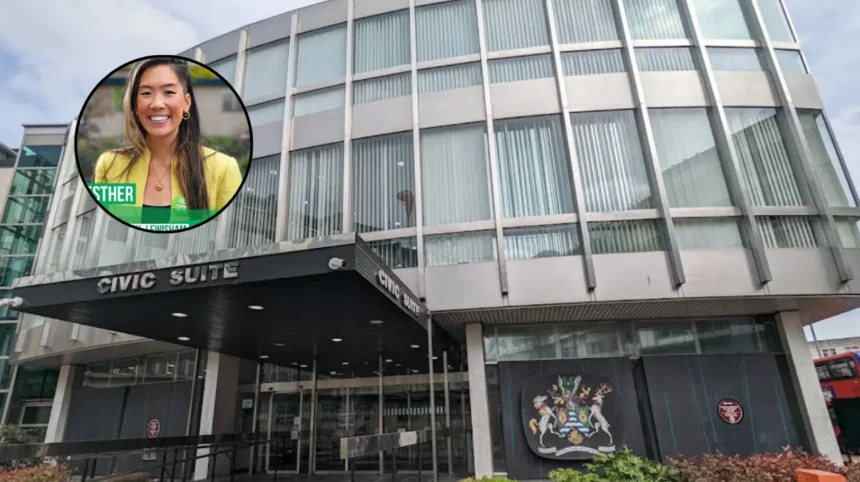
Lewisham (South London News) June 20, 2026 –A controversial Green Party candidate has narrowly won a London council by-election despite facing significant backlash over previous posts on social media, marking a dramatic conclusion to the Crofton Park ward contest in Lewisham.
- Key Points
- Why Did the Crofton Park Ward By-Election Take Place in Lewisham?
- How Did Esther Lie Respond to the Backlash Over Her 2013 Social Media Post?
- What Campaign Message Did Esther Lie Promote During the By-Election?
- How Close Was the Vote Between Lie and Labour’s Alex Brooks?
- What Does This Victory Mean for the Green Party in Lewisham?
- Background of the Development: The 2013 Tweet and Apology Timeline
- Prediction: How This Development Can affect South London Voters and the Green Party’s Future in Lewisham
Esther Lie secured the Lewisham council seat with 1,340 votes — just 10 more than Labour’s Alex Brooks, who came in second place — according to results announced following Thursday’s election.
The extraordinarily narrow margin underscores the contentious nature of Lie’s campaign, which was overshadowed for much of the week by controversy surrounding an old social media post.
As reported by the journalist covering the story for the London Evening Standard, Lie’s victory came despite widespread criticism of her 2013 tweet that referred to Indian men having “rapey grins”.
The post, which had been deleted several years prior, resurfaced ahead of the by-election and sparked accusations of racism and inappropriate language.
Why Did the Crofton Park Ward By-Election Take Place in Lewisham?
The by-election was called because the previously elected member was elected mayor of the council and cannot hold both positions simultaneously, according to official election information. This administrative requirement forced residents in the Crofton Park ward to return to the polls to select their new council representative.
Crofton Park is a ward within the London Borough of Lewisham, located in South London. The ward has been a focal point for political engagement as Lewisham residents “sent a clear message” in May that they want “politics that actually works for them,” according to the Lewisham Green Party’s candidate introduction video.
How Did Esther Lie Respond to the Backlash Over Her 2013 Social Media Post?
Ahead of standing in the Crofton Park ward in Lewisham on Thursday, Esther Lie issued a formal apology for the now-deleted tweet from 2013. In her statement, Lie explained the context surrounding the controversial post.
As reported by the journalist for the London Evening Standard, Ms Lie said:
“This tweet was made 13 years ago, in response to a particular event that had happened to me whilst backpacking as a young person — and wasn’t ever meant for public consumption”.
She further explained that she “deleted it several years ago”
Lie provided additional context about the underlying circumstances, stating:
“It reflects the lack of constructive spaces for people facing sexual assault at the time”.
She concluded her apology with a direct acknowledgment:
The tweet itself, from 2013, read:
“Almost fancied the Indian guys at the swimming pool yesterday. Despite their thick prickly torsos and rapey grins”.
The language used in the post, particularly the term “rapey grins,” drew immediate criticism when it resurfaced ahead of the election.
What Campaign Message Did Esther Lie Promote During the By-Election?
Despite the controversy, Lie maintained her campaign focus on environmental and community issues. In a campaign video from the Lewisham Green Party, the message emphasized Lewisham’s political transformation:
“Lewisham made history in May. Residents across this borough sent a clear message: they want politics that actually works for them”.
The party’s campaign materials highlighted Lie’s experience, stating:
“With over 10 years working with communities for climate justice, Esther brings an incredible amount of energy and professional experience that will help build a fairer, greener Lewisham”.
Campaign messaging on social media urged voters:
“On Thursday the 18th of June, vote Esther Lie, your Green candidate for Crofton Park. Let’s keep building a fairer, greener Lewisham”.
How Close Was the Vote Between Lie and Labour’s Alex Brooks?
The election results reveal an extraordinarily tight contest. Esther Lie’s 1,340 votes represented only a 10-vote margin over Labour’s Alex Brooks, who received 1,330 votes.
This razor-thin victory demonstrates how the controversy may have significantly impacted voter turnout and preferences, yet ultimately failed to prevent Lie’s election.
The six candidates who ran in the Crofton Park by-election included representatives from multiple parties, though Lie and Brooks emerged as the front runners in the final count.
What Does This Victory Mean for the Green Party in Lewisham?
Lie’s victory represents a significant achievement for the Green Party in Lewisham, where the party appears to be gaining ground following the political developments in May.
The London Evening Standard reported that the candidate’s win occurred
“despite backlash over previous posts on social media,”
highlighting the unusual nature of this electoral success.
The Green Party’s campaign messaging suggested that Lewisham residents are seeking alternative political representation, with the party positioning itself as the voice for “politics that actually works”.
Background of the Development: The 2013 Tweet and Apology Timeline
The controversy surrounding Esther Lie’s election stems from a social media post made in 2013, when Lie was backpacking as a young person.
The tweet, which referred to Indian men having “rapey grins” while at a swimming pool, was deleted by Lie several years before the 2026 by-election.
The timeline of events unfolded as follows:
- 2013: Lie posted the original tweet containing the controversial language about “rapey grins”
- Several years before 2026: Lie deleted the tweet, removing it from public view
- May 2026: The tweet resurfaced ahead of the Crofton Park ward by-election, sparking backlash
- Early June 2026: Lie issued a formal apology, acknowledging the tweet was “clearly inappropriate”
- June 4, 2026: The London Evening Standard published coverage of Lie’s apology
- June 18, 2026: Thursday’s by-election took place, with Lie winning the seat
- June 2026: Election results announced, confirming Lie’s 10-vote victory over Labour
Lie’s apology statement, reported by the London Evening Standard, connected the tweet to her experience of sexual assault while backpacking, explaining it “reflects the lack of constructive spaces for people facing sexual assault at the time”.
Explore More Lewisham Council News
Lewisham’s 18 Green Flag Parks Win International Awards: Lewisham 2026
Four Groups Shortlisted to Save Historic Ladywell Playtower, London 2026
Prediction: How This Development Can affect South London Voters and the Green Party’s Future in Lewisham
Esther Lie’s narrow victory in the Crofton Park ward by-election, despite significant controversy over her 2013 social media post, signals several potential developments for South London voters and the Green Party’s political trajectory in Lewisham.
For South London voters in Lewisham, this result suggests that environmental and climate justice concerns may outweigh controversy in certain electoral contexts. Lie’s campaign emphasised her “10 years working with communities for climate justice”, and her victory indicates that voters prioritised this experience over the backlash.
This could influence how future candidates in South London boroughs approach their campaigns, potentially focusing more heavily on policy credentials and community experience rather than исключительно avoiding past controversies.
The Green Party’s position in Lewisham appears strengthened by this result. The party’s messaging that “Lewisham made history in May” and that residents want “politics that actually works for them” gained electoral validation.
Lie’s victory, even by just 10 votes, demonstrates the Green Party’s growing viability in South London boroughs where traditional party dominance may be shifting. This could encourage the Green Party to invest more resources in Lewisham and neighbouring South London wards for future elections.
For future by-elections and council contests in South London, Lie’s win suggests that voters may be increasingly willing to support candidates with strong environmental credentials despite personal controversies.
The razor-thin margin (10 votes) indicates that the controversy significantly impacted the result, but did not prevent victory. This dynamic could make future campaigns in South London more focused on policy substance while requiring candidates to address past controversies more directly and quickly.
The result also raises questions about voter attitudes toward social media accountability in South London. Lie’s explanation that the tweet reflected “the lack of constructive spaces for people facing sexual assault at the time” appears to have resonated with enough voters to secure victory.
This could influence how future candidates in South London boroughs frame their responses to past social media posts, potentially emphasizing contextual understanding over simple apologies.
For Labour Party strategists in South London, losing the Crofton Park seat by just 10 votes represents a significant warning. The narrow margin suggests Labour needs to strengthen its environmental messaging and community engagement in Lewisham to prevent further Green Party gains in South London boroughs.