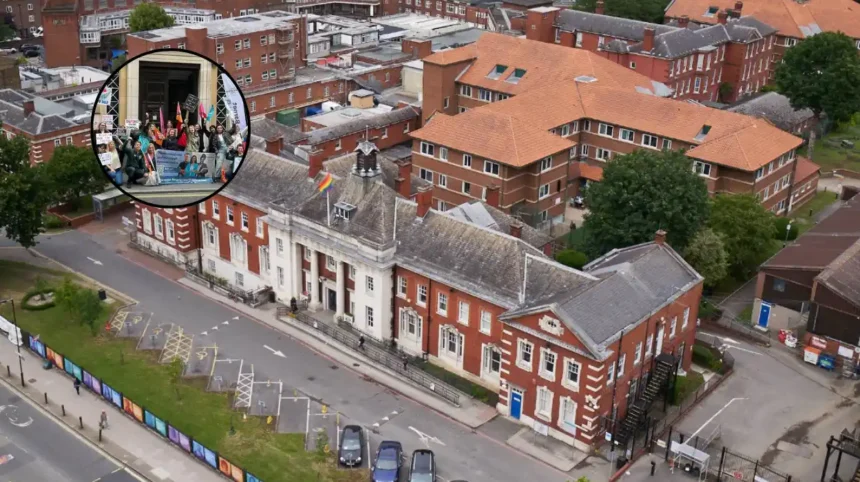
Key Points
- Strike Ballot Initiated: Estates and maintenance staff at South London and Maudsley NHS Foundation Trust are voting on whether to take strike action over deep-seated pay disparities.
- Two-Tier Workforce Alleged: The dispute centres on workers performing identical roles—such as joiners, electricians, plumbers, and painters—being placed on different NHS Agenda for Change pay bands ranging from Band 3 to Band 5.
- Decades of Disparity: Some affected staff members have reportedly remained on Band 3 rates for up to 25 years while working alongside colleagues receiving Band 5 pay for the same duties.
- Widespread Hospital Disruption Looming: If the strike is approved, maintenance and estates services will face severe disruption across four major healthcare facilities: Bethlem Royal, Lambeth, Lewisham, and Maudsley hospitals.
- Ballot Timeline: The voting process administered by Unite the Union is scheduled to run from its commencement through to its closing date on 6 July.
South London (South London News) June 23, 2026 – Estates and maintenance services across multiple south London hospitals face severe operational disruption as trade union members vote on potential strike action. Unite, the United Kingdom’s leading trade union, confirmed that a formal industrial action ballot is underway for tradespeople employed by the South London and Maudsley NHS Foundation Trust. The dispute stems from an internal pay grading system that workers argue has created a “two-tier workforce” within the trust’s estates department. This ballot places considerable pressure on hospital management to resolve long-standing pay disparities before the voting period concludes early next month.
- Key Points
- Why are South London and Maudsley NHS Estates Staff Balloting for Strike Action?
- What is the Stance of Union Leadership and Management on the Dispute?
- Which Healthcare Facilities Will Be Affected by the Maintenance Strike?
- Background of the South London and Maudsley Pay Grading Dispute
- Prediction: How This Development Can Affect Patients and Local Communities
The ballot involves essential maintenance staff, including hospital joiners, electricians, plumbers, painters, and decorators, who are responsible for the physical upkeep, safety, and operational readiness of the trust’s clinical environments.
According to union structural data, these workers are currently split across different NHS Agenda for Change pay scales, ranging from Band 3 to Band 5, despite frequently fulfilling identical job specifications and carrying matching operational responsibilities.
Why are South London and Maudsley NHS Estates Staff Balloting for Strike Action?
The core catalyst for the industrial dispute is the significant variance in basic pay for personnel doing the exact same manual and technical work. Union documentation reveals that several workers have been kept on a Band 3 salary grading despite performing the same tasks as colleagues positioned on Band 5.
In the most severe instances highlighted by labor representatives, staff members have occupied these lower-tier bands for up to 25 years without receiving upward regrading, leading to substantial cumulative financial deficits for long-serving employees.
As reported by senior communications officer Ryan Fletcher of Unite the Union, the structural discrepancies inside the department have led directly to widespread anger and structural division among the workforce. The union maintains that a failure by the trust’s human resources and estates leadership to standardize pay grades based on job function, rather than historic contract placements, left them with no alternative but to move toward formal industrial action.
What is the Stance of Union Leadership and Management on the Dispute?
National and regional union leaders have placed the responsibility for the potential disruption entirely on the administrative decisions of the NHS trust. As reported by general secretary Sharon Graham of Unite the Union,
“The band differences within the trust’s estates department are totally unacceptable – people doing the same job need to be paid the same wage. These workers have their union’s full support.”
Graham’s statement underscores a national union policy targeting structural pay inequalities inside public sector frameworks.
Local negotiations have apparently stalled, leading to the formalization of the ballot. As reported by regional officer Maz Ebrahim of Unite the Union,
“These workers do not want to strike but are being forced to ballot for industrial action because of the trust’s creation of a two-tier workforce. Staff feel undervalued and unappreciated. Strikes can still be avoided but that will require the trust giving these workers equal pay.”
Which Healthcare Facilities Will Be Affected by the Maintenance Strike?
Should the workforce vote in favor of a strike, the operational impact will be felt heavily across four primary healthcare hubs in the south London region.
The trust utilizes a centralized and site-specific estates team to manage complex medical infrastructure, which will be compromised if walkouts proceed.
The locations facing direct maintenance service suspensions are:
- Bethlem Royal Hospital: A sprawling psychiatric facility requiring continuous environmental management.
- Lambeth Hospital: Dependent on round-the-clock emergency plumbing and electrical coverage.
- Lewisham Hospital: Where estates teams support acute healthcare infrastructure alongside mental health wings.
- Maudsley Hospital: The historic psychiatric institution and central hub for the trust’s clinical operations.
During any periods of industrial action, routine repairs, environmental upgrades, structural maintenance, and non-emergency compliance checks are expected to cease entirely, creating a backlog of facilities management tasks.
Background of the South London and Maudsley Pay Grading Dispute
The financial tensions at the South London and Maudsley NHS Foundation Trust sit within a broader historical context involving the NHS ‘Agenda for Change’ pay structure. Introduced nationally in 2004, the Agenda for Change framework was designed to ensure harmonized pay scales and equal pay for work of equal value across the entire National Health Service. Under this system, jobs are supposed to be evaluated using a standardized job evaluation scheme to place roles accurately into bands 1 through 9.
However, local implementations have frequently led to variations, particularly within estates and facilities departments.
Over the last two decades, as hospital trusts faced tightening capital and operational budgets, many relied on historical job descriptions to keep staff on lower bands such as Band 3 (generally reserved for routine tasks under supervision) while gradually expanding their daily responsibilities to mirror those of Band 4 or Band 5 technical specialists (who work autonomously on complex electrical, plumbing, and structural systems).
This slow drift in responsibilities without a corresponding re-evaluation of pay bands has caused repeated friction throughout the NHS network.
In the case of the South London and Maudsley estates department, the retention of staff on lower pay bands for up to a quarter of a century indicates a prolonged systemic failure to conduct mandatory job matching and regrading reviews, ultimately culminating in the current collective labor dispute.
Explore More Local South London News
German Kraft Brewery Revives Historic Model Market in Lewisham 2026
Green Candidate Esther Lie Wins Controversial Lewisham By-Election Crofton Park 2026
Prediction: How This Development Can Affect Patients and Local Communities
The progression of this ballot toward active strike action will directly impact patients, clinical staff, and the broader south London community through a decline in hospital environment efficiency. For patients residing in or visiting Bethlem Royal, Lambeth, Lewisham, and Maudsley hospitals, the withdrawal of estates labor means that non-essential ward repairs, heating and ventilation adjustments, and lighting fixes will experience severe delays.
In mental health facilities, maintaining a calm, safe, and fully functional physical environment is a core component of clinical care; physical deterioration of wards due to unresolved maintenance issues can escalate patient stress levels and impact overall recovery environments.
For clinical staff, including doctors and nurses, the absence of electricians, plumbers, and joiners means they will have to manage deteriorating workplace conditions, potentially forcing the temporary closure of specific hospital rooms or treatment bays if minor infrastructure failures cannot be legally or safely repaired.
For the local community, while emergency “life and limb” maintenance cover will legally be maintained during a strike, the inevitable accumulation of backlogged repairs could delay broader facility modernization projects.
If the dispute is prolonged, it may result in increased operational costs for the trust as they attempt to draft in expensive external contractors to handle critical systems failures, diverting vital financial resources away from local frontline clinical services.