
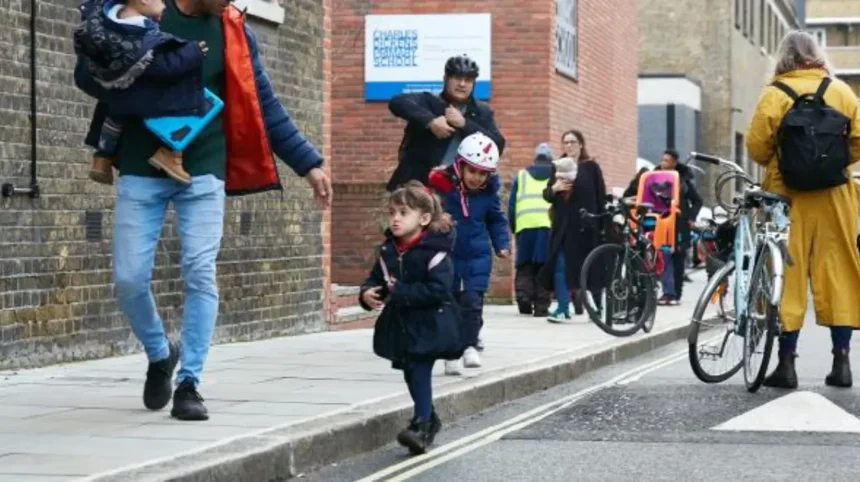
Residents across Southwark are welcoming efforts to improve road safety, with local authorities continuing to introduce measures aimed at reducing traffic-related injuries and making streets safer for pedestrians and cyclists.
The initiatives form part of broader efforts across London to encourage active travel while improving safety for vulnerable road users, particularly children, older residents, and people with disabilities.
Recent road safety improvements in parts of the borough have included traffic calming measures, pedestrian crossings, cycle-friendly infrastructure, and adjustments to street layouts designed to reduce vehicle speeds.
For many residents, the changes are about more than transport. They are about everyday safety.
“I walk my grandchildren to school every morning, and the slower traffic has made a noticeable difference,”
said local resident Sarah Thompson during a recent community consultation.
“Parents feel more comfortable crossing the road, and drivers seem more aware of pedestrians.”
Road safety remains a key concern across London. According to Transport for London, excessive speed continues to be one of the leading factors contributing to serious road traffic collisions.
Southwark Council has stated that its long-term goal is to reduce injuries and create streets that are safer and more accessible for everyone.
Councillor James McAsh, Cabinet Member for Clean Air, Streets and Waste, previously highlighted the importance of designing streets around people rather than vehicles.
“Safer streets help support healthier communities,”
he said.
“When residents feel safe walking or cycling, they are more likely to make active travel part of their daily lives.”
Community organisations have also welcomed the changes, arguing that safer streets can improve public health while helping to reduce air pollution and congestion.
However, not all residents are convinced that the measures go far enough.
Business owner Ahmed Rahman, who operates a small shop near one of the affected routes, believes additional improvements may still be needed.
“The changes are positive, but there are still areas where drivers speed during busy periods,”
he said.
“Many residents would like to see stronger enforcement alongside the infrastructure improvements.”
Transport specialists often point to the relationship between street design and behaviour, noting that road layouts can significantly influence driving speeds and pedestrian safety.
Public health advocates have similarly argued that safer streets can encourage more walking and cycling, helping residents incorporate physical activity into their daily routines.
As Southwark continues to invest in road safety programmes, residents will be watching closely to see whether the measures lead to long-term reductions in collisions and injuries.
For many local people, the goal is straightforward: creating neighbourhoods where children can travel to school safely, older residents can move around confidently, and communities can enjoy public spaces without fear of traffic-related harm.