
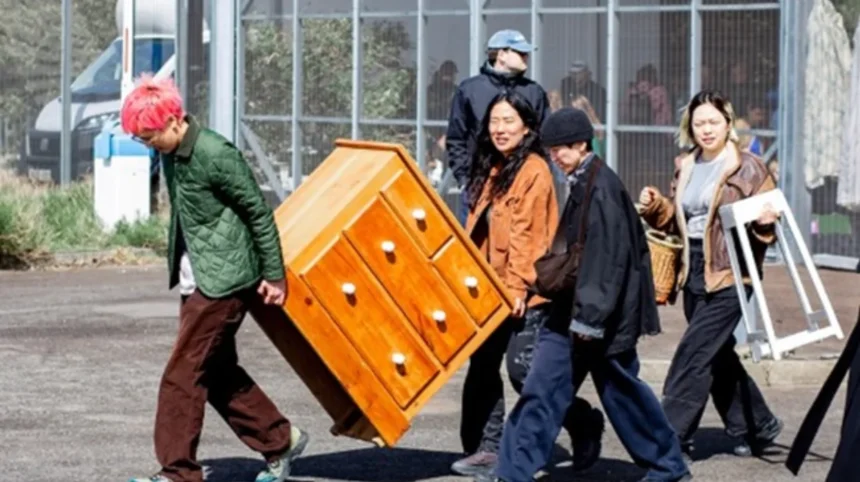
Before most shops have raised their shutters, queues are already forming outside Hackney Flea Market. Once a fixture of a particular kind of thriftiness, it has quietly become one of the more revealing sites of contemporary culture. The timing is not coincidental. As fast fashion faces its most sustained period of scrutiny, from regulatory to environmental, the second-hand market has expanded well beyond charity shops and online resale platforms. Physical flea markets, antique fairs and car boot sales are seeing a surge in both vendor applications and footfall, and the demographic driving that surge is getting younger.
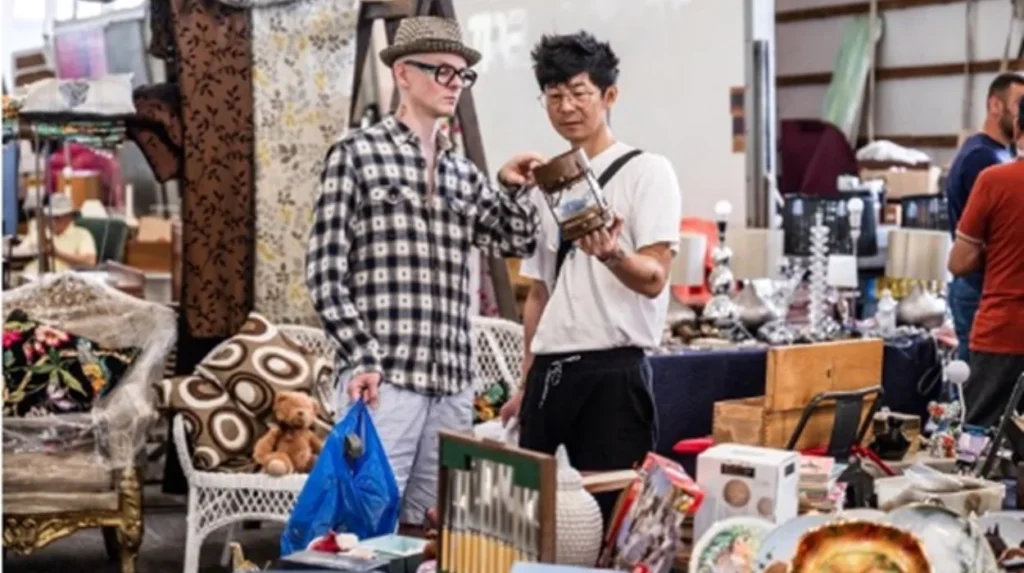
Mark Farhall, founder of Hackney Flea Market, has watched the shift happen in real time.
“One of the biggest changes we’ve seen is that our customers are getting younger,”
he says.
“For younger generations, buying second-hand feels completely natural. There isn’t the stigma that may have existed in the past around purchasing used items. Instead, it’s seen as a more interesting, affordable and sustainable way to shop.”
That normalisation has been accelerated, Farhall argues, by social media, not simply as a marketing channel but as an educational one. Platforms like TikTok and Instagram have given rise to a genre of content dedicated to the art of the genuine find, sourcing trips, restoration projects, before-and-after upcycles. The result is a generation that arrives at a flea market not just willing to buy pre-owned, but equipped with the knowledge to assess, repair and reimagine what they find.
“There are countless videos showing how to re-upholster furniture, restore vintage finds, repair clothing or upcycle household objects. As a result, people are increasingly confident about buying items with a bit of history and giving them a new life.”
This is a meaningful distinction. The appeal of flea markets for this demographic is not purely aesthetic, it is participatory. Buying something worn or imperfect and making it functional again is an act of ownership in a way that unboxing something new, wrapped in tissue paper, rarely is. It would be easy, and not entirely wrong, to frame the flea market revival as a direct response to the crisis in fast fashion. The UK‘s extended producer responsibility legislation is now in effect, placing new obligations on brands to account for the waste their products generate; Shein and Temu face growing regulatory and public pressure. The environmental cost of overproduction is, at this point, widely understood, and people are not idly standing by. Although, we are careful not to reduce the trend to a single motivation. “I think it’s a combination of both,” he says of the question of whether shoppers are driven by ethics or economics.
“Price is certainly a factor, particularly given the current cost of living, but many shoppers are also making a conscious decision to buy more sustainably.”
What makes the flea market particularly interesting is that it collapses the usual tension between the sustainable and the desirable. Choosing to buy second-hand does not, in this context, require sacrifice.
“The great thing about flea markets is that sustainable shopping doesn’t feel like a compromise. People can often buy better quality items, spend less money and find something unique that nobody else has. The environmental benefit is an added bonus rather than the sole motivation.”
This framing matters. Consumer behaviour research consistently shows that sustainability alone is rarely sufficient to change purchasing habits at scale. The flea market works precisely because it bundles the ethical with the economic, the principled with the pleasurable. The immense rise of resale platforms like Vinted, Depop and eBay’s vintage categories has reshaped the second-hand economy in ways that are still being understood. They have undeniably widened the market, introducing millions of users to the idea that pre-owned goods are a legitimate and even desirable first choice. Although, the physical and digital experiences are not substitutes for one another. At a market, you are able to handle the item, learn about its history, its material directly; this human connection cannot be so easily replicated – it is as much about the selling as it is about the human connection being forged.
Hackney Flea was recently featured in Popeye magazine as part of a wider piece on the global rise of flea markets. What is striking about this is the consistency across cities, whether photos in London or Tokyo the crowds eager and engaged searching mirrored each other. The flea market has become, in a sense, a shared international language for a particular kind of consumer dissatisfaction with the mainstream.Perhaps the most enlightening thing about a market like Hackney Flea is the vast plethora of what it contains. A trading floor that spans generations, backgrounds and price points, sellers who have been buying and dealing for over fifty years alongside young entrepreneurs specialising in Y2K fashion and upcycled pieces; house-clearance traders offering everyday items cheaply alongside established antique dealers handling rare and valuable objects.
“Flea markets aren’t exclusive, creative spaces. They’re one of the few retail environments where people from different generations, backgrounds and budgets come together around a shared love of finding something unexpected.”
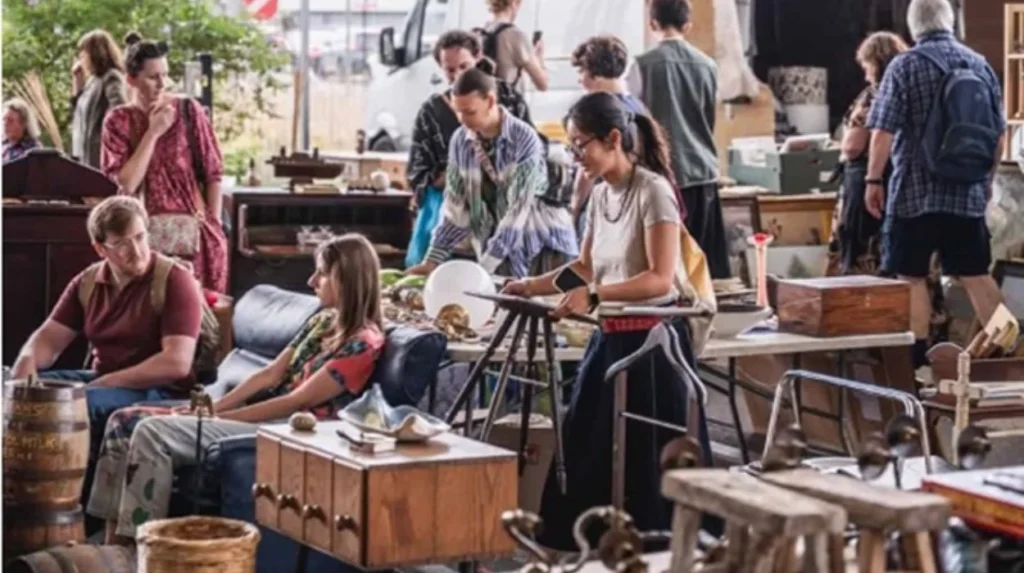
This is where the flea market diverges sharply from its more curated cousin, the vintage boutique, and from the algorithmically assembled resale apps. It is not optimised nor targeted. The encounter with an object, and with the person who has carried it this far, is contingent in a way that feels, at this particular cultural moment, almost profound. Whether the flea market revival represents a durable shift in how we consume, or whether it will eventually be absorbed into the marketing language of the very industry it implicitly critiques, remains an open question. What is harder to dispute is that, for now, these markets are doing something that most retail spaces stopped doing a long time ago, bringing people together around objects that have already lived one life, fighting fast-fashion one sale at a time.