Key Points
- A Change.org petition opposing a new Gail’s bakery branch next to Brixton Tube station has gathered more than 1,000 signatures.
- The boutique bakery chain submitted planning proposals to Lambeth Council to take over a vacant commercial site at 439 Brixton Road.
- Local residents and business owners have expressed concerns regarding gentrification, rising costs, and corporate uniformity on the high street.
- The public consultation period yielded 30 formal objections and one comment in support on the local authority’s planning portal.
- Small business operators within transport hubs, including Old Roots Café and the former Brixton News stand, report facing severe financial pressures and rent increases from Transport for London (TfL).
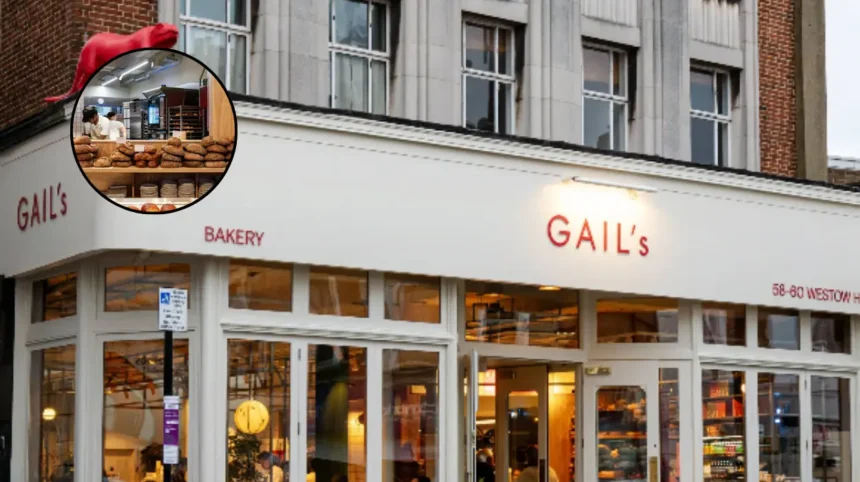
Brixton (South London News) June 30, 2026 – A community-led backlash has mounted in south London following a planning application by the artisanal bakery chain Gail’s to open a new branch directly adjacent to the busy Brixton Underground station. A petition launched on Change.org has successfully amassed 1,074 signatures from residents and local business figures who argue that the expansion of the commercial chain poses a direct risk to the survival of independent traders within the neighbourhood. The proposed development, which seeks to convert a vacant storefront on the high street, has triggered a broader public debate concerning commercial gentrification, cultural identity, and the economic survival of long-standing working-class communities in the capital.
- Key Points
- Why Are Brixton Residents Opposing The New Gail’s Bakery?
- What Are The Specific Details Of The Planning Application?
- How Do Local Business Owners View The Chain’s Expansion?
- What Impact Does Corporate Pricing Have On Local Culture?
- Background of the Commercial Expansion and High Street Gentrification
- Prediction for Local Independent Traders and the Brixton Community
Why Are Brixton Residents Opposing The New Gail’s Bakery?
As reported by Senior Local Democracy Reporter Ruby Gregory of MyLondon, the planning application submitted by Gail’s has encountered swift resistance from community organizers who view the brand’s premium pricing as mismatched with the local demographics. The Change.org petition, which was established by Ruby Bukhari—a former local election candidate for the Shake It Up party—outlines several socio-economic objections. In the text of the petition, Bukhari stated that
“the proposed development of a Gail’s Bakery branch in Brixton is causing genuine concern among residents and local business owners.”
Bukhari further asserted that
“many fear that the introduction of another large chain bakery will not only disrupt the distinctive character of our area but also directly threaten the livelihoods of our cherished local bakers and café owners.”
The campaign emphasizes that the high street relies heavily on independent outlets that offer unique, culturally rooted services. In her petition documentation, Bukhari wrote:
“Independent businesses in Brixton have thrived on community support, offering personal attention and unique experiences that large chains simply cannot replicate. This petition is not against bakeries or new investment in Brixton. Rather, it is a call to protect the area’s independent spirit and ensure that development supports local entrepreneurs and preserves the distinct identity of the neighbourhood.”
What Are The Specific Details Of The Planning Application?
According to data published on Lambeth Council’s planning portal, Gail’s formally submitted its development proposals on Wednesday, May 13.
The chain is seeking planning permission to take over the unit at 439 Brixton Road, which was previously occupied by the fast-food noodle chain Chopstix and currently sits vacant.
As reported by India Lawrence, a staff writer for Time Out London, the architectural adjustments requested by the bakery chain involve making minor physical alterations to the building’s exterior, including removing the existing corporate shopfront and installing new commercial signage.
The statutory public consultation window opened following the submission, allowing local residents and business entities until Friday, June 19, to file formal representations.
During this timeframe, the planning portal recorded 30 official objections from members of the public, compared to just a single comment submitted in support of the bakery’s arrival.
Following the closure of the public consultation, the application will undergo a formal evaluation against local and national planning policies before a recommendation report is compiled.
The final determination will be made either by an authorized local planning officer or referred directly to Lambeth Council’s Planning Applications Committee for a vote.
How Do Local Business Owners View The Chain’s Expansion?
The dispute comes amidst ongoing friction between independent transport-hub tenants and corporate entities. Writing for the Evening Standard, reporter Ruby Gregory noted that local business owners feel increasingly crowded out by multi-site corporations.
Metin Balci, the operator of Old Roots Café, which has traded inside the London Underground station infrastructure for two decades, stated that his business faces forced closure by the summer of next year if current structural trends persist. In an official statement, Balci stated:
“TfL are limiting small businesses that are trying to run in their stations. We’re all being replaced by Gail’s, Pret and Greggs, but there’s no way we can compete with them. If this continues there will be no independent businesses left in stations.”
This commercial pressure is mirrored by recent closures nearby. Earlier this year, the owner of Brixton News, Pritesh Patel, was forced to dismantle his newsstand after 36 years of operation inside the station complex. Patel stated that Transport for London (TfL) management informed him that the annual rent for his pitch would rise to £85,000—a figure that represented more than double his historical lease rate, rendering the business financially unviable.
What Impact Does Corporate Pricing Have On Local Culture?
The pricing structure of the incoming chain has also drawn criticism from local objectors who argue it promotes commercial exclusion.
On the commercial menu, a single cinnamon bun is priced at £4, while artisan sourdough loaves begin at £4.90. Public commentary submitted directly to Lambeth Council highlights concerns regarding affordability.
One formal objector stated on the planning portal that Gail’s “does not fit with the local culture of the area,” adding that its price points are entirely unaffordable to the majority of local households.
The objector further argued that the development constitutes
“part of a continued displacement of long-standing Black and working-class residents, a shrinking space for independent and culturally rooted businesses, and contributes towards creating a London made of standardisation, exclusion, and uniformity, rather than celebrating one of diversity.”
A second independent objector wrote that the arrival of
“another national chain like Gail’s risks accelerating a process of gentrification,”
which they noted many local people feel is actively “eroding the area’s distinct character.”
Digital pushback has similarly intensified across social media channels. A public thread published by the local digital community account bestofbrixtonldn on Instagram garnered 572 comments and over 1,200 likes within days of publication. Commenting on the digital platform, an Instagram user under the handle divagez stated:
“The High Street doesn’t need another overpriced bakery. It needs variety, affordability and businesses that actually serve the whole community. Every year London looks more generic, costs more to live in, and loses a bit more of its character. Gail’s? Really?”
Another commentator using the account name somaticswithsuhad stated:
“It is everywhere.. how are all high streets gonna look the same?”
Furthermore, community members pointed out that an existing Gail’s branch is already operational on Railton Road, located just over a 20-minute walk from the newly contested site.
Background of the Commercial Expansion and High Street Gentrification
The confrontation in Brixton forms part of a wider corporate strategy initiated by Gail’s management. At the conclusion of November 2025, the corporate bakery chain announced an aggressive retail expansion plan aimed at launching 40 new branches across the United Kingdom, following a fiscal year where corporate sales volumes increased by 20 per cent.
Gail’s, which is managed under the parent company Bread Holdings, has frequently found itself at the centre of municipal zoning and gentrification debates across London.
Similar community resistance has previously occurred during store openings in areas such as Walthamstow, Stoke Newington, and Primrose Hill, where local retail associations argued that the arrival of institutional capital disrupts local micro-economies.
Concurrently, high-density transit locations managed by Transport for London have seen a shift in tenant composition. Over the past decade, independent kiosks and family-run stations have gradually faced lease renegotiations or restructuring, leading to increased occupancy by national and multinational chains like Pret A Manger, Greggs, and Gail’s.
Municipal data indicates that independent retail spaces across the London Borough of Lambeth have faced compounding financial strains driven by escalating business rates, inflationary ingredient costs, and shifting real estate valuations, making competitive parity with venture-backed or corporate chains increasingly difficult for local operators.
Explore More Brixton News
Brixton Market fights for community ownership after news of a £50 million private bid
Brixton Student Michaela Mensah Accepted at Harvard University 2026 South London
Prediction for Local Independent Traders and the Brixton Community
If Lambeth Council approves the planning application for 439 Brixton Road, the development is highly likely to accelerate shifts in local high street real estate dynamics, directly impacting independent business owners and lower-income residents within the Brixton catchment area.
The introduction of a prominent anchor brand next to the Underground station typically drives up adjacent commercial property valuations. For independent shopkeepers, this trend can translate into higher lease renewal demands from commercial landlords, potentially forcing out lower-margin, culturally specific businesses that cannot sustain higher overhead costs.
For the local consumer base, the arrival of premium-priced food retail will likely entrench a dual-economy on Brixton Road, widening the gap between affluent commuters and long-term, working-class residents who are priced out of basic high street options.
While the development will occupy a currently vacant unit and generate immediate local employment, the long-term structural effect may reduce the overall commercial diversity of the transport hub, shifting the local retail ecosystem away from independent entrepreneurship toward corporate standardization.