Key Points
- Event Launch: The inaugural Croydon Youth Awards took place on Thursday, 25 June 2026, marking a brand-new council-wide and community-driven celebration dedicated to highlighting the achievements of local young residents.
- Overcoming Stereotypes: Winners and participants actively challenged the persistent public perception that growing up in the South London borough is inextricably linked to crime, gang activity, and visual knife violence.
- Organisational Fabric: Hosted at the historic Fairfield Halls, the student-led event was orchestrated by the Croydon College Student Executive Team, with vital support from local businesses, statutory partners, and headline sponsor Croydon Drop In.
- Wide-Ranging Recognition: Twelve distinct categories were awarded, celebrating local individuals aged 11 to 25 across domains including environmental stewardship, digital impact, creative expression, resilience, and personal growth.
- Unified Community Stance: Local leaders, educational heads, and community activists united to champion Croydon’s youth demographic—which comprises roughly a quarter of the borough’s total population—as its absolute “greatest strength.”
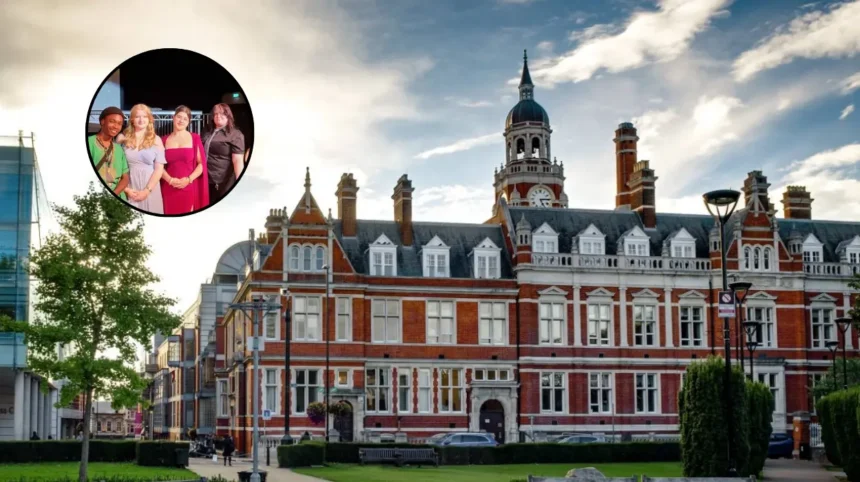
Croydon (South London News) July 1, 2026 – The visual and cultural narrative surrounding the London Borough of Croydon underwent a deliberate, youth-led transformation last week as local institutions gathered to honour the area’s top young talent. For a borough frequently thrust into metropolitan headlines for spikes in youth violence, the inaugural Croydon Youth Awards served as an official platform to showcase a reality often ignored by the wider public. Held at the iconic Fairfield Halls on Thursday, 25 June 2026, the awards brought together schools, community colleges, regional businesses, and local charities to publicly position the positive contributions of young people aged 11 to 25 as the area’s genuine structural anchor.
As reported by reporter Tara O’Connor of MyLondon, the evening explicitly focused on shifting deep-seated external biases. Organised directly by the Croydon College Student Executive Team, the ceremony functioned not merely as an awards distribution night, but as a collective statement against negative stereotyping.
Local youth winners explicitly voiced a shared weariness regarding how their home town is painted in national media ecosystems, using their platforms to detail an environment defined by diversity, deep community unity, and artistic enterprise rather than systemic danger.
What Did the Winners and Organisers Say About the True Spirit of Croydon’s Youth?
The evening highlighted individual stories of profound resilience, community service, and academic breakthrough. One of the central focal points of the night was Naimah Khan, a British Sign Language (BSL) and Augmentative and Alternative Communication (AAC) user.
As reported by Tara O’Connor of MyLondon, Khan won the highly contested Personal Growth and New Beginnings Award after successfully launching an inclusive communication drive that encouraged fellow peers and academic staff at Croydon College to learn and implement alternative communication methods. Khan stated that the awards were critically important because
“others need to know that there are people out there making [Croydon] better.”
The sentiment of actively dismantling an unfair regional reputation was echoed across the stage by fellow students and community prize winners.
According to the reporting by MyLondon, student Em Farley-Sales spoke openly about the mathematical imbalance between the actions of a few and the achievements of the many in South London. Farley-Sales stated:
“I think the smaller minority often misrepresents the larger majority. Having an award that is focused on our youth will help get rid of those stereotypes and show that this is not just where crime happens.”
Farley-Sales further added that “it’s just good to be surrounded by those people and experience those different things,” pointing out that her personal experience of living in the area is anchored by an unmatched feeling of local solidarity, noting that
“nowhere else in the country have I been that has such a strong sense of community and unity with its neighbours than in Croydon.”
The structural importance of celebrating these milestones from an institutional standpoint was underlined by educational leaders overseeing the borough’s largest instructional cohorts.
As detailed by MyLondon, Caireen Mitchell, the Croydon College Group Principal and Chief Executive Officer, emphasised that the true value of the event lay in its democratic, youth-led architecture. Mitchell stated:
“What makes these awards so special is that they are led by young people themselves – reflecting their voices, their priorities and their vision for the future. From acts of leadership and creativity to quiet determination and community spirit, each story we recognise speaks to the power and potential of the next generation. At a time when we must challenge negative perceptions and celebrate what truly defines Croydon, these awards play an essential role.”
How Did Local Leaders and Sponsors React to the Civic Success of the Event?
The event combined professional artistic showcases with standard-setting civic representation. Hosted by prominent Croydon community activist and Majestic Youth programme leader Anthony King, the ceremony featured an eclectic array of live talent, including a critically acclaimed operatic performance by a young local artist named Olivia.
The civic leadership of the borough was also present, with Croydon Executive Mayor Jason Perry delivering an official address validating the structural achievements of the nominees.
Corporate and third-sector backing proved vital to establishing the awards as a sustainable, recurring annual property. Shaun Polley, the Chief Executive Officer of headline sponsor Croydon Drop In, a local youth support charity, released a statement following the conclusion of the event highlighting the long-term socioeconomic value of investing heavily in the borough’s youngest citizens. Polley stated:
“Croydon is a vibrant and diverse community, and its young people are its greatest strength. These awards shine a light on the inspiring achievements, talent, and determination of the next generation. We are proud to stand alongside this event because we value the young people of Croydon and are committed to investing in their future. Celebrating young people’s success not only recognises their hard work, but also inspires others to follow in their footsteps.”
Local educational institutions also highlighted the precise internal impact of the accolades on their respective student bodies. Following the formal presentation, Hannah Aldis of Woodcote High School published a comprehensive review of the school’s individual nominees, noting the immense pride felt by local families who gathered at Fairfield Halls.
According to Aldis’s report, Woodcote High School student Evie P. was named Runner-Up for the Academic Excellence & Progress Award, recognizing dedicated scholastic growth, while fellow student Karina V.
secured the Kindness & Inclusion Award for promoting a compassionate school ecosystem. Furthermore, school representatives celebrated the individual nominations of Lauren W. for the Resilience and Inspiration Award and Elliot W.
for the Young Leader Award, framing them as clear structural examples of character and leadership within daily secondary school life.
Background of the Particular Development
The establishment of the Croydon Youth Awards follows a challenging decade for the South London borough, which holds one of the largest concentrations of young residents anywhere in Greater London. Demographically, individuals under the age of 25 account for roughly one-quarter of Croydon’s total population of more than 380,000 residents.
Historically, macro-level austerity measures, coupled with sharp financial cuts to regional community centres, youth clubs, and social safety nets, created a vacuum that left local youth disproportionately vulnerable to localized crime cycles.
National press coverage frequently focused heavily on these statistical spikes in knife crime, embedding a persistent and often damaging “outer-city danger” narrative that local grass-roots leaders have long fought to correct.
In response to these historical structural pressures, a complex ecosystem of youth advocacy groups, such as Gloves Not Gunz and the Majestic Youth programme, emerged alongside formal educational bodies like Croydon College to craft alternative pathways for the borough’s youth.
The launch of the Croydon Youth Awards represents the formal consolidation of these scattered grassroots efforts into a singular, high-profile, council-recognised framework.
By utilizing premium cultural venues like Fairfield Halls and securing long-term third-sector funding, local organizers have successfully institutionalised a mechanism designed to systematically counter negative press and build protective social capital for the area’s massive young demographic.
Explore More Croydon News
Croydon Rejects 65.7% of HMO Applications Amid Housing Crisis; Croydon, 2026
Croydon Resident Runs 38-Mile Ultra Marathon for Youth Theatre Fundraiser
Prediction: How This Development Can Affect the Youth and Community of Croydon
The institutionalisation of the Croydon Youth Awards is highly likely to generate significant, tangible benefits for the young people, educators, and broader community networks within the borough.
By establishing a high-visibility platform that formally honours non-academic and academic achievements alike, the awards will likely act as a major psychological buffer against the negative societal stereotypes that local youth report encountering when applying for universities, internships, or employment outside the borough.
This systematically elevated profile can directly translate into enhanced social mobility and greater confidence for young applicants entering competitive professional spheres.
Furthermore, for local schools, youth charities, and community groups, the success of this inaugural event sets a vital precedent that will likely stimulate increased corporate sponsorship and statutory funding from central London bodies.
As corporate partners observe measurable civic returns from investments in events like the Youth Awards, funding pipelines for continuous creative, technological, and athletic youth programmes are expected to strengthen.
Over the next few years, this development is predicted to foster a highly resilient infrastructure of interconnected support, ultimately reducing marginalization, driving down localized anti-social behavior statistics, and solidifying a sustainable culture of civic pride among Croydon’s next generation of leaders.