
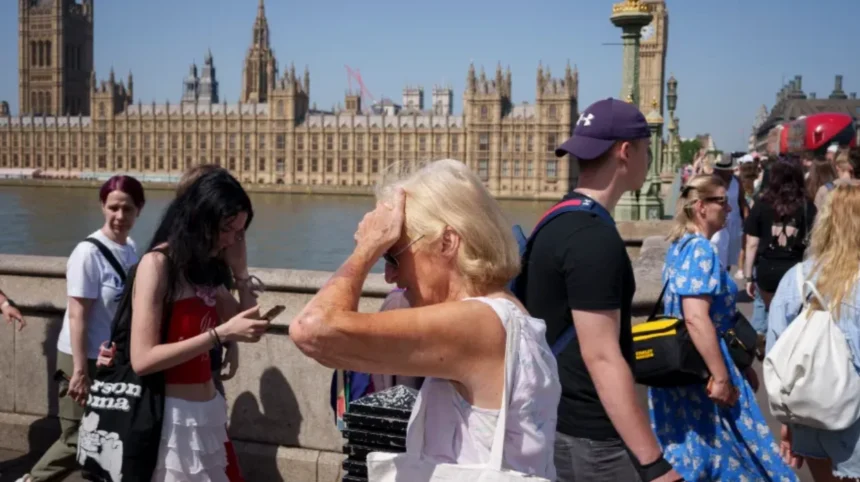
South London is sweltering under one of the most intense June heatwaves on record, as a rare red extreme-heat warning and soaring temperatures bring fresh concern for health, travel and daily life across the capital.
The UK has just recorded its hottest June day on record, with temperatures reaching 36C in Wisley, Surrey, while London hit 35.8C on Wednesday. The Met Office has kept a red warning in place for London and much of southern England, signalling a risk to life from extreme heat. Forecasts suggest the capital will remain very hot through the end of the week before conditions begin to ease on Sunday.
For residents in South London, the heat is being felt not just in the daytime but through the night. BBC Weather and other reports have described “tropical nights” across London and the South East, with temperatures staying above 20C in some places and making proper rest difficult. That is especially significant in dense urban areas, where homes can retain heat long after sunset and limited airflow can make conditions uncomfortable or even hazardous.
The health risks are serious. UK Health Security Agency guidance warns that hot weather can pose real dangers, particularly for older people, young children, pregnant women and anyone with existing medical conditions. Extreme heat can increase the risk of dehydration, heat exhaustion and sleep disruption, while also placing extra strain on the heart and lungs. In practical terms, that means South Londoners are being urged to take precautions now rather than wait until they feel unwell.
The current spell also highlights how exposed London is to rising summer temperatures. Meteorologists say the heatwave is being driven by a large heat dome over western Europe, and climate scientists argue that events like this are becoming more likely and more intense as the climate warms. Sky News reported that heatwave temperatures are likely to become the new normal in many parts of the UK, especially across the south and east of England.
That broader trend has local consequences. In South London, extreme heat can affect schoolchildren, commuters, care workers and people living in top-floor flats or homes without cooling. It can also put pressure on transport, local services and public spaces, particularly when parks and shopping streets become overcrowded as people look for shade and relief.
The red warning is a reminder that extreme heat is no longer unusual enough to be dismissed as a brief inconvenience. It is a test of how prepared London is for hotter summers, and how quickly communities can adapt when the temperature rises to dangerous levels.
For now, South London faces at least another day or two of punishing heat before a more comfortable change arrives at the weekend. Until then, the message from forecasters and health officials is clear: stay cool, stay hydrated and treat the heat as a genuine risk.