
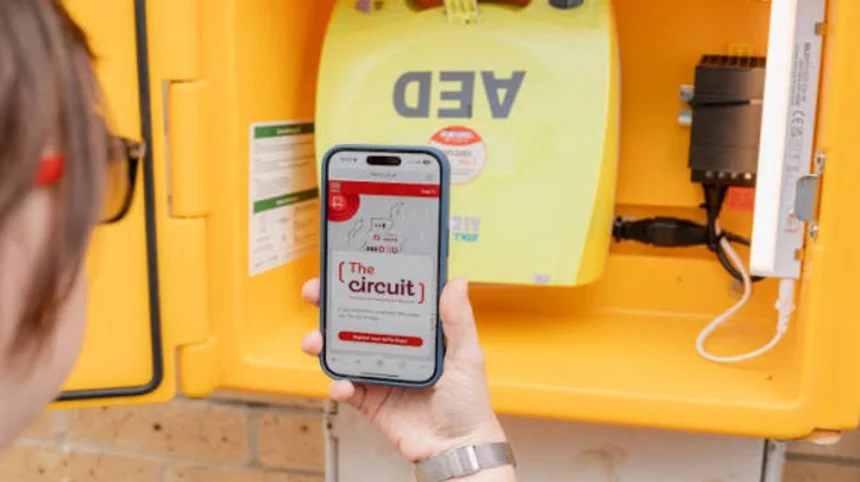
More publicly accessible defibrillators are being installed across Southwark as part of ongoing efforts to improve survival rates from out-of-hospital cardiac arrests and strengthen emergency preparedness within local communities.
The initiative follows growing recognition that early access to cardiopulmonary resuscitation (CPR) and automated external defibrillators (AEDs) can significantly improve the chances of surviving a sudden cardiac arrest.
According to the British Heart Foundation, fewer than one in ten people survive an out-of-hospital cardiac arrest in the UK. However, when CPR is started immediately and a defibrillator is used within the first few minutes, survival rates can increase substantially.
Southwark Council has worked with community organisations, businesses and healthcare partners to identify locations where additional public-access defibrillators can provide the greatest benefit, particularly in busy public spaces and neighbourhoods with high foot traffic.
A spokesperson for Southwark Council said expanding access to lifesaving equipment forms part of the borough’s wider commitment to creating healthier and safer communities.
“Every additional publicly accessible defibrillator increases the opportunity for someone experiencing cardiac arrest to receive immediate help before ambulance crews arrive,”
the spokesperson said. Local residents have welcomed the initiative.
“It’s reassuring to know there are more defibrillators available,”
said Southwark resident Emily Carter.
“You hope you’ll never need one, but if it helps save someone’s life, it’s worth having them in places people can easily find.”
Healthcare professionals say improving access to AEDs must go hand in hand with increasing public confidence in using them.
“Many people worry they might do something wrong,”
explained Dr. James Patel, an emergency medicine consultant.
“Modern defibrillators provide clear voice instructions and are designed for use by members of the public. The most important thing is acting quickly.”
Community organisations across South London are also expanding CPR awareness sessions and basic life support training to encourage more residents to respond confidently during emergencies.
For local volunteer Sarah Williams, education is just as important as equipment.
“A defibrillator only helps if people know it’s there and aren’t afraid to use it,”
she said.
“Community training can make all the difference.”
Public health experts say the initiative reflects a growing emphasis on prevention, resilience and community involvement in emergency care.
As Southwark continues expanding access to lifesaving equipment, local leaders hope that improved awareness, wider training and greater availability of defibrillators will help more residents respond confidently when every second counts.