Key Points
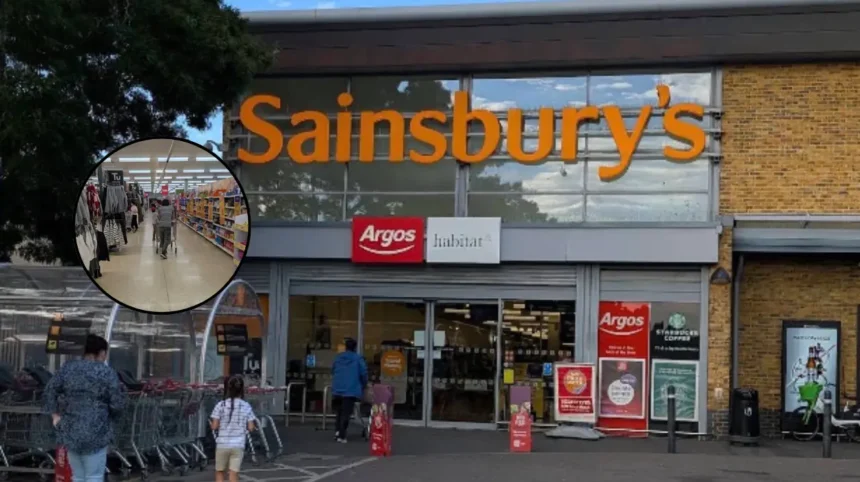
- Incident Summary: Sainsbury’s has paused the operation of live artificial intelligence facial recognition scanning at its East Dulwich superstore in south-east London after a customer was falsely accused of shoplifting and escorted off the premises.
- The Victim: Matt Arnold, 46, a comedy promoter and freelance television editor, was buying event supplies at a self-service checkout when store management confronted him.
- Retailer Explanation: Sainsbury’s insisted the mistake was caused by “human error” on the part of store staff rather than a technical failure of its AI security system, Facewatch.
- System Operations: The company stated that the Facewatch software possesses a 99.98% accuracy rate and that store managers review every automated alert before intervening.
- System Disruption Detail: As revealed by Arnold following discussions with management, flagged 2D alert images disappear from staff handheld devices after a few seconds due to GDPR privacy rules, leaving staff unable to re-check identity matches on the shop floor.
- Compensation & Action: Sainsbury’s issued an apology and a £150 goodwill voucher to Arnold, which he donated entirely to a local community foodbank charity.
- Pattern of Errors: This marks the second high-profile wrongful ejection involving Sainsbury’s and the Facewatch system in south London within a year, following a similar incident at the Elephant and Castle branch.
Dulwich (South London News) August 17, 2026 – Supermarket chain Sainsbury’s has temporarily suspended the use of live facial recognition technology at its East Dulwich superstore in south-east London after an innocent customer was wrongly identified as a shoplifter and forced to leave the premises. The retailer insisted that the misidentification of 46-year-old Matt Arnold was down to human error rather than an algorithmic flaw in its surveillance software. Arnold, a comedy promoter and freelance television editor, was purchasing drinks and snacks at a self-service checkout for an upcoming performance at the adjacent Dulwich Hamlet Football Club on August 6 when he was confronted by two members of the store management team.
- Key Points
- What Happened During the Incident at the East Dulwich Checkout?
- How Did Sainsbury’s and Facewatch Respond to the Misidentification?
- What Operational Vulnerabilities Were Raised Regarding the AI System?
- What Arguments Do Privacy Advocates and the Customer Make Against Retail AI?
- Background of the Particular Development
- Prediction: How This Development Can Affect Retail Customers, Store Staff, and Supermarket Operators
What Happened During the Incident at the East Dulwich Checkout?
As reported by Helena Horton of The Guardian, Arnold had scanned his items and swiped his Nectar loyalty card, waiting at the till for staff to verify an alcohol purchase, when store managers approached him. Management informed him that he could not be served owing to an incident earlier that week and requested that he leave the premises immediately.
Arnold recounted that staff offered no detailed explanation and insisted on walking him out. Refusing to be physically escorted, Arnold stood his ground to walk out under his own power to preserve his dignity. As he departed, he noticed an overhead CCTV screen displaying an alert with a red circle tracking his face. To ensure the comedy event went ahead, Arnold arranged for his colleague to enter five minutes later to pay for and collect the trolley of supplies that staff agreed to hold.
How Did Sainsbury’s and Facewatch Respond to the Misidentification?
As reported by Samuel Montgomery of The Telegraph, Sainsbury’s head office contacted Arnold the following day to apologize for his experience at the Dulwich superstore. A spokesperson for Sainsbury’s stated that the incident was caused by human error, not the facial recognition technology, assuring customers that the underlying Facewatch system boasts a 99.98% accuracy rate and that every match is reviewed by a trained manager.
A spokesperson for Facewatch confirmed that their technology was not at fault in this case. Facewatch stated that a correct alert was transmitted to the retailer, but was subsequently subject to human error in the way it was handled in-store by supermarket staff. The technology provider added that pausing system usage at the East Dulwich location was a precautionary measure while personnel underwent additional training. Sainsbury’s issued Arnold a £150 goodwill voucher as compensation, which he donated in full to a local community foodbank.
What Operational Vulnerabilities Were Raised Regarding the AI System?
As reported by Vilius Petkauskas of Cybernews, Arnold met with store management following the event to understand how the Facewatch system operates inside the supermarket. During this discussion, it was disclosed that when an individual is flagged by the facial recognition camera, a 2D reference image appears on a store-managed mobile device. However, due to General Data Protection Regulation (GDPR) compliance rules, this reference image automatically disappears from the screen after a few seconds.
Consequently, floor staff and managers are unable to re-verify the camera alert image against the individual once they approach them on the shop floor. Arnold also stated that the body-worn cameras of security personnel were not recording at the time of his ejection, meaning no secondary footage existed to determine where the communication breakdown occurred.
As reported by Resultsense, this occurrence follows a similar incident at a Sainsbury’s branch in Elephant and Castle, south London, where shopper Warren Rajah was wrongly identified and ejected by staff acting on a system alert, despite Facewatch later confirming Rajah was never on their database.
What Arguments Do Privacy Advocates and the Customer Make Against Retail AI?
Speaking about his experience, Arnold warned of the broader societal risks associated with automated retail surveillance, stating that anyone could be falsely accused and that it would inevitably affect vulnerable individuals or people living with anxiety. Arnold called for an immediate nationwide pause on the surveillance technology across all retail branches, arguing that if potential operational issues exist in one store, similar risks apply across the entire network.
Privacy advocacy groups, including Big Brother Watch, have continually challenged the deployment of real-time facial recognition in commercial settings. Critics contend that even high statistical accuracy margins result in regular false positives when applied across millions of weekly customer visits, while creating an environment where retail employees feel pressured to follow automated computer prompts without applying independent verification.
Background of the Particular Development
Live facial recognition technology has seen rapid adoption across the United Kingdom retail sector as businesses seek solutions to curb rising rates of shoplifting, organized retail crime, and violent behavior directed at shopfloor workers. Figures published by the British Retail Consortium indicate that UK retailers face over 1,600 daily incidents of violence or verbal abuse against staff, alongside annual losses from shoplifting exceeding £1 billion.
Facewatch operates as a centralized commercial surveillance network. Cameras positioned at store entrances match incoming shoppers’ facial features against a private digital database of individuals previously suspected or convicted of theft and anti-social behavior. When the software detects a potential match, it sends an alert to handheld devices carried by designated store personnel, who are tasked with confirming the image match before taking security action.
Despite growing deployment across major supermarket chains, home improvement stores, and convenience networks, the technology remains subject to scrutiny from regulatory bodies, including the Information Commissioner’s Office (ICO), over privacy compliance, data storage standards, and the legal framework governing automated processing in public places.
Explore More Dulwich News
South Circular roadworks and delays in Dulwich in 2026
CORE Soft Tissue Therapy: Dulwich Clinic’s First-Year Triumph
Prediction: How This Development Can Affect Retail Customers, Store Staff, and Supermarket Operators
This development is likely to have structural consequences across three primary stakeholder groups:
For Retail Customers
Shoppers are likely to encounter stricter operational checks and potential delays as retailers re-evaluate how automated security alerts are handled on the shop floor. Public awareness of false positives may lead to increased customer pushback against staff interventions, higher friction at self-service areas, and heightened sensitivity around data privacy. For vulnerable shoppers or those with medical conditions such as anxiety, high-profile misidentifications may erode trust in standard supermarket environments.
For Retail Staff and Store Management
Frontline employees will face increased training requirements and heightened operational pressure. The reliance on human judgment to validate fleeting digital alerts places staff in a challenging position—balancing store security duties against the legal and reputational risks of wrongly accusing an innocent member of the public. Training programs will likely be overhauled to mandate higher standards of visual confirmation before any customer interaction occurs.
For Supermarket Operators and Security Vendors
Supermarket chains utilizing or trialing AI surveillance systems will likely face regulatory pressure to audit their human-in-the-loop procedures. Retailers may be required to review software configurations—such as the duration alert images remain visible on staff devices under data protection laws—to ensure staff can reliably verify matches. Ongoing misidentification incidents may prompt formal reviews from data protection regulators, potentially slowing the wider rollout of real-time facial recognition tech across the UK retail sector.