Key Points
- Community Vineyard Discovery: Denmark Hill station in south London hosts the UK’s first railway station vineyard, located just metres from active train tracks.
- Botanical Variety: The secluded plot features over 20 Bacchus grape vines, a variety well-suited to the English climate and known for producing crisp white wines.
- Local Stewardship: The project is managed by the Camberwell Society, a local civic organisation dedicated to enhancing the neighbourhood.
- Official Authorization: Network Rail granted the society a official Community Licence in 2020, permitting the transformation and care of non-passenger railway land.
- Hidden Urban Oasis: Thousands of daily commuters pass through the busy transport hub completely unaware of the agricultural development running alongside the lines.
Denmark Hill (South London News) August 17, 2026 – A hidden urban vineyard featuring more than 20 Bacchus grape vines has been established inside Denmark Hill railway station in south London, marking the first known initiative of its kind at a train station in the United Kingdom. Positioned mere metres from active train lines, the secret botanical plot remains unseen by the thousands of passengers who pass through the busy transport interchange on a daily basis. The agricultural project represents a novel integration of community gardening, urban greening, and railway heritage, managed entirely by local volunteers who have reclaimed unutilised railway land for cultivation.
Which Station Hosts the UK’s First Railway Vineyard?
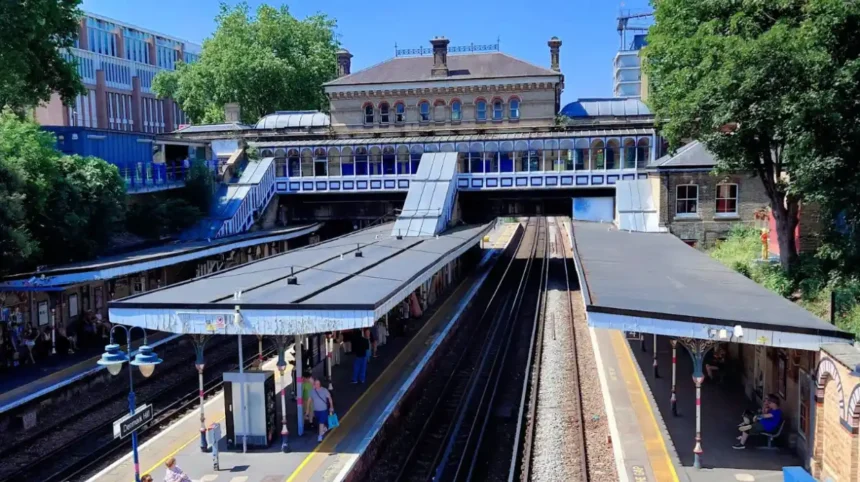
Denmark Hill railway station, situated in the London Borough of Southwark, is the site of this unique viticultural development. Renowned historically for its striking Victorian architecture and for housing a pub within its former ticket hall, the station has expanded its features to include a fully functioning micro-vineyard. Tucked discreetly into non-passenger areas adjacent to the platforms, the plot accommodates over 20 Bacchus vines. Bacchus grapes, a hybrid variety known for thriving in cooler climates, are widely used across English viticulture to produce high-quality, aromatic white wines. Despite the heavy volume of rail traffic and passenger movement through the hub, the vineyard operates quietly in the background, shielded from direct view.
How Was the Station Vineyard Established?
The creation and ongoing maintenance of the vineyard have been spearheaded by the Camberwell Society, a long-standing local community group dedicated to preserving and improving the environment of Camberwell and its surrounding areas. The project was made possible when Network Rail awarded the group a Community Licence in 2020. This formal agreement allows local organisations to occupy, restore, and care for land within the railway estate that is not directly used for operational or passenger facilities. Since receiving the licence, volunteers from the society have devoted significant time to clearing the land, preparing the soil, planting the vines, and tending to the crop, converting previously neglected railway embankment space into a thriving green sanctuary.
What Is the Background of the Denmark Hill Development?
The establishment of the Denmark Hill vineyard forms part of a broader, long-term effort across the British rail network to repurpose disused land for community benefit and environmental sustainability. For decades, railway embankments and operational sidings often lay neglected or overgrown, occasionally presenting security or maintenance challenges for rail infrastructure managers.
In recent years, Network Rail launched community licensing frameworks to partner with neighbourhood associations, charity groups, and local councils. These licences grant formal permission for civic groups to transform secure, non-operational railway land into community gardens, biodiversity corridors, and educational spaces.
The initiative at Denmark Hill building upon the station’s established reputation as a focal point for community pride. Restored following a major fire in the late 20th century, the station building retains its historic character while serving as a key interchange for Thameslink and London Overground services. The Camberwell Society’s intervention in 2020 marked a new chapter in the station’s history, turning unused infrastructure lineside into an agricultural footprint within inner-city London.
Explore More Denmark Hill News
Denmark Hill Station Wine: UK First Vineyard in Camberwell 2026
King’s College Hospital Welcomes First Visually Impaired NHS Volunteer 2026 | Denmark Hill
How Will This Development Affect Local Commuters and the Community?
The successful establishment of the Denmark Hill station vineyard has practical and social implications for several distinct groups:
- Daily Commuters: Passengers using Denmark Hill station benefit from an aesthetically enhanced environment and a reduction in litter or unmanaged overgrowth along the tracks, contributing to a more pleasant travel experience.
- Local Residents and Community Volunteers: The project offers direct hands-on opportunities for urban gardening, fostering civic pride, environmental education, and stronger social connections among Camberwell residents.
- Urban Biodiversity and Local Wildlife: The introduction of managed vines and associated flora creates micro-habitats for pollinators, birds, and insects, boosting biodiversity along a busy rail corridor.
- The Wider Transport and Railway Sector: The project serves as a practical model for other transport hubs across the United Kingdom, proving that underutilised railway land can be successfully adapted for community agriculture and sustainable land management.