Key Points
- Denmark Hill railway station in Camberwell, south London, is set to become the UK’s first railway station to produce its own wine.
- Twenty-two Bacchus vines planted by the Camberwell Society near the tracks have yielded enough grapes for a first vintage, expected to be ready by next year.
- The project operates under a Community Licence from Network Rail, granted in November 2020, to care for non-passenger areas at the station.
- Alongside the vineyard, volunteers have planted thousands of bulbs and seeds, including bluebells, poppies, crocuses and lavender.
- Winemakers described the project as “making history as they work on the first ever vineyard in a UK station.”
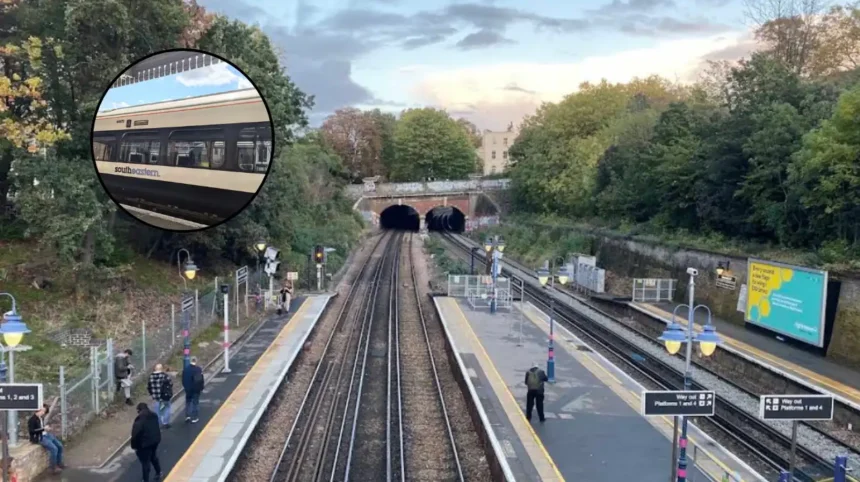
Denmark Hill (South London News) August 3, 2026 – Denmark Hill, in the London Borough of Southwark, is set to become the first British railway station to produce wine from vines grown on its own property. The 22 Bacchus vines, planted by the Camberwell Society just metres from the railway tracks, have produced enough grapes for “Chateau Denmark Hill”, a debut white wine expected to be ready by next year.
- How did the vineyard at Denmark Hill station begin?
- Who is behind the Denmark Hill station vineyard?
- When will the first Denmark Hill station wine be ready?
- What grape variety is used at Denmark Hill station?
- What else has been planted at Denmark Hill station?
- Why is the Denmark Hill station wine significant?
- Background of the Denmark Hill station wine development
- Prediction: How this development could affect local residents, passengers and the UK rail community
The initiative forms part of a wider community programme to improve the station’s landscape, biodiversity and public spaces through long-term planting and volunteer work.
How did the vineyard at Denmark Hill station begin?
The Camberwell Society received a grant and a Community Licence from Network Rail in November 2020, allowing volunteers to care for and improve non-passenger areas at Denmark Hill station.
Since then, members have cleared overgrown vegetation and introduced a wide range of planting schemes designed to enhance the station environment for passengers, wildlife and the local community.
Volunteers have planted more than 10,000 bluebell and poppy seeds, together with around 1,500 crocus, grape hyacinth and daffodil bulbs. As part of the wider landscaping project, they also established a vineyard of 22 Bacchus vines alongside 56 lavender plants.
Who is behind the Denmark Hill station vineyard?
The project is led by the Camberwell Society, a local civic organisation responsible for maintaining the station’s non-passenger areas under its agreement with Network Rail.
Volunteers have carried out the clearance, planting and ongoing maintenance of the vineyard and surrounding gardens, while specialist winemakers are processing the harvested grapes into the station’s first wine.
When will the first Denmark Hill station wine be ready?
The first harvest from the 22 Bacchus vines has now been processed into a white wine.
Following maturation, the inaugural vintage of “Chateau Denmark Hill” is expected to be ready to drink by next year.
What grape variety is used at Denmark Hill station?
The vineyard is planted entirely with Bacchus, one of England’s best-known white grape varieties.
Bacchus is widely used for English still and sparkling wines because it produces crisp, aromatic wines with flavours often associated with elderflower, citrus and fresh green fruit. The variety is well suited to southern England’s climate and performs reliably in smaller vineyards.
What else has been planted at Denmark Hill station?
The vineyard is part of a much larger biodiversity project.
Volunteers have planted more than 10,000 bluebell and poppy seeds, together with approximately 1,500 crocus, grape hyacinth and daffodil bulbs to create colourful seasonal displays.
The site also includes 56 lavender plants, helping attract pollinators while transforming previously overgrown railway land into an attractive green space.
Why is the Denmark Hill station wine significant?
The project is expected to make history as the first vineyard at a UK railway station to produce wine from grapes grown on station land.
“Chateau Denmark Hill” represents a unique combination of community volunteering, urban greening and English winemaking, demonstrating how unused railway land can be transformed into productive green spaces.
Background of the Denmark Hill station wine development
The Denmark Hill station vineyard grew out of the Camberwell Society’s successful application for a Community Licence from Network Rail in 2020.
The initial grant enabled volunteers to clear neglected railway land before introducing extensive planting schemes that improved biodiversity and enhanced the appearance of the station.
The decision to establish a vineyard reflects the continuing growth of English viticulture, particularly across southern England where Bacchus has become one of the country’s leading grape varieties for still white wine.
By combining vines with bulbs, wildflowers and lavender, the project creates a landscape that delivers environmental benefits while producing a distinctive local product.
Prediction: How this development could affect local residents, passengers and the UK rail community
If the first vintage proves successful, the Denmark Hill project could encourage other station adoption groups and community rail partnerships to consider similar planting initiatives on underused railway land.
For local residents, the vineyard provides a visible example of community-led regeneration, helping improve the station environment while encouraging biodiversity and volunteer involvement.
Passengers may benefit from more attractive station surroundings, while the wider rail industry could view the project as a model for safely combining horticulture, environmental improvements and community engagement on railway property.
Over time, similar schemes involving vineyards, orchards, herb gardens or pollinator-friendly planting could contribute to greener railway stations and stronger community partnerships across the UK.