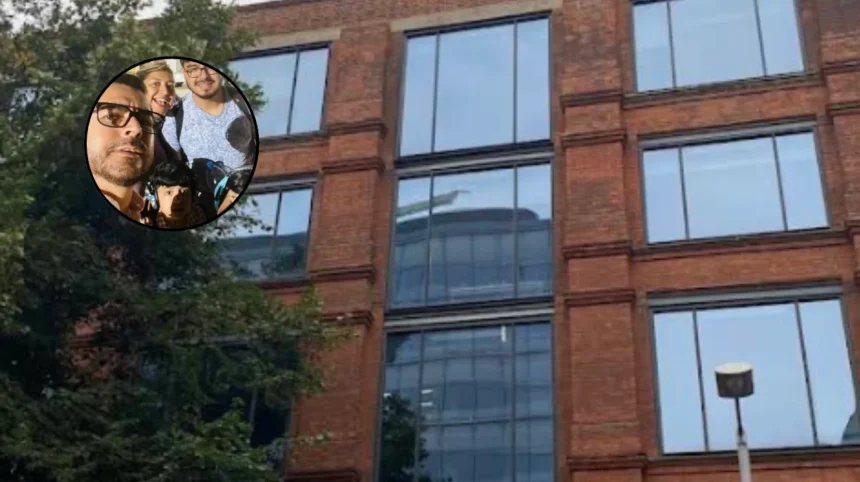
Key Points
- Carmen Castro Guallichico, a Southwark resident living in an overcrowded home with two severely autistic children, challenged the council’s direct offer social housing waiting list in the High Court.
- She claimed her position on the four-bedroom list fell from 19th to 30th, and on the five-bedroom list from 10th to 16th, between January and July 2025.
- Deputy High Court Judge Jonathan Richards dismissed her judicial review on 3 July 2026, ruling the council’s system lawful despite acknowledging the family was disadvantaged.
- The judge found no breach of the council’s procedure, transparency obligations, or public sector equality duty.
- Carmen’s legal team understands she is planning to appeal the decision to the Court of Appeal.
- Southwark Council stated it would not comment on individual cases but noted more than 20,000 households are on its housing waiting list.
Southwark (South London News) July 20, 2026 – Deputy High Court Judge Jonathan Richards dismissed Carmen Castro Guallichico’s claim for judicial review after concluding that Southwark Council’s direct offer waiting list for social housing operates lawfully. In a judgment published on 3 July 2026, the judge wrote:
- Key Points
- Why was the family’s position on the housing list challenged?
- How did the court assess the three grounds of challenge?
- What criticisms did the judge make of Southwark Council’s system?
- What has Southwark Council said about the case?
- What is the next step for the family?
- Background to the development
- Prediction: How might this affect social housing applicants in Southwark?
“In the circumstances, I have not gone on to consider the points made by the Defendant [Southwark Council] as to the appropriateness of relief in this case, in the event that I found one of the grounds made out. The claim for judicial review is dismissed.”
As reported by the Evening Standard, the judge accepted that Carmen’s family had been “disadvantaged” by the council’s operation of its direct offers waiting list, but he still ruled the system legally valid. The claim was dismissed on all three grounds raised by the claimant, and the judge did not proceed to consider what relief might be appropriate had a ground been made out.
Why was the family’s position on the housing list challenged?
Carmen Castro Guallichico lives in an overcrowded home in Southwark with two severely autistic children and has been seeking rehousing through the council’s social housing system. She claims that in January 2025 she was told she was 19th on the four-bedroom direct offer list and 10th on the five-bedroom list.
By July 2025, she alleges her position had moved back to 30th for a four-bedroom home and 16th for a five-bedroom home.
When her solicitor asked the council for an explanation, no response was provided, according to reports in My London News.
The family’s legal challenge centred on the claim that the council acted unlawfully and ignored the length of time they had already been waiting for emergency housing.
How did the court assess the three grounds of challenge?
The claimant advanced three principal grounds: that the council breached its own procedure, failed in transparency, and disregarded its public sector equality duty.
On the procedural ground, the judge found that the claimant accepted there was no strict date order and no clear hierarchy of categories in the direct offer list, and on that footing no breach was made out.
Evidence showed that of nine direct offers of four-bedroom properties made over an eight-month period, seven went to applicants with no waiting time but “enhanced priority”.
The transparency ground also failed, according to the judgment summarised in Solicitors Journal. On the equality challenge, which argued that disabled households faced longer waits, the court noted that the alleged disadvantage rested on a single data point and was insufficient to establish a systemic failure.
The judge also observed that the council had a “limited amount of data” in relation to the direct offer waiting list and disabled families, but this did not amount to a breach of the public sector equality duty.
What criticisms did the judge make of Southwark Council’s system?
Although the judge dismissed the claim, he identified areas where the council’s practice could be improved. As reported by the Evening Standard, other criticisms included the council’s failure to explain how the “enhanced priority” criteria works for the direct offer list.
The judgment also noted the council had a “limited amount of data” in relation to the direct offer waiting list and disabled families, raising questions about monitoring and oversight.
My London News reported that critics, including housing advocates, have described the council’s approach as a “fake waiting list” that manipulates the situation of some of the most vulnerable residents in the borough. Elizabeth Wyatt, a member of Housing Action Southwark and Lambeth (HASL), said:
“It’s unimaginable how agonizing it must be for this family to endure such cramped and harmful living conditions for years.”
What has Southwark Council said about the case?
Southwark Council has declined to comment on individual cases but acknowledged the scale of demand for social housing in the borough. As reported by My London News, Councillor Reginald Popoola, the Member for Homes at Southwark, stated:
“We acknowledge that this issue has been raised however, it would not be appropriate to comment on individual cases. There are over 20,000 on the waiting list in Southwark. Applications are evaluated using a priority banding system based on identified housing needs and are matched to suitable properties according to applicants’ requirements.”
The council has previously suspended its direct allocation policy following legal threats from other families in 2024, before later reintroducing a revised system. In response to a 2024 letter before action from the Public Interest Law Centre acting for HASL, Southwark confirmed it would
“suspend the operation of the ALP with immediate effect, pending a review of local housing needs and circumstances”,
while stressing this was not an acceptance that the policy was unlawful or discriminatory.
Explore More Southwark News
London Affordable Housing Cuts Challenged: Southwark 2026
EPR Architects Submits 23-Storey Hotel Plans: Southwark 2026
What is the next step for the family?
The family intends to take the case further. According to the Local Democracy Reporting Service, Carmen is planning to appeal the decision at the Court of Appeal.
Her legal representatives have indicated that the judgment, while dismissing the claim, acknowledged disadvantage to the family, and they argue this warrants further scrutiny at a higher court.
Background to the development
The dispute arises from Southwark Council’s use of a “direct offer” system for allocating social housing, under which properties are offered directly to households on a waiting list rather than through a traditional bidding process.
Critics, including housing campaigners, have argued that the lack of published criteria and the use of “enhanced priority” categories create uncertainty and perceived unfairness for applicants.
In 2024, three families threatened legal action over the council’s direct allocation practice, prompting Southwark to suspend the policy pending a review.
The council later reintroduced a revised direct offer system, which formed the basis of the 2026 judicial review brought by Carmen Castro Guallichico.
The High Court’s judgment confirms that, in its current form, the system is lawful, though it highlights areas where clarity and data monitoring could be strengthened.
Prediction: How might this affect social housing applicants in Southwark?
If the family’s appeal to the Court of Appeal is unsuccessful, the High Court’s ruling is likely to reinforce Southwark Council’s confidence in operating its direct offer waiting list in its current form, subject to incremental improvements in transparency and data collection.
For applicants, this means the council’s prioritisation framework, including “enhanced priority” categories, will probably continue to determine the order in which direct offers are made, even where this results in households with longer waiting times being passed over.
Conversely, should the Court of Appeal find in favour of the claimant, the council may be required to publish clearer criteria for enhanced priority, improve monitoring of outcomes for disabled households, and potentially adjust the weighting given to waiting time in its allocation decisions.
In either scenario, the case is likely to increase pressure on Southwark to provide more detailed explanations to applicants about how their position on the list is determined and to strengthen data collection on the impact of its policies on disabled families.