Key Points
- Defendant Sentenced: Musse Ali, 67, of no fixed address, was handed an indefinite hospital order following a fatal knife attack.
- Plea Entered: Ali admitted to the manslaughter by diminished responsibility of 77-year-old grandfather Hilkiah McLeggan, alongside charges connected to wounding two other men.
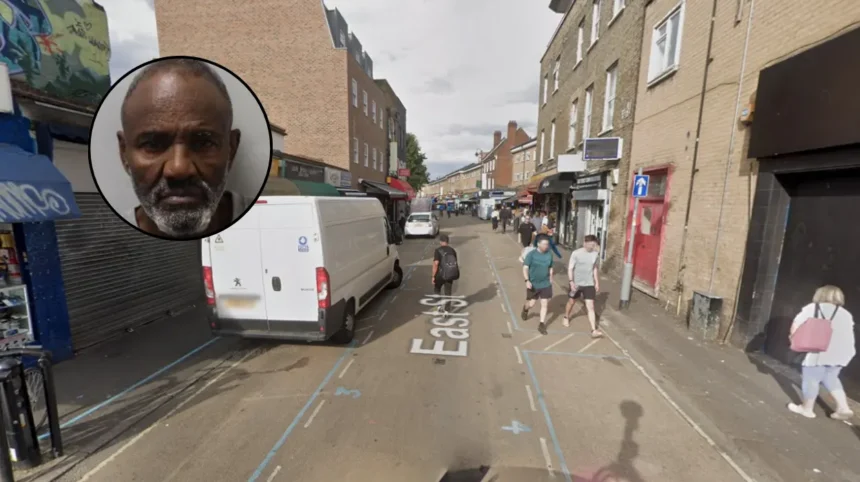
- Tragic Incident: The random attack took place at around 10:40 am on Remembrance Sunday, 10 November 2024, at East Street market in Walworth, south London.
- Additional Victims: Two other men, identified as Ho Man Yau and Baheru Nadew Bartura, sustained serious injuries during the assault and required urgent hospital treatment.
- Brave Bystanders: Local market stallholders and members of the public heroically tackled and restrained the attacker until Metropolitan Police officers arrived at the scene.
- Public Misinformation Addressed: Police officially dispelled rumours circulating on social media that had falsely speculated the stabbing was a terror-related incident.
Walworth (South London News) July 23, 2026 –A 67-year-old homeless man who carried out a random, fatal knife attack at a historic south London market on Remembrance Sunday morning has been sentenced to an indefinite hospital order. Musse Ali, of no fixed address, previously admitted to the manslaughter by diminished responsibility of 77-year-old grandfather Hilkiah McLeggan. During the unprovoked rampage at East Street market in Walworth, south London, on Sunday, 10 November 2024, Ali also wounded two other shoppers, identified as Ho Man Yau and Baheru Nadew Bartura. Police were called to the scene at approximately 10:40 am following urgent reports of multiple stabbings amidst morning shoppers. Mr McLeggan, a resident of Southwark, was pronounced dead at the scene despite the efforts of emergency services.
- Key Points
- What details were disclosed regarding the incident at East Street market?
- How did law enforcement address rumors circulating after the attack?
- What were the court proceedings against Musse Ali?
- What is the background behind this development?
- How could this development affect local communities, public policy, and street safety?
What details were disclosed regarding the incident at East Street market?
As reported by PA Media in The Guardian, police officers were dispatched to East Street market in Walworth at around 10:40 am on Sunday, 10 November 2024, following calls reporting multiple people injured in a knife attack. Upon arrival, emergency responders located three men with knife wounds.
Hilkiah McLeggan, 77, suffered fatal injuries and died at the scene, while Ho Man Yau and Baheru Nadew Bartura were rushed to hospital by London Ambulance Service paramedics. One of the surviving victims was initially listed in critical condition while receiving emergency care.
Local market traders and bystanders reacted rapidly to the chaotic scene. Eyewitness accounts indicated that courageous members of the public intervened to restrain Ali on the pavement until police officers arrived to take him into custody.
As reported by reporter Jonathan Brown for ITV News London, Chief Superintendent Seb Adjei-Addoh, lead for policing in Southwark, stated that:
“This was a horrific incident where a man has lost his life and two other people received serious injuries. The incident has understandably caused concern amongst the local community. There will be an increased policing presence in the Walworth area as we work alongside our partners to provide reassurance to local people and small businesses operating in East Street.”
How did law enforcement address rumors circulating after the attack?
In the hours immediately following the knife attack, false speculation mounted online regarding the possible motivation behind the public violence on Remembrance Sunday. Metropolitan Police officials moved swiftly to address false allegations and reassure the community.
As reported by PA Media, Chief Superintendent Seb Adjei-Addoh addressed the social media claims directly, stating that:
“We are aware of posts circulating on social media, implying that this was a terrorist incident. Our inquiries indicate this is not the case and we ask the public not to speculate.”
Chief Superintendent Adjei-Addoh also expressed gratitude to the bystanders who intervened, stating:
“I would like to take this opportunity to thank brave members of the public who assisted police at the scene.”
Detective Chief Inspector Alison Foxwell of the Metropolitan Police’s Specialist Crime Command added further detail regarding the rapid police response. As reported by ITV News London, Detective Chief Inspector Foxwell stated that:
“Our officers have worked quickly to investigate this tragic incident and secure these charges. I would like to thank the members of the public who have assisted us so far and encourage anyone who hasn’t spoken with us to get in contact.”
What were the court proceedings against Musse Ali?
Following his arrest at East Street market, 67-year-old Musse Ali was remanded in custody and formally charged with murder, two counts of attempted murder, and possession of an offensive weapon in a public place.
As reported by court reporters for ITV News London, Ali appeared at Croydon Magistrates’ Court wearing a grey tracksuit, where he spoke only to confirm his identity with the assistance of a Somali interpreter. District Judge Nigel McLean addressed the court during the initial hearing, stating to Ali:
“The charges you face are matters that can only be tried in crown court in the main. My only function today is to formally send you to the Central Criminal Court where your trial will take place.”
The case was remitted to the Old Bailey (Central Criminal Court). Following psychiatric assessments, psychiatric evaluations confirmed that Ali was suffering from severe psychiatric illness at the time of the offense, reducing his culpability from murder to manslaughter on the grounds of diminished responsibility.
The court subsequently sentenced Ali to an indefinite hospital order under the Mental Health Act, ensuring he remains detained in a secure medical facility for treatment and public protection without a fixed release date.
What is the background behind this development?
East Street market in Walworth, located in the London Borough of Southwark, is one of London’s oldest and busiest street markets, dating back to the 19th century. Serving a diverse inner-city demographic, the market attracts thousands of local residents and visitors every week, particularly during weekend trading hours.
In recent years, issues surrounding knife crime, unmanaged mental health conditions among unhoused individuals, and community safety in urban commercial zones have been prominent topics of public discourse across Greater London. Musse Ali, a man of no fixed address with severe undiagnosed or untreated mental health issues, had been living rough prior to the attack.
The vulnerability of individuals suffering from severe psychiatric conditions on the streets, combined with gaps in community mental health provisions and social housing support, has been a growing challenge for local councils and healthcare trusts across urban hubs in the United Kingdom.
Furthermore, the timing of the attack on Remembrance Sunday morning—a day traditionally marked by quiet reflection across the country—heightened the emotional shock within the Southwark community, prompting localized demands for better street safety and public health interventions.
How could this development affect local communities, public policy, and street safety?
The conviction and subsequent secure medical containment of Musse Ali are expected to reverberate across several sectors, impacting the local community, social care services, and law enforcement strategies:
- Impact on Local Traders and Residents: For the community of Walworth and stallholders at East Street market, the outcome brings legal closure regarding the perpetrator’s containment, though anxiety regarding street security in open-air trading spaces remains elevated. Small business owners may press Southwark Council and the Metropolitan Police for permanent community safety measures, such as dedicated market wardens or persistent neighbourhood policing teams.
- Scrutiny of Mental Health and Homelessness Provision: The case is likely to intensify parliamentary and local government debates over the intersection of rough sleeping and acute psychiatric illness. Public health groups and mental health advocacy organisations will face pressure to review how vulnerable homeless individuals with severe mental health issues are monitored, supported, and integrated into psychiatric care networks before reaching crisis points.
- Policing and Misinformation Management: The swift action taken by the Metropolitan Police to counter false social media claims of terrorism sets a procedural precedent for future public crisis management. Law enforcement agencies will continue refining protocols to quickly quell online rumour mills during high-profile violent incidents in order to prevent public panic and potential inter-community tension.