Key Points
- Call for Mayoral Control: Wandsworth Council has formally requested that administrative and operational responsibility for Hammersmith Bridge be transferred from Hammersmith & Fulham Council directly to Sadiq Khan, the Mayor of London.
- Rejection of Limited Funding Proposals: The initiative follows a recommendation from Hammersmith & Fulham Council to limit available funding solely to keeping the bridge accessible for pedestrians, cyclists, and river traffic, abandoning full vehicular restoration.
- Demand for Full Restoration: Wandsworth Council demands a fully funded restoration plan that reopens the bridge to motor vehicles, buses, and emergency services across south-west London.
- Traffic Diversion Pressures: Seven years of continuous disruption have pushed substantial traffic onto Putney Bridge and surrounding residential routes, impairing public transport efficiency and response times.
- Exploiting Devolution: Wandsworth Council Leader, Councillor Robert Morritt, has urged the UK Government to utilise current regional devolution conversations to place the strategic crossing under Transport for London (TfL) oversight.
Wandsworth (South London News) July 23, 2026 –Wandsworth Council has officially called for the governance and operational oversight of Hammersmith Bridge to be stripped from Hammersmith & Fulham Council and transferred directly to the Mayor of London, Sadiq Khan. Local authority leaders argue that direct mayoral control is the only viable path to securing a fully funded, credible strategy to restore the vital Victorian river crossing for motorised traffic, public transport, and emergency services.
As reported in an official press release issued by Wandsworth Council, the formal intervention follows a controversial recommendation by neighbouring Hammersmith & Fulham Council to restrict future financial expenditure exclusively to maintaining access for pedestrians, cyclists, and river transport.
Local leaders across south-west London argue that managing the bridge purely as a pedestrian walkway represents an unacceptable “managed decline” of critical regional infrastructure.
What are local leaders saying about the ongoing closure?
The Leader of Wandsworth Council, Councillor Robert Morritt, stated that central government conversations surrounding regional devolution present an ideal opportunity to resolve the multi-year stalemate between local boroughs and national bodies.
As quoted by Wandsworth Council, Councillor Robert Morritt stated:
“This is a moment for leadership, not managed decline. After seven years of disruption, the time has come to transfer responsibility for Hammersmith Bridge to the Mayor of London, with the powers and funding needed to get this strategic crossing properly restored.”
Councillor Morritt added:
“Residents in Putney, Roehampton and across Wandsworth cannot be left with a half-baked plan that keeps Hammersmith Bridge permanently out of reach for buses, emergency vehicles and ordinary traffic.”
Expanding on the wider systemic consequences, Councillor Morritt noted:
“This bridge is not a local inconvenience. It is a strategic river crossing. Its closure has shifted traffic onto Putney Bridge and surrounding roads, made journeys harder for residents and businesses, and damaged public transport resilience across south London.”
Concluding the council’s position, Councillor Morritt stated:
“Wandsworth will continue to champion the full reopening of Hammersmith Bridge. We are calling on the Government to use the current devolution agenda to put responsibility where it belongs: with London’s Mayor, working with Transport for London and the boroughs to deliver a serious, funded plan that restores proper connectivity for residents, buses and emergency services.”
Why is Wandsworth Council demanding mayoral oversight now?
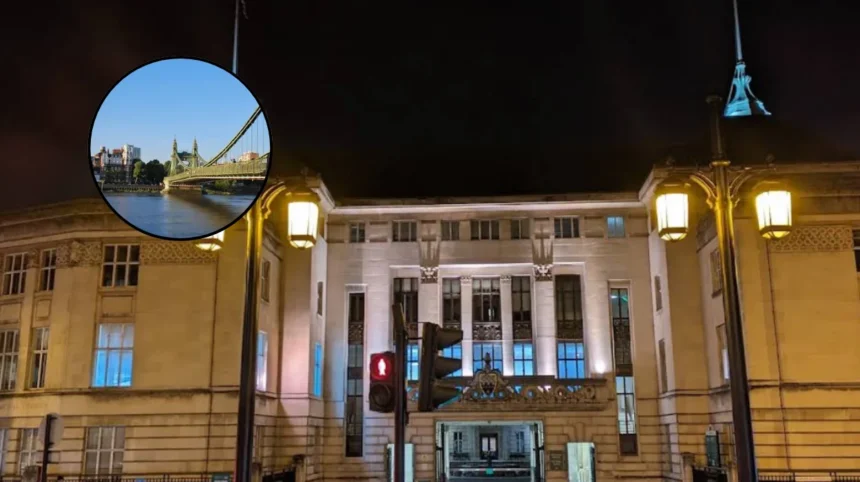
Hammersmith Bridge, a Grade II* listed cast-iron suspension structure built in 1887, has been completely closed to motor vehicles since April 2019 after structural engineers detected micro-fractures in its pedestals. Although temporary stabilization works permitted pedestrians and cyclists to resume crossing, full repair estimates have ballooned into tens of millions of pounds, leading to prolonged political friction between the London Borough of Hammersmith & Fulham, the Department for Transport (DfT), and Transport for London (TfL).
According to technical analysis conducted by Wandsworth Council, the prolonged vehicular closure has placed sustained and unmanageable pressure on alternative Thames crossings, most notably Putney Bridge. Wandsworth’s traffic assessments revealed substantial increases in morning peak vehicular traffic on Putney Bridge, leading directly to deteriorating bus punctuality, extended passenger wait times, and gridlock across surrounding road networks in SW15.
Wandsworth officials maintain that the continued disruption adversely impacts residents, local traders, bus passengers, emergency services, and individuals with reduced mobility who cannot easily cross on foot or by bicycle. By shifting authority to the Greater London Authority (GLA) and TfL, Wandsworth Council believes a long-term capital funding model can finally be unlocked.
Background of the particular development
The dispute over Hammersmith Bridge represents one of the most complex funding deadlocks in modern London transport infrastructure.
Owned by the London Borough of Hammersmith & Fulham, the bridge requires an estimated total restoration budget exceeding £250 million. Under previous funding arrangements proposed by the UK Department for Transport, repair costs were meant to be split equally three ways: one-third from the central Government, one-third from Transport for London, and one-third from Hammersmith & Fulham Council.
However, local authorities have repeatedly stated that a single London borough lacks the financial bandwidth or borrowing capacity to fund a capital project of this magnitude. Meanwhile, TfL’s ongoing fiscal constraints have prevented it from underwriting the borough’s share.
As a result, progress has dragged for over seven years, characterized by temporary stabilization efforts, partial river closures, and intermittent pedestrian bans during hot weather when thermal expansion threatened structural integrity.
Hammersmith & Fulham Council’s recent policy signal—recommending that available capital be focused purely on maintaining active travel (pedestrians and cyclists) rather than motor vehicles—marks a major strategic pivot away from complete vehicle restoration.
This proposal has drawn sharp criticism from neighboring Wandsworth, which bears the brunt of diverted traffic without holding statutory authority over the bridge itself.
Explore More Wandsworth Council News
Plans for Lennox Estate 14-Storey Tower Scrapped – Roehampton 2026
Landmark Temporary Housing for 186 Homeless Families in Tooting 2026
Predictions: How this development affects south-west London residents and commuters
If responsibility for Hammersmith Bridge is successfully transferred to the Mayor of London and Transport for London, the decision could fundamentally reshape transport dynamics across south-west London:
- For Bus Passengers and Commuters: Re-establishing vehicular traffic under a unified TfL strategy would enable the restoration of key cross-river bus routes connecting Barnes, Hammersmith, Putney, and Roehampton. This would reduce daily commute times for tens of thousands of bus passengers who currently face extensive detours via Chiswick Bridge or Putney Bridge.
- For Local Residents and Road Users in Wandsworth: A fully reopened bridge would alleviate severe peak-time gridlock on Putney High Street, Lower Richmond Road, and Putney Bridge Road. Reduced congestion would directly lower localized tailpipe emissions, improving air quality for residential communities in Putney and Roehampton. Conversely, if mayoral takeover is rejected and the bridge remains permanently restricted to pedestrians, gridlock around Putney Bridge will likely become a permanent structural feature of the area.
- For Emergency Services: Emergency response units (London Ambulance Service and London Fire Brigade) would regain a direct arterial route across the Thames, shortening response times between hospitals such as Charing Cross and residential zones south of the river.
- For Council Taxpayers: Consolidating funding under the Mayor of London and TfL reduces the immediate threat of sudden council tax precepts or localized tolls being levied exclusively on local borough residents to cover capital construction costs.