Key Points
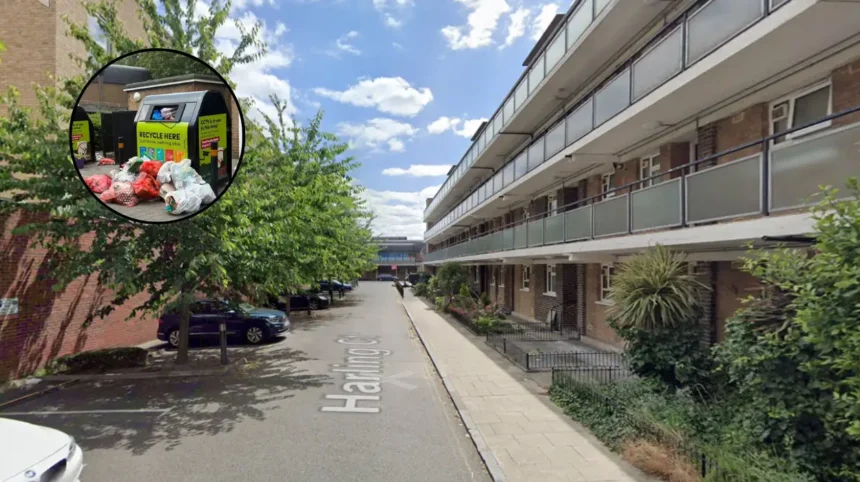
- Residents near Harling Court in Battersea have reported ongoing fly-tipping and waste dumping at the site since 2021.
- Neighbours say unauthorised use by people who do not live at the block causes bins to overflow, attracts vermin, and creates a health hazard.
- Complaints have been made repeatedly to Wandsworth Council, but residents say effective action using CCTV, enforcement, or access restrictions has not yet been taken.
- The council added extra bins earlier this month, which residents warned could encourage more dumping.
- Wandsworth Council says it will introduce portable CCTV, has increased waste capacity, installed new bin enclosures, and will write to neighbouring properties asking them not to use the Harling Court facilities.
- The bins belong to Harling Court, a former council block, and are located next to Chadwick House and Latchmere Leisure Centre.
Wandsworth Council, (South London News) July 24, 2026Battersea neighbours living near Harling Court say they have been reporting issues caused by people who do not live at the apartment block repeatedly dumping their waste and fly-tipping at the bins to Wandsworth Council since 2021, as reported by the Local Democracy Reporting Service (LDRS) via the Evening Standard.
- Key Points
- What have residents described about the scale and impact of the dumping?
- What actions has Wandsworth Council taken or promised so far?
- What concerns do residents have about the council’s recent changes?
- Background of the particular development
- Prediction: how this development can affect residents and local audiences
People told the LDRS that unauthorised use of the site causes the bins to overflow, with waste piling up around them, which attracts vermin and has become a health hazard on a route busy with children and families, according to the Evening Standard’s coverage of the LDRS investigation.
Residents said they have struggled to get responses from the council to their complaints over the years, and it has not yet taken effective action using CCTV, enforcement and restricting access to the bins to resolve the issue, as reported by the LDRS via the Evening Standard.
They said the authority added extra bins earlier this month, which they warned would only encourage more unauthorised waste dumping, according to the LDRS report carried by the Evening Standard.
The council told the LDRS it will introduce portable CCTV to deter people from misusing the site and monitor the situation closely to take action against those responsible, as reported by the Evening Standard.
The bins belong to Harling Court, which was built as a council block, and are next to Chadwick House and Latchmere Leisure Centre, the LDRS noted via the Evening Standard.
One resident told the LDRS the bins were “constantly overfilled” and the site had become a “health hazard”, with foxes spreading the rubbish around further, according to the Evening Standard’s report.
He said:
“The place has become a hotspot for fly-tipping. Every day of the week you will find anything dumped in there. People just pass by, dump mattresses, furniture, other kinds of waste, garden waste… It’s the fact that the site has been repeatedly misused since at least 2021 and the council has not addressed the underlying problem,”
as quoted by the LDRS via the Evening Standard.
A Wandsworth Council spokesperson said:
“We have heard residents’ concerns and recognise that there have been recurring issues with waste being left around the bin site at Harling Court. In response, we have increased waste and recycling capacity, installed new bin enclosures and improved signage. We will also be introducing deployable CCTV to help deter and identify those responsible for the misuse of the site, as we believe the issue is being caused by people who do not live in the blocks. And we will shortly be writing to neighbouring properties asking residents not to use the Harling Court bin facilities. Keeping our streets and estates clean is a priority for the council and we will continue to monitor the situation closely and take action against those responsible,”
as reported by the LDRS via the Evening Standard and AOL.
What have residents described about the scale and impact of the dumping?
Residents described daily dumping of large items such as mattresses, furniture and garden waste, which they say has turned the site into a persistent fly-tipping hotspot, according to the LDRS account in the Evening Standard.
They said the overflowing bins and scattered rubbish attract vermin and foxes, which then spread waste further along a route used regularly by children and families, creating what they describe as a health hazard, as reported by the LDRS via the Evening Standard.
One resident emphasised that the problem is not simply occasional littering but long-term, repeated misuse of the bin area since at least 2021, with the underlying issue unaddressed despite years of complaints, according to the LDRS report carried by the Evening Standard.
What actions has Wandsworth Council taken or promised so far?
Wandsworth Council said it has increased waste and recycling capacity at the site, installed new bin enclosures and improved signage in response to the recurring issues, as quoted by the LDRS via the Evening Standard.
The authority also said it will introduce deployable (portable) CCTV to help deter and identify those responsible for the misuse of the site, based on its belief that the problem is being caused by people who do not live in the blocks, according to the council statement reported by the Evening Standard and AOL.
In addition, the council said it will shortly write to neighbouring properties asking residents not to use the Harling Court bin facilities, as stated by the council spokesperson in the LDRS report via the Evening Standard.
The council added that keeping streets and estates clean is a priority and that it will continue to monitor the situation closely and take action against those responsible, as reported by the Evening Standard.
What concerns do residents have about the council’s recent changes?
Despite the council’s measures, residents expressed concern that adding extra bins earlier in the month could make the problem worse by encouraging more unauthorised dumping, according to the LDRS report in the Evening Standard.
They argued that simply increasing capacity without stronger enforcement, access controls or consistent CCTV coverage does not address the root cause of the misuse, as reported by the LDRS via the Evening Standard.
Background of the particular development
Fly-tipping—the illegal dumping of waste on land that does not belong to the tipper—is a longstanding issue across London and wider England, with local councils responsible for clearing most incidents and investigating offences.www+1
In England, residents can report fly-tipping to their local authority’s environmental health team, while large-scale dumping and waste crime can be reported to the Environment Agency or anonymously to Crimestoppers, according to UK government guidance.
Local authorities such as Wandsworth have enforcement powers to investigate waste offences and issue fines, as set out on the council’s own waste enforcement pages.
London-wide data on fly-tipping incidents is published through the London Datastore, showing that such incidents are tracked and reported at a city level, though individual hotspot cases like Harling Court are typically handled by the relevant borough.
The Harling Court case fits a wider pattern in which bin areas serving housing blocks become targets for non-residents seeking to dispose of household and bulky waste without paying for proper collection, leading to repeated complaints from people living nearby.
Prediction: how this development can affect residents and local audiences
If the council’s planned measures—portable CCTV, written notices to neighbouring properties, and improved bin infrastructure—are implemented consistently and backed by enforcement, the frequency of fly-tipping at Harling Court could fall over time, reducing health and nuisance risks for local residents.
However, if enforcement is sporadic or the CCTV is not maintained or monitored closely, residents may see little change, and frustration with the council could grow, particularly among families and vulnerable people who use the surrounding routes daily.
For local audiences, including other Battersea and Wandsworth residents, the case may also increase pressure on the council to apply similar measures—such as deployable CCTV and access restrictions—at other known hotspot sites, potentially improving street cleanliness more widely if the approach proves effective.
Conversely, if the extra bins and signage do not deter non-resident dumpers, the area could remain a persistent problem site, with continued risks from vermin, scattered waste and potential impacts on perceptions of safety and cleanliness around Harling Court, Chadwick House and Latchmere Leisure Centre.