Key Points
- Scale of Opportunity: A new artificial intelligence mapping tool has identified 3,017 small sites across the London Borough of Lewisham with an estimated capacity to accommodate up to 9,747 new homes.
- Funding and Development: The “Small Sites AI Finder” was developed in partnership with architecture practice RCKa under the fourth round of the Ministry of Housing, Communities and Local Government’s (MHCLG) PropTech Innovation Fund.
- Site Typologies: The digital tool analysed geographic and land parcel data to locate typical small-site urban typologies, focusing primarily on backland, infill, and side-street plots.
- Policy Impact Evaluation: Beyond land identification, the tool evaluated historical planning application data to assess the real-world impact of Lewisham’s Small Sites Design Guide Supplementary Planning Document (SPD).
- Planning Approval Metrics: Approval rates for small site planning applications rose slightly from 38.8% prior to the SPD’s adoption to 40.7% afterward, accompanied by a drop in application withdrawals but a rise in refusal rates and determination times.
- Accuracy and Limitations: The MHCLG reported that the tool’s identification accuracy varied significantly between 31% and 76% depending on the site type, underscoring that AI output must be cross-checked by professional planning officers.
- Future Deployment: Lewisham Council intends to refine the software to support targeted landowner engagement, inform policy updates, and accelerate small-scale housing delivery.
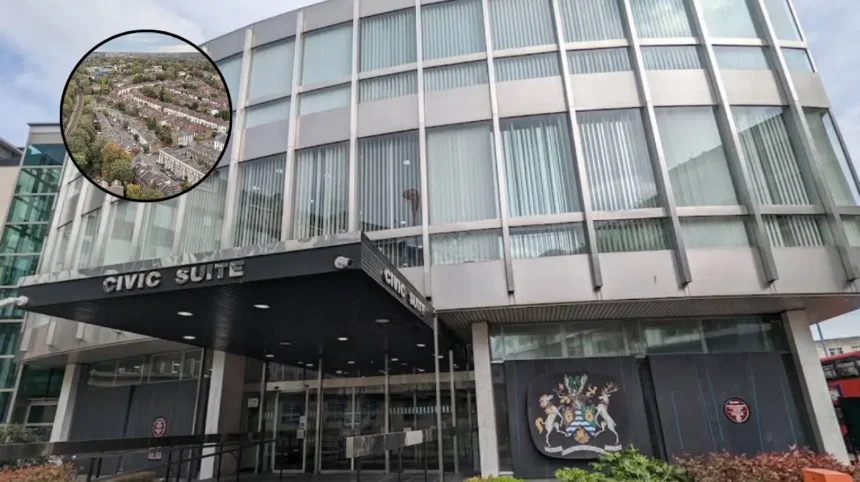
Lewisham (South London News) July 31, 2026 – Lewisham Council has deployed a government-backed artificial intelligence platform to identify 3,017 potential small sites capable of yielding an estimated 9,747 new homes across the borough.
- Key Points
- How Has Artificial Intelligence Been Deployed to Map Housing Sites in Lewisham?
- How Has Lewisham’s Small Sites Design Guide Impacted Planning Outcomes?
- What Are the Stated Limitations and Accuracy Rates of the AI Platform?
- What Are the Next Steps for Lewisham Council and the PropTech Innovation Fund?
- Background to the PropTech Innovation Fund and Small-Site Housing Delivery
- Predictions: How This Development Could Affect Local Planning Authorities, Landowners, and Developers
How Has Artificial Intelligence Been Deployed to Map Housing Sites in Lewisham?
As reported by planning and development journalists covering the Ministry of Housing, Communities and Local Government (MHCLG) flagship initiatives, the “Small Sites AI Finder” was created through a partnership between Lewisham Council and the architectural practice RCKa. The pilot initiative received financial and structural backing through the fourth round of the government’s PropTech Innovation Fund, a program designed to accelerate digital innovation within local authority planning departments and the wider housing sector.
The algorithmic mapping tool evaluated land parcel configurations and spatial constraints throughout the London Borough of Lewisham. By processing spatial datasets, the system categorized land into recurring urban residential development typologies, specifically isolating:
- Infill plots: Gap sites within existing street frontages.
- Backland sites: Underutilised land positioned behind existing property lines.
- Side-street plots: Flank plots and corner spaces capable of accommodating additional residential density.
In addition to spatial mapping, the project integrated historical planning submission data to evaluate how local policy interventions shape development outcomes over time.
How Has Lewisham’s Small Sites Design Guide Impacted Planning Outcomes?
The Small Sites AI Finder examined planning data to measure the operational impact of Lewisham’s Small Sites Design Guide Supplementary Planning Document (SPD). The platform conducted a comparative analysis of planning applications submitted prior to and following the formal adoption of the guidance document.
The findings revealed shifts in application performance across several metrics:
| Metric | Pre-SPD Adoption | Post-SPD Adoption |
| Approval Rate | 38.8% | 40.7% |
| Withdrawal Rate | Higher relative proportion | Reduced volume of voluntary withdrawals |
| Refusal Rate | Lower relative proportion | Increased rate of formal refusals |
| Determination Times | Shorter average processing timeframe | Extended average processing timeframe |
As reported by spatial analysts and local authority representatives within the project documentation, Lewisham Council indicated that these statistical shifts likely reflect heightened scrutiny of planning proposals following the adoption of the SPD. Council representatives noted that extended determination timelines and altered approval ratios were also influenced by external operational variables, including local authority resourcing pressures and macro-economic factors affecting the construction sector.
What Are the Stated Limitations and Accuracy Rates of the AI Platform?
As reported by official spokespersons for the Ministry of Housing, Communities and Local Government (MHCLG), the outcome of the proptech pilot “could inform future policy work and engagement with landowners and developers.” However, central government representatives maintained a clear reservation regarding the technology’s operational limits, emphasizing that automated platforms “cannot replace professional judgement.”
Technical evaluation data released alongside the project metrics detailed that the accuracy of the Small Sites AI Finder fluctuated considerably depending on the spatial characteristics of the land involved:
- Lower-bound accuracy: Recorded at 31% for complex or irregular site typologies.
- Upper-bound accuracy: Reached 76% on clearly defined land configurations.
Due to this variance, the MHCLG stipulated that all automated outputs must undergo manual verification by qualified local authority planning officers, who must cross-check potential sites against the spatial standards outlined in the borough’s SPD and local development plans.
What Are the Next Steps for Lewisham Council and the PropTech Innovation Fund?
Lewisham Council confirmed its intention to continue the technical development of the Small Sites AI Finder. The ongoing development phase aims to increase the software’s baseline accuracy rates and expand its analytical functionality.
Municipal officers intend to deploy the platform to:
- Facilitate targeted outreach and engagement programs with private and public landowners.
- Inform future revisions of the Small Sites Design Guide SPD based on empirical development patterns.
- Establish streamlined frameworks to increase housing yield on underutilized urban land.
Background to the PropTech Innovation Fund and Small-Site Housing Delivery
The development of the Small Sites AI Finder occurs against the backdrop of persistent housing shortages across Greater London and broader national policy efforts to modernize the UK planning system. Small sites—typically defined as plots capable of accommodating fewer than 10 units—are widely regarded by planning policy experts as vital components in meeting regional housing targets. However, identifying and allocating these plots traditionally requires extensive manual survey work by local authority teams, making comprehensive small-site delivery resource-intensive.
To address these spatial and administrative bottlenecks, the central government established the PropTech Innovation Fund under the Ministry of Housing, Communities and Local Government. The fund allocates targeted financial grants to local planning authorities across England to pilot digital technologies, open-data initiatives, and automated spatial analytics.
Round four of the fund specifically prioritised tools capable of improving land availability assessments, accelerating planning application processing, and enhancing policy transparency. The partnership between Lewisham Council and the architectural practice RCKa represents a core effort within this national strategy to test whether machine learning algorithms can lower the administrative cost of identifying viable development land within tightly constrained urban environments.
Explore More Lewisham News
Lewisham and Greenwich NHS Trust Discharge Failure: South London, 2026
Atelier Funds £5m Brownfield Home Development in Lewisham 2026
Predictions: How This Development Could Affect Local Planning Authorities, Landowners, and Developers
The pilot results from Lewisham’s AI mapping initiative offer a clear indication of how automated spatial tools will shape the urban development landscape moving forward:
For Local Planning Authorities
Local councils across the UK are likely to adopt similar algorithmic tools to streamline their Strategic Housing Land Availability Assessments (SHLAAs). While manual officer verification remains mandatory due to accuracy limitations (which dip to 31% on complex plots), AI identification drastically reduces the initial discovery phase for small sites. Over time, as baseline accuracy improves beyond the current 76% upper threshold, planning departments will experience reduced administrative burdens during plan-making stages, allowing officers to concentrate resources on formal scheme determinations.
For Landowners and Homeowners
Private individuals and commercial entities holding small, backland, or infill plots within urban centers will face increasingly proactive outreach from local councils. Rather than waiting for landowners to submit speculative planning enquiries, municipal authorities using AI spatial analysis can directly identify suitable sites and approach owners to discuss development potential. This proactive model could unlock latent land value for property owners who were previously unaware of their site’s residential capacity under local SPD guidelines.
For Small-to-Medium Enterprise (SME) Developers
SME housebuilders stand to benefit from reduced search costs and clearer policy guidance. Because small sites historically carry high planning risk relative to their project scale, clear identification combined with specific design guidance (such as Lewisham’s SPD) provides developers with greater certainty regarding site viability. While post-SPD planning data shows extended determination times and slightly elevated refusal rates due to stricter design scrutiny, the overall modest rise in approvals (to 40.7%) and reduction in application withdrawals suggest that early-stage clarity helps developers align proposals with local authority expectations prior to submission.