Key Points
- Joint Declaration: Six local authorities across London—Lambeth, Hackney, Haringey, Lewisham, Southwark, and Waltham Forest—have pledged to keep their local services trans-inclusive.
- Ministerial Appeal: Council leaders dispatched a joint letter to Women and Equalities Minister Bridget Phillipson, warning that the revised Equality and Human Rights Commission (EHRC) Code of Practice risks pushing trans people out of public life.
- Staff Protection: Boroughs confirmed they will not require council employees to “police” gender or biological sex in single-sex public spaces such as changing rooms, toilets, and support facilities.
- Operational Concerns: Leaders highlighted a “dangerous lack of clarity” in the new code, noting that without adequate alternative facilities, council workers could face legal exposure to inadvertent discrimination claims.
- Local Strategy: Boroughs representing some of the UK’s largest transgender and non-binary communities are reviewing internal policies to establish local protections and maintain access for all residents.
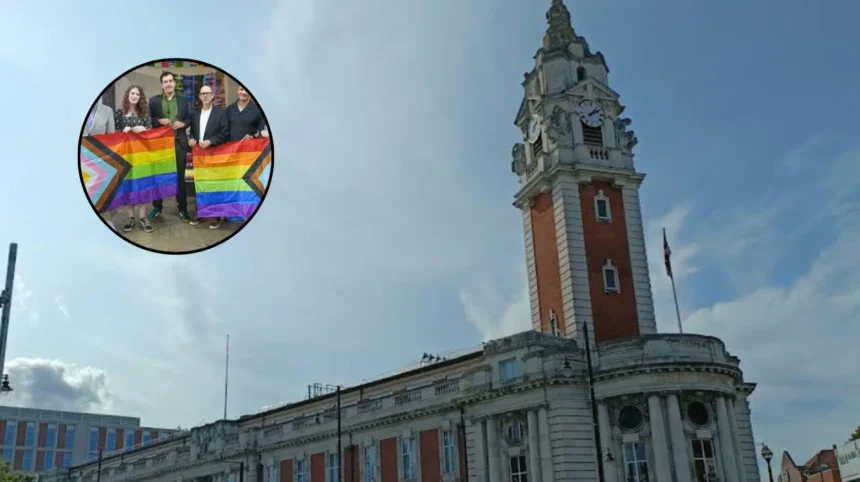
London (South London News) August 10, 2026 – Six London local authorities have formally pledged to maintain trans-inclusive public services, launching a joint challenge to newly implemented guidance from the Equality and Human Rights Commission (EHRC) on single-sex spaces. Council leaders representing Lambeth, Hackney, Haringey, Lewisham, Southwark, and Waltham Forest issued a collective declaration on Tuesday—the same day the EHRC’s updated Equality Act 2010: Code of Practice for services, public functions and associations came into effect across England, Scotland, and Wales. In a joint letter sent directly to Women and Equalities Minister Bridget Phillipson, the six boroughs stated that they will not instruct frontline staff to verify or monitor gender identity or biological sex at public facilities. The local authorities warned that overly broad interpretations of the guidance threaten to segregate transgender, non-binary, and intersex residents, making their exclusion from civic life more likely.
- Key Points
- Why Are London Boroughs Challenging the EHRC Single-Sex Code of Practice?
- What Actions Are Local Authorities Taking to Protect Trans Inclusion?
- What Is the Background of the EHRC Single-Sex Guidance?
- What Are the Predictions for How This Development Will Affect Local Authorities and Residents?
Why Are London Boroughs Challenging the EHRC Single-Sex Code of Practice?
As reported by Will Stroude of PinkNews, the leaders of the six boroughs convened at the London LGBTQ+ Centre in central London to establish a unified front against the implementation of the new guidance. The councils expressed concern that the updated code compromises equal access to essential services and creates severe operational uncertainty for public sector staff.
In their joint letter to the Equalities Minister, the council leaders wrote:
“It is simply unacceptable that the Code of Practice is harmful to the rights of trans people and will make their exclusion from public life more likely, not less. This will feel like an attack to the countless trans people in our communities who are simply trying to live their lives in safety and wish to be treated with respect.”
As noted by LocalGov editorial reporting, the signatories emphasised that the guidance risks exposing frontline employees to legal liability. The leaders stated that the code introduces a “dangerous lack of clarity” for local service providers, leaving council staff “at risk of inadvertent discrimination where no third spaces are available to Trans+ people.”
As reported by Noah Vickers of the Evening Standard, Lambeth Council’s deputy leader and cabinet member for inclusion, Natalie Kane, outlined the potential risks to service users during borough proceedings. Kane stated:
“For trans, intersex and gender non-conforming individuals, as well as those men and women who do not fit normative social representations of gender, these guidelines present the danger of discrimination and prejudice in the spaces where we should be prioritising care, support and service provision.”
Kane added:
“When residents access our public services, they should not be concerned about how their gender is perceived, but how we provide the very best service for them, every step of the way. Trans women are women, trans men are men. Trans rights are human rights.”
What Actions Are Local Authorities Taking to Protect Trans Inclusion?
Following the joint statement, individual boroughs began reviewing their workplace policies and public service delivery frameworks. Councils are developing local protocols to ensure that public amenities, including leisure centers, community centers, and municipal buildings, remain accessible without gender policing.
A motion passed by Lambeth Council condemned the code as “incoherent and self-contradictory, discriminatory, and impossible to implement in a reasonable and proportionate manner,” committing the authority to produce an internal policy that champions dignity and privacy rights for transgender and gender non-conforming residents.
As reported by the Evening Standard, Green Party London Assembly member Caroline Russell formally contacted Mayor of London Sir Sadiq Khan, asking City Hall to coordinate a city-wide approach among local authorities. In her letter, Russell urged the Mayor to work alongside London councils to ensure that “this new guidance cannot be used to diminish the everyday rights of trans Londoners so that London remains a place where everyone can belong.” Russell stressed that the initiative centers on “Trans people’s right to exist in society free from abuse, discrimination and segregation, with the autonomy to be who they know themselves to be.”
In official statements published by Haringey Council, borough leaders confirmed that they will continue working with local LGBTQ+ advocacy groups and service providers to maintain non-discriminatory service access. The leadership maintained:
“We believe the government should be working to strengthen protections, rights and inclusion for all communities, not introducing measures that risk deepening division and exclusion.”
What Is the Background of the EHRC Single-Sex Guidance?
The Equality and Human Rights Commission’s updated Code of Practice for services, public functions and associations represents a substantial revision of the statutory guidance originally published in 2011. Under the previous 2011 framework, service providers were advised to treat transgender individuals according to their presented gender role, allowing exclusion from single-sex facilities strictly on a case-by-case basis where deemed a proportionate means of achieving a legitimate aim.
The regulatory framework shifted following a landmark UK Supreme Court ruling concerning the legal definition of “sex” under the Equality Act 2010. The court determined that “sex” in the context of the Act refers to biological sex at birth. Consequently, the EHRC revised its code to clarify that single-sex services—such as domestic abuse refuges, hospital wards, changing facilities, and public toilets—must define single-sex spaces based on biological sex.
Under section 13.130 of the updated code, if a service provider permits transgender individuals of the opposite biological sex into a space designated for one sex, the facility legally ceases to qualify as a single-sex service under statutory exceptions. The EHRC’s revised position instructs service providers wishing to accommodate transgender people to offer separate, gender-neutral “third spaces” or mixed-sex alternatives rather than adjusting single-sex provisions.
Explore More Local South London News
Wandsworth To Get Dedicated Mental Health A&E At St George’s 2026
Bus Bursts into Flames on Residential Street in Sutton 2026
What Are the Predictions for How This Development Will Affect Local Authorities and Residents?
The stand taken by Lambeth, Hackney, Haringey, Lewisham, Southwark, and Waltham Forest sets up an operational and legal precedent that will impact several key groups across London:
- Transgender and Non-Binary Residents: For trans residents living in or visiting these six London boroughs, local service delivery will largely remain status quo, reducing immediate friction or exclusion in local council-run venues. However, because private operators, commercial businesses, and neighboring councils may choose to strictly enforce the EHRC guidance, residents will likely face inconsistent rules across different boroughs and venues.
- Local Council Staff and Service Providers: Frontline staff in the six participating councils will not be instructed to challenge or verify service users based on biological sex. However, local authorities may face potential legal challenges or Judicial Review applications from single-sex advocacy groups arguing that non-enforcement violates statutory Equality Act provisions regarding single-sex exceptions.
- Central Government and Regulatory Bodies: The joint petition sent to Women and Equalities Minister Bridget Phillipson puts pressure on the government to issue secondary guidance or legal clarifications for public bodies. If central government enforces strict compliance with the statutory code, conflict between local government administration and federal regulators could escalate into formal legal disputes.