Lambeth is one of London’s strongest boroughs for museums covering war, medicine, gardening, cinema, local history and social heritage. Its museums range from major national institutions to specialist collections housed in historic buildings. Together, they show how Lambeth connects national events with everyday London life.
- Which museums are the best to visit in Lambeth?
- Why is the Imperial War Museum London one of Lambeth’s most important museums?
- What makes the Garden Museum different from other Lambeth museums?
- How does the Florence Nightingale Museum explain the history of nursing?
- Why should film lovers visit the Cinema Museum in Kennington?
- What can visitors discover at Lambeth Archives?
- How should visitors choose between Lambeth’s museums?
- How accessible are Lambeth’s museums for tourists and day visitors?
- How can tourists build a museum itinerary around Lambeth?
- Why are Lambeth’s museums important to London’s cultural heritage?
- What should visitors know before visiting Lambeth museums?
The borough extends along the south bank of the River Thames and southwards through Waterloo, Vauxhall, Kennington, Stockwell, Brixton, Herne Hill, Tulse Hill and Norwood. Lambeth Council identifies more than 2,000 statutory listed buildings across the borough, demonstrating the scale of its architectural and historical heritage.
For visitors, the strongest museum experiences are concentrated around several distinct themes. The Imperial War Museum London focuses on modern conflict and its effects on individuals and societies. The Garden Museum explores horticultural history, design and culture. The Florence Nightingale Museum examines nursing, healthcare and the legacy of a major Victorian reformer. The Cinema Museum preserves the history of film-going through equipment, photographs, posters and cinema memorabilia.
Lambeth Archives adds another dimension. It is the borough’s record office and local studies library, holding documents, maps, photographs, artworks and artefacts connected with Lambeth and its communities. It provides a valuable route into neighbourhood history that conventional museums do not always cover.
Which museums are the best to visit in Lambeth?
Lambeth’s leading museums include the Imperial War Museum London, Garden Museum, Florence Nightingale Museum and Cinema Museum, while Lambeth Archives provides specialist local history collections for deeper research into the borough’s people, places and development.
These institutions offer distinctly different experiences, so the best choice depends on the subject a visitor wants to explore.
The Imperial War Museum London is the strongest option for visitors interested in modern military history, civilian experiences of war, the First World War, Second World War and Holocaust. Its permanent galleries combine objects, photographs, testimony and interpretation. The museum recommends allowing at least three hours to explore its galleries and collections.
The Garden Museum provides a different cultural perspective. It is Britain’s only museum dedicated to the art, history and design of gardens. Its collection covers British gardening from the sixteenth century to the present, with displays examining gardeners, plants, garden design, objects and changing attitudes towards outdoor spaces.
The Florence Nightingale Museum focuses on Florence Nightingale, healthcare reform and the development of modern nursing. Its collection includes objects associated with Nightingale, including the lamp she carried during the Crimean War, her medicine chest and material relating to her book Notes on Nursing.
The Cinema Museum is particularly valuable for visitors interested in film history. Its collection covers cinema architecture, projection equipment, film, posters, uniforms, publicity material and other objects associated with going to the pictures.
Lambeth Archives is not a conventional museum attraction, but it is important for researchers and visitors interested in local heritage. Its collections extend back to the sixteenth century and cover government, schools, estates, churches, businesses, societies, charities, transport and social history.
Why is the Imperial War Museum London one of Lambeth’s most important museums?
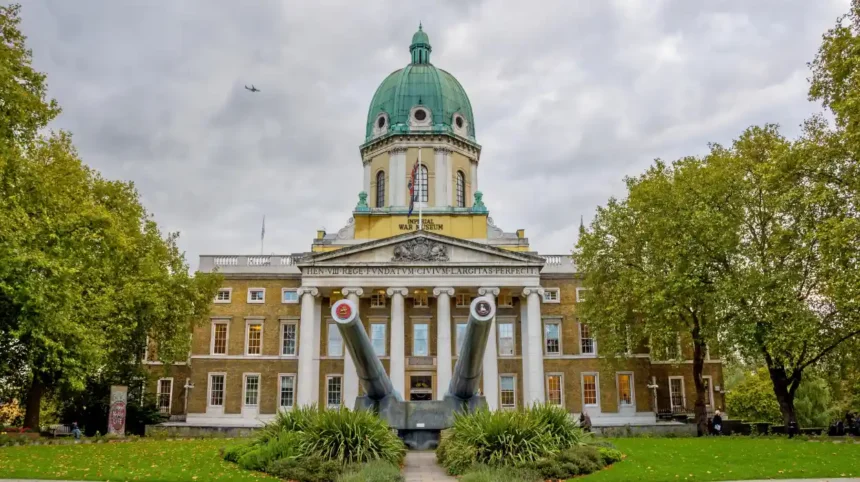
Imperial War Museum London is a national museum documenting modern conflict and its human consequences. Its galleries cover the First World War, Second World War and Holocaust, alongside art, photography and personal experiences from conflicts.
Imperial War Museums, commonly abbreviated to IWM, is a group of museums documenting conflict and its impact on people. IWM London is located on Lambeth Road in SE1 and forms one of the borough’s most significant cultural attractions.
The museum’s institutional history began during the First World War. In 1917, the British Cabinet decided to establish a National War Museum to collect material relating to the conflict then underway. The institution was formally established by Act of Parliament in 1920.
IWM London opened at the Crystal Palace on 9 June 1920. It subsequently moved through several London locations before the Duke of York reopened the museum in its current Lambeth home on 7 July 1936. The building had previously formed part of Bethlem Royal Hospital, historically known as Bedlam.
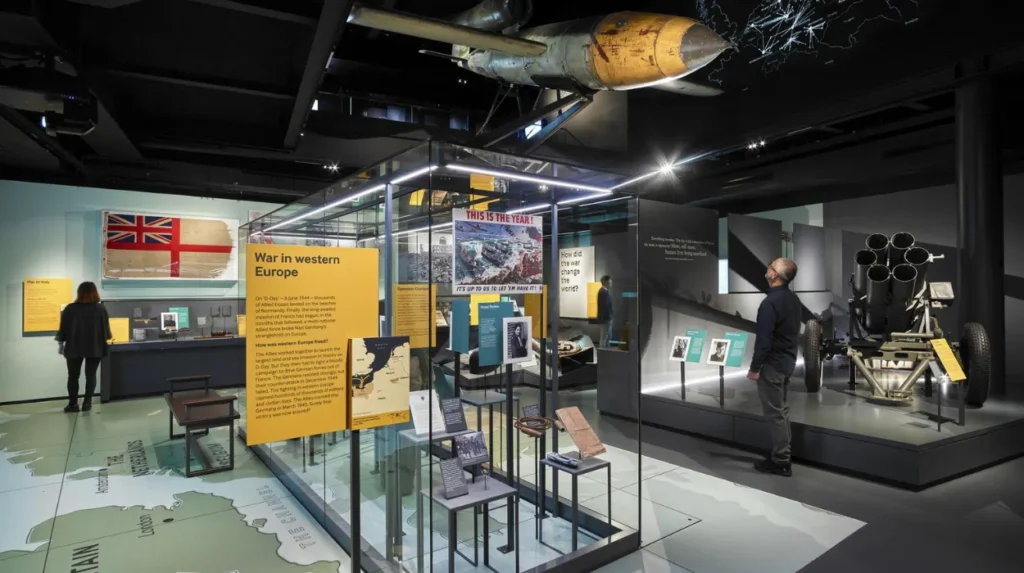
The museum now presents modern warfare through the experiences of people affected by conflict. Its permanent galleries include displays on the First World War, Second World War and Holocaust. The Blavatnik Art, Film and Photography Galleries add another dimension by showing creative responses to conflict and twentieth- and twenty-first-century history.
The museum’s scale makes it particularly useful for visitors who want substantial historical coverage rather than a short specialist collection. IWM recommends allowing at least three hours, although visitors focusing on specific galleries can plan a shorter visit.
Access is another practical strength. The museum has step-free access through its West Entrance, and wheelchairs are available to borrow subject to availability. IWM also publishes an accessibility guide containing information about sensory features and accessible facilities.
The museum is close to several major transport points. Lambeth North Underground station is about a seven-minute walk away, while Elephant and Castle is around ten minutes away and Waterloo is around fourteen minutes away.
For tourists, IWM London works particularly well as part of a central London cultural itinerary. Its position between Waterloo, Lambeth and Elephant and Castle places it within easy reach of other South Bank attractions.
What makes the Garden Museum different from other Lambeth museums?
The Garden Museum is Britain’s only museum dedicated to the art, history and design of gardens. It occupies the former St Mary-at-Lambeth church beside Lambeth Palace and combines historic architecture, collections, exhibitions, archives and gardens.
The Garden Museum offers one of Lambeth’s most distinctive museum experiences because the building itself forms part of the collection story. The museum occupies the former St Mary-at-Lambeth Church beside Lambeth Palace on Lambeth Palace Road.
The site has medieval origins. The Garden Museum records a wooden church on the site from 1062, associated with Goda, sister of Edward the Confessor. The church later became connected with the Archbishops of Canterbury and their London residence at Lambeth Palace.
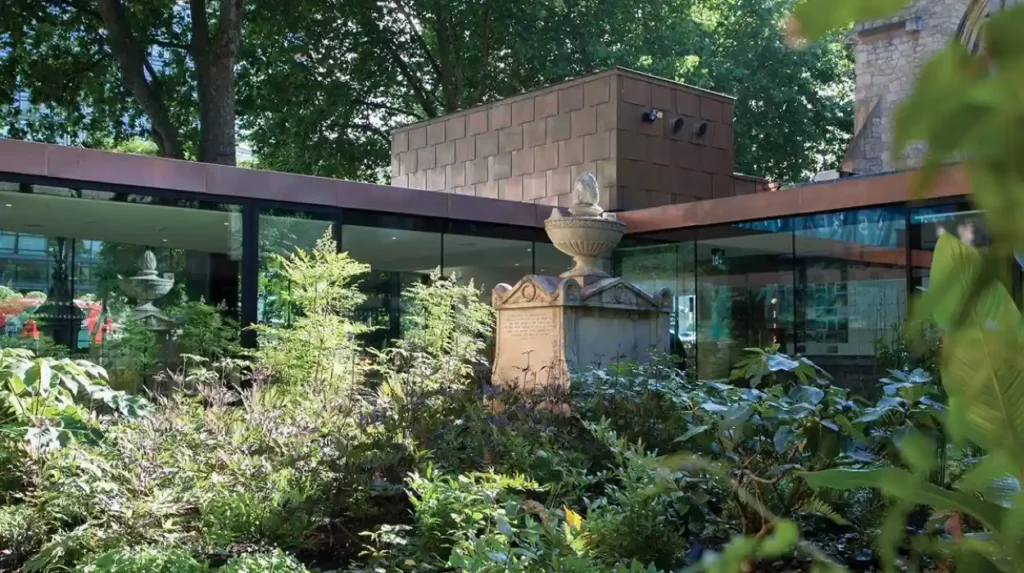
The museum was founded in 1977 by Rosemary and John Nicholson. Their objective was to rescue the abandoned church, which faced demolition. The building contains the tomb of John Tradescant, an important seventeenth-century gardener and plant collector. His tomb forms the centrepiece of the museum’s courtyard garden.
John Tradescant is particularly important to the museum’s identity. After settling in Lambeth in the seventeenth century, he developed a botanical garden and collection that became known as “The Ark”. The collection included unusual natural-history objects and plants gathered through international networks.
The museum’s permanent collection traces British gardening from the sixteenth century to the present. Displays cover art, tools, design, horticulture and the people who shaped British gardening. The Wolfson Ark Gallery focuses specifically on John Tradescant and his collecting activities.
The museum also operates the Archive of Garden Design. This archive preserves working records from leading British garden designers from the twentieth and twenty-first centuries. It therefore serves both general visitors and researchers studying landscape architecture and garden design.
The gardens add another layer to the visit. The museum’s courtyard garden was designed by landscape designer Dan Pearson. The site also includes a front garden and a community garden in Old Paradise Gardens across Lambeth High Street.
The museum underwent a major redevelopment beginning in 2015. The project created larger permanent collection spaces, new learning spaces, a café and new gardens while retaining the historic building.
Visitors interested in architecture, horticulture, design or social history therefore gain several subjects from one attraction. The Garden Museum is also useful for visitors looking for a quieter cultural stop close to the Thames and Lambeth Palace.
As you explore the modern museum, you are crossing land with centuries of heritage. Read about the full [Insert Anchor Text for History Article Here] to understand its origins.
How does the Florence Nightingale Museum explain the history of nursing?
The Florence Nightingale Museum explains the development of modern nursing through Florence Nightingale’s life, healthcare work and Crimean War experience. Its collection combines personal objects, medical history and interpretation of Nightingale’s lasting influence.
The Florence Nightingale Museum is located within the grounds of St Thomas’ Hospital on Lambeth Palace Road. St Thomas’ Hospital is itself closely associated with Nightingale’s career and the development of professional nursing.
Florence Nightingale was a nineteenth-century British nurse, healthcare reformer and statistician. She became internationally known for her work during the Crimean War and her campaigns to improve hospital hygiene, nursing education and healthcare administration.
The museum presents her as a healthcare pioneer rather than focusing only on her wartime reputation. Its displays examine her life, professional development, working methods and continuing influence on nursing and healthcare.
Objects form an important part of the experience. The museum identifies several notable items, including the lamp associated with Nightingale’s Crimean War service, her medicine chest, a copy of Notes on Nursing and material relating to her pet owl, Athena.
Notes on Nursing was first published in 1859 and became an influential work on nursing practice and domestic healthcare. Nightingale also used statistical evidence to communicate the relationship between sanitation, hospital conditions and mortality.
The museum’s location provides an important geographical connection. Visitors are not simply viewing objects associated with nursing in an unrelated building. They are visiting a museum within the St Thomas’ Hospital complex on the same Lambeth riverside corridor associated with Nightingale’s professional legacy.
The museum operates as a charitable institution and research venue as well as a visitor attraction. Its stated objectives include using its collection to support discussion about healthcare, science and continuing innovation.
For visitors interested in medical history, public health, nursing or Victorian Britain, this museum provides a focused alternative to larger national institutions. Its specialist subject also makes it relevant to students, healthcare professionals and researchers.
The museum’s published opening information currently lists Tuesday to Sunday opening from 10am to 5pm, with last entry at 4.30pm, plus extended opening on the last Thursday of each month. Visitors should check the official museum information before travelling because schedules can change.
Why should film lovers visit the Cinema Museum in Kennington?
The Cinema Museum preserves the history of going to the pictures through more than a million photographs, film materials, projectors, uniforms, cinema fittings, posters and publications, making it one of Lambeth’s most distinctive specialist cultural collections.
The Cinema Museum is located at 2 Dugard Way in Kennington, close to Elephant and Castle. It occupies part of the former Lambeth Workhouse, giving the museum a direct connection with the social history of the area.
The museum is dedicated to the history of cinemagoing. Its collection covers the physical and cultural experience of visiting cinemas, rather than focusing solely on famous actors or individual films.
The collection includes more than one million photographs, together with posters and original poster artwork. It also contains film in different formats, including advertisements, trailers, “B” films, newsreels and home movies.
Cinema equipment forms another major category. Visitors can encounter projectors, sound systems and arc lamps, including early examples. Uniforms from cinema staff dating from the 1930s to the 1950s demonstrate how the experience of visiting picture houses extended beyond the screen itself.
Fixtures and fittings are also preserved. These include cinema seats and signage associated with historic picture palaces. Period publications, catalogues and film-industry campaign books add documentary evidence about the business and culture of cinema.
The building has an additional connection with film history. Charlie Chaplin lived at the Lambeth Workhouse as a child during a period of hardship for his family. This connection gives the museum’s location particular significance within London’s social and cinematic history.
Unlike a large national museum, the Cinema Museum operates through guided tours and scheduled events rather than regular daily opening hours. Its official visitor information states that visitors currently need to book a place on a guided tour to view the collection. Tours last approximately two hours and include a short-film screening of around thirty minutes.
The museum is staffed by volunteers and operates as a social enterprise. Its current fundraising campaign seeks to secure its historically significant home, demonstrating the practical challenges faced by specialist independent museums.
For tourists, the Cinema Museum works particularly well for visitors who want a specialist experience away from London’s largest institutions. It is also useful for film students, researchers, photographers, cinema historians and anyone interested in the technological development of projection and exhibition.
What can visitors discover at Lambeth Archives?
Lambeth Archives provides access to documents, maps, photographs, artworks and artefacts recording the borough’s development. Its collections cover local government, communities, buildings, businesses, transport, social history and family research from earlier centuries to today.
Lambeth Archives is the London Borough of Lambeth’s record office and local studies library. It provides a different form of museum experience because its principal purpose is preserving and providing access to historical records rather than presenting a conventional permanent exhibition.
The archive collections extend back to the sixteenth century. They include records of Lambeth Council, schools, estates, churches, businesses, societies and charities. The collections also include maps, photographs, artworks and artefacts associated with Lambeth and its residents.
The subject coverage is particularly broad. Researchers can investigate local archaeology, architecture, biography, Black history, geography, LGBTQ+ history, social history, transport and women’s history. This makes the archive valuable for understanding the borough beyond its most visible tourist attractions.
Family historians can also use the collections to investigate people and properties. Lambeth Archives specifically identifies family history, house history and neighbourhood origins as areas where its staff can provide assistance.
The archive is located on Brixton Hill overlooking Rush Common. Its facilities include a searchroom and space for exhibitions, meetings and educational events. It is open to residents and international researchers.
For tourists, an archive visit requires more planning than a conventional museum visit. Visitors should check access arrangements and exhibition availability before travelling. The archive itself notes that exhibition space can sometimes be used for meetings, so advance checking is useful.
The archive is particularly valuable for visitors who have already explored Lambeth’s major museums and want to understand how individual neighbourhoods developed. It provides primary-source material that can connect large historical events with streets, institutions, businesses and families.
Explore more Area Guide
What Makes Lambeth Ideal for Weekend Breaks in South London for Tourists
Where Can Visitors Enjoy Lambeth After Dark? Evening Entertainment Guide
How should visitors choose between Lambeth’s museums?
Choose IWM London for war history, the Garden Museum for horticulture and design, the Florence Nightingale Museum for nursing and healthcare, the Cinema Museum for film history, and Lambeth Archives for detailed local research.
Museum choice in Lambeth is best based on subject rather than size. Each institution has a defined collecting purpose, allowing visitors to select an attraction according to their interests.
Visitors interested in international and British twentieth-century history should prioritise IWM London. Its collections cover modern conflict and civilian experiences at a scale unmatched by Lambeth’s specialist museums. The museum’s First World War, Second World War and Holocaust galleries provide a chronological and thematic framework.
Garden enthusiasts should prioritise the Garden Museum. Its permanent collection, historic church setting, courtyard garden, archive and temporary exhibitions combine horticulture with architecture, art and social history.
Visitors interested in healthcare history should choose the Florence Nightingale Museum. Its collection provides a concentrated examination of Nightingale and the development of modern nursing, supported by original objects and historical interpretation.
Film enthusiasts should select the Cinema Museum. Its extensive collection covers the practical experience of cinema, from projectors and sound equipment to posters, uniforms, photographs and architectural fittings.
Visitors researching Lambeth itself should consider Lambeth Archives. Its local records provide evidence about communities, properties, institutions, transport and social change across the borough.
The museums also differ in their visiting models. IWM London is a large national museum with permanent galleries and temporary exhibitions. The Garden Museum combines museum galleries with gardens and learning spaces. The Florence Nightingale Museum is a specialist hospital-based museum. The Cinema Museum requires advance booking for guided tours. Lambeth Archives operates primarily as a research and records institution.
This distinction matters for itinerary planning. A visitor looking for a two- or three-hour attraction can build a substantial visit around IWM London. A visitor combining museums with architecture and riverside sightseeing can pair the Garden Museum with Lambeth Palace and the Thames. A film enthusiast can reserve a Cinema Museum tour and then explore Kennington.
How accessible are Lambeth’s museums for tourists and day visitors?
Lambeth’s museums have different access arrangements, so visitors should check each institution before travelling. IWM London provides step-free access, Garden Museum publishes detailed accessibility information, and Cinema Museum offers level ground-floor access and a lift.
Accessibility varies because the museums occupy different types of buildings.
IWM London has step-free access through its West Entrance. The museum also provides an accessibility guide and wheelchair availability. Its published guidance notes that the museum can become crowded and noisy, with quieter periods often occurring after 3pm.
The Garden Museum provides detailed sensory and accessibility information. Its facilities include an accessible ground-floor toilet, baby-changing facilities, hearing loops in selected spaces and large-print exhibition labels on request. The museum also provides information about lighting, sounds, uneven surfaces and other environmental factors.
The Garden Museum is close to Lambeth North, Vauxhall and Waterloo. Its published guidance places Lambeth North at roughly a ten-minute walk, Vauxhall at about fifteen minutes and Waterloo at around twenty minutes. Several local bus routes also stop close to the museum.
The Florence Nightingale Museum is within St Thomas’ Hospital on Lambeth Palace Road. Its central riverside location makes it convenient for visitors already exploring Westminster, the South Bank and Waterloo.
The Cinema Museum provides level access on the ground floor, a lift to the upper floor and an accessible toilet on the ground floor. Its current visiting system requires pre-booked tours, making advance planning particularly important.
Visitors travelling by public transport should check current Transport for London information before setting out. London transport arrangements, station access and service patterns change over time.
How can tourists build a museum itinerary around Lambeth?
A Lambeth museum itinerary works best when attractions are grouped geographically and by subject. Visitors can combine IWM London with Waterloo and South Bank, the Garden Museum with Lambeth Palace, or the Cinema Museum with Kennington and Elephant and Castle.
Lambeth’s museums fit naturally into wider London itineraries because several are close to major transport hubs and attractions.
A central London history itinerary can begin at IWM London. From there, visitors can travel towards Waterloo and the South Bank, where museums, galleries, theatres and riverside attractions form one of London’s largest cultural districts.
A horticultural and architectural itinerary can centre on the Garden Museum. The museum is next to Lambeth Palace and close to the Thames. Its historic church setting, gardens and collections provide a compact cultural experience.
A medical-history itinerary can combine the Florence Nightingale Museum with riverside sightseeing. The museum is located at St Thomas’ Hospital, close to Westminster Bridge, the Houses of Parliament and the London Eye.
A specialist film itinerary can centre on the Cinema Museum in Kennington. Because visits currently operate through pre-booked tours, the museum should be scheduled first rather than treated as a walk-in attraction.
A local-history itinerary can use Lambeth Archives as a research-focused stop. Visitors interested in family history, architecture, neighbourhood development or social history can use its collections to investigate specific people and places.
Digital nomads and business travellers can also use Lambeth’s museums as structured cultural breaks during time in central London. The Garden Museum has a café and gardens, while IWM London has an on-site café. However, museum galleries remain cultural spaces rather than conventional workspaces, so visitors should use dedicated work facilities elsewhere when they need uninterrupted calls or extended laptop sessions.
Why are Lambeth’s museums important to London’s cultural heritage?
Lambeth’s museums preserve different layers of London’s heritage, from national conflict and medical reform to gardening, cinema and neighbourhood history. Their collections protect physical objects and documentary evidence that connect major historical developments with people, buildings and communities.
The significance of Lambeth’s museums extends beyond tourism. Together, they demonstrate how museums preserve different forms of evidence.
IWM London preserves material relating to modern conflict and its consequences. Its collections connect military events with civilian experiences, personal stories, visual culture and political history.
The Garden Museum preserves horticultural culture and the history of garden design. Its collections demonstrate how gardening has developed through changes in science, design, social behaviour and environmental thinking. Its archive also protects professional records from garden designers.
The Florence Nightingale Museum preserves evidence of healthcare reform and nursing history. Its objects provide tangible connections with Nightingale’s work and the development of professional nursing.
The Cinema Museum protects a form of cultural history that is often lost when buildings, equipment and printed advertising are discarded. Its collection preserves cinema technology and the physical experience of picture houses, including projectors, seating, uniforms, posters and publicity material.
Lambeth Archives provides another layer by preserving records created by local institutions and communities. Its collections demonstrate how a London borough changed over centuries through migration, commerce, transport, architecture, government and social development.
These museums also support future research. Collections are not limited to tourist displays. IWM London provides research facilities containing original documents, photographs and sound recordings, while Garden Museum maintains an archive of garden design. Lambeth Archives provides primary-source material for local and family history research.
Their continuing relevance also depends on conservation, education and public access. Museum collections require cataloguing, preservation and interpretation so that historical material remains useful to future generations.
For visitors, this creates a broader understanding of Lambeth. The borough is not simply a collection of tourist landmarks. Its museums reveal how national history, professional reform, cultural industries, environmental design and local communities have developed alongside one another.
What should visitors know before visiting Lambeth museums?
Visitors should check official opening times, ticket requirements, temporary exhibitions, access information and tour arrangements before travelling. This is especially important for specialist museums because opening patterns, exhibitions and booking systems differ significantly between Lambeth institutions.
Museum information changes more frequently than permanent collections. Opening hours, temporary exhibitions, ticket prices and access arrangements should therefore be confirmed through each museum’s official visitor information.
IWM London is generally straightforward for independent visitors, with permanent galleries and temporary exhibitions. General admission is free, although charges apply to some special exhibitions.
The Garden Museum operates with museum galleries, exhibitions, gardens, learning activities and events. Its official information advises visitors to check the visit information because the museum occasionally closes early for events.
The Florence Nightingale Museum publishes its current opening pattern as Tuesday to Sunday, 10am to 5pm, with last entry at 4.30pm and extended hours on the last Thursday of each month.
The Cinema Museum requires the most advance planning. It currently does not have regular opening hours and requires visitors to book guided tours to view the collection.
Lambeth Archives should also be approached as a research institution rather than a conventional tourist attraction. Visitors interested in specific records should review its collections and access information before travelling.
The strongest museum strategy is therefore simple: identify the subject first, check the institution’s current visitor information, then build the surrounding itinerary around the museum’s location and opening pattern.
Lambeth provides enough cultural variety for repeat visits. A first trip can focus on IWM London and the Garden Museum. A second can explore the Florence Nightingale Museum and Cinema Museum. A research-focused visit can use Lambeth Archives to investigate the borough at neighbourhood level.
The result is a museum network that covers national history, specialist knowledge and local identity within one London borough. For tourists and residents seeking cultural activities, Lambeth offers a concentrated collection of institutions that connect major historical themes with authentic places and original collections.
What are the best museums to visit in Lambeth?
The best museums in Lambeth include the Imperial War Museum London, Garden Museum, Florence Nightingale Museum and Cinema Museum. Lambeth Archives is also important for visitors researching local history, family history and community heritage.