Lambeth is one of south London’s strongest destinations for traditional markets, international food, independent retail and artisan shopping. The borough stretches from the South Bank and Waterloo through Brixton, Stockwell, Clapham, Herne Hill and Streatham. Its markets reflect this geographical and cultural diversity.
- Which Lambeth markets are worth visiting?
- What makes Brixton Market one of Lambeth’s best markets?
- Why should visitors explore Brixton Village?
- What can visitors find at Lower Marsh Market?
- Is Venn Street Market good for food and crafts?
- Which other Lambeth markets are useful for independent shopping?
- How do Lambeth markets support independent businesses and local food?
- Which Lambeth market is best for food, crafts or independent shopping?
- When is the best time to visit Lambeth markets?
- How can visitors plan a Lambeth market itinerary?
- Why are Lambeth markets important for visitors and local communities?
- What should visitors know before visiting Lambeth markets?
Lambeth Council identifies a network of established markets and street-trading locations across the borough, including Brixton Market, Lower Marsh Market, Herne Hill Market, Venn Street Market, Streatham Market, Stockwell Market, Oval Market and West Norwood Feast. The council describes Lambeth’s markets as places selling fresh fruit and vegetables, clothing, handmade goods, gifts, luggage, bedding and street food influenced by cuisines from around the world.
For visitors, the main distinction is between large traditional markets, specialist food markets, artisan markets and independent shopping areas. Brixton provides the broadest market experience, while Lower Marsh offers a central Waterloo location. Herne Hill and Venn Street are particularly relevant for seasonal produce and independent makers.
The best market for a visitor depends on the purpose of the trip. Food-focused visitors have strong choices in Brixton, Lower Marsh and Venn Street. Shoppers seeking independent goods have particularly strong options in Brixton Village and Lower Marsh. Visitors interested in local community markets can explore Herne Hill, Streatham and West Norwood.
Which Lambeth markets are worth visiting?
Lambeth’s markets are worth visiting for their mix of international food, fresh produce, independent shops, crafts and community culture. Brixton, Lower Marsh, Herne Hill and Venn Street provide distinct market experiences across different parts of the borough throughout the year.
The strongest starting point is Brixton. Its market district combines traditional outdoor trading streets with covered market spaces, independent businesses, restaurants, grocers and specialist retailers. Lambeth Council states that Brixton Market has more than 80 licensed pitches across Electric Avenue, Pope’s Road and Brixton Station Road.
Lower Marsh provides a different experience. It is a historic Waterloo street lined with independent businesses and market stalls. Weekday trading focuses strongly on food and produce, while Saturday provides a produce and flea-market format. Lambeth’s Film Office lists fresh fruit and vegetables, lunchtime food, clothing, gifts and flowers among the goods sold there.
Venn Street Market in Clapham is particularly relevant for visitors looking for seasonal produce, artisan food and handmade products. Its traders include producers of bread, cheese, vegetables, flowers, preserves, specialist foods and handmade goods. The market also operates a Makers Market featuring products such as jewellery, ceramics, prints, candles and upcycled fashion.
Herne Hill Market provides another local shopping option. Lambeth Council lists it among the borough’s established markets and identifies it as a Sunday market.
Market schedules and trader line-ups change, so visitors should check the relevant market operator or Lambeth Council before travelling.
What makes Brixton Market one of Lambeth’s best markets?
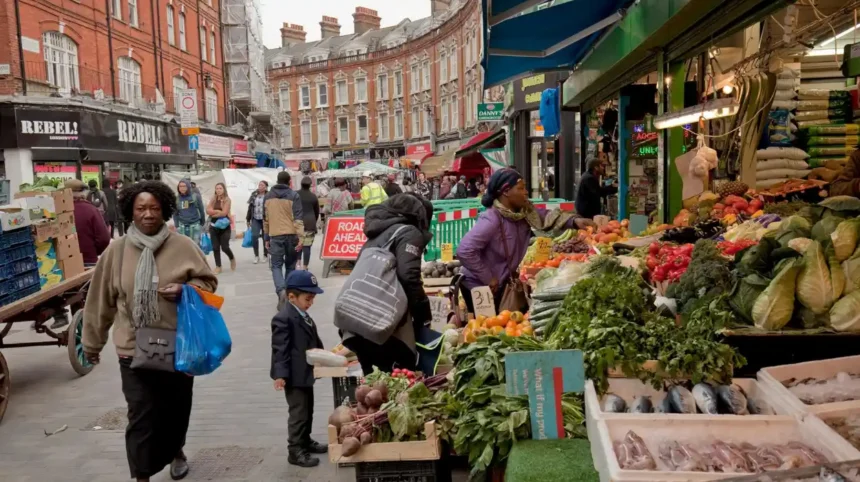
Brixton Market stands out for its scale, cultural diversity, fresh produce, Caribbean and African food, and traditional street trading. Its connected streets and covered arcades create a broad shopping area rather than a single venue within central Brixton for visitors.
Brixton Market is the clearest choice for visitors who want a traditional London market combined with international food and independent shopping. Lambeth Council describes more than 80 licensed pitches across Electric Avenue, Pope’s Road and Brixton Station Road.
The market’s food identity is closely connected with Brixton’s African and Caribbean communities. Produce stalls sell fruit, vegetables and specialist ingredients, while food traders provide prepared dishes and snacks. The market therefore works both as a shopping destination and as a food-focused visitor attraction.
Brixton’s market history is particularly significant. The area developed rapidly during the nineteenth century, and its commercial role grew alongside the expansion of south London. Electric Avenue was constructed in the 1880s and became notable as the first market street illuminated by electric lighting. Market Row followed in 1928.
Brixton’s markets also developed alongside major demographic changes. After the Second World War, Caribbean communities became an important part of Brixton’s social and commercial identity. The resulting cultural influence remains visible through food, music, retail and community businesses.
Brixton itself is also designated as a conservation area. Lambeth Council first designated the Brixton Conservation Area in October 1980. Its boundaries have subsequently been altered, most recently in January 2024. The conservation area includes the town centre, historic commercial premises and Brixton’s covered markets.
As you explore the modern market streets, you are crossing land with a deep heritage. Read about the full [Insert Anchor Text for History Article Here] to understand its origins.
The practical advantage of Brixton is concentration. Visitors can combine market shopping with independent cafés, restaurants, music venues and cultural attractions without travelling between several parts of the borough.
Brixton is also useful for specialist grocery shopping. Traditional traders include greengrocers, fishmongers, bakeries and other food businesses. This creates a market environment that serves residents as well as visitors.
The market is therefore particularly suitable for visitors seeking three things: international food, fresh produce and independent retail.
Why should visitors explore Brixton Village?
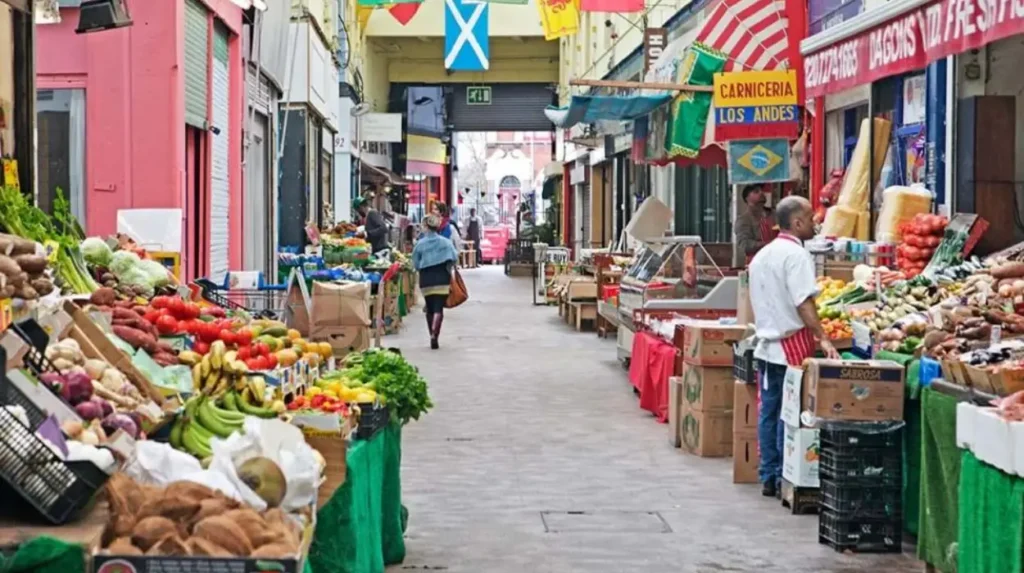
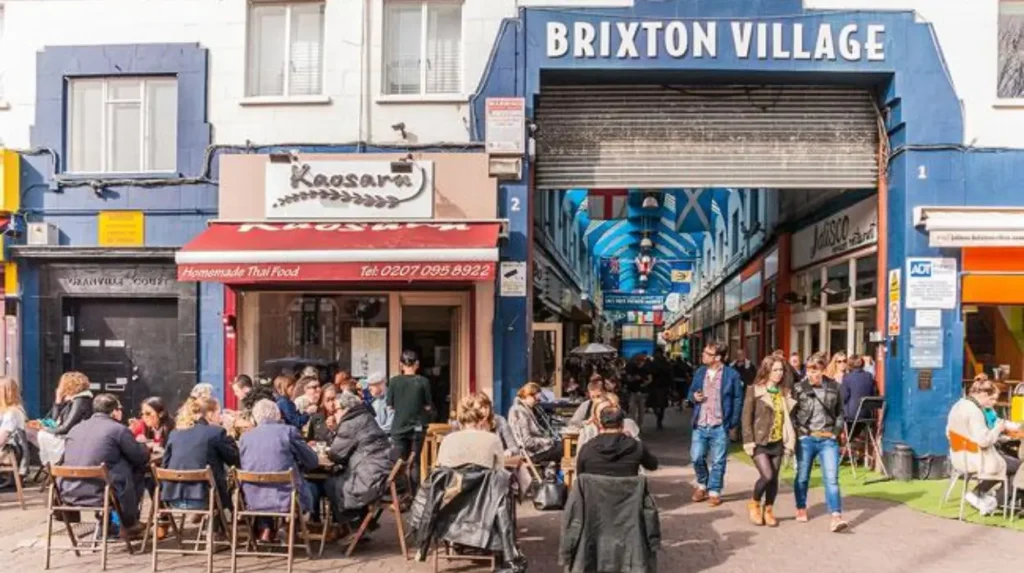
Brixton Village combines food, independent retail and cultural programming within Market Row and Granville Arcade. Its more than 100 independent vendors represent over 50 nationalities, creating a strong destination for international dining, specialist shopping, gifts and handmade goods in Brixton.
Brixton Village occupies Market Row and Granville Arcade in the heart of Brixton. Its current trading environment includes more than 100 independent vendors representing over 50 nationalities. The businesses cover restaurants, cafés, food retailers, fashion, lifestyle, records, jewellery, homeware and specialist shops.
The food offer is one of the most important reasons to visit. Brixton Village highlights international cuisines including Jamaican seafood, Mexican street food, Ethiopian injera and Japanese pancakes. This makes the market particularly relevant for visitors searching for international dining rather than conventional high-street food.
The retail offer is equally important. Independent businesses sell vintage clothing, handmade jewellery, artisanal pottery, books, records and lifestyle products. This creates opportunities for visitors looking for distinctive gifts and specialist goods.
Brixton Village also has a strong connection with local creative industries. Its programme includes live performances, art exhibitions, talks, fashion events, guest markets and other cultural activities.
The site has a significant historical dimension. Granville Arcade opened in 1937 and was designed by Alfred and Vincent Burr. It was originally named after developer Granville-Grossman. The arcades connect Coldharbour Lane, Atlantic Road and Pope’s Road.
Brixton Village received Grade II listed status in 2010. The listing recognised the architectural and historical significance of the site and its relationship with post-war British social history.
For visitors, this means Brixton Village works as both a shopping destination and a heritage site. The market is particularly suitable for travellers who want to combine food with independent retail.
Its location also makes it easy to combine with the wider Brixton market district. A visitor can explore traditional produce stalls around the outdoor market before continuing into the covered arcades.
This distinction is important for search intent. “Brixton Market” and “Brixton Village” are closely connected but are not identical descriptions. Brixton Market refers broadly to the traditional market streets and licensed pitches, while Brixton Village specifically consists of Market Row and Granville Arcade.
What can visitors find at Lower Marsh Market?
Lower Marsh Market is a central Waterloo destination for weekday street food, fresh produce, independent shopping and Saturday flea-market trading. Its historic street setting provides convenient access from Waterloo while supporting small businesses, food traders, gift sellers and market shoppers.
Lower Marsh is one of Lambeth’s most accessible market destinations. It sits close to Waterloo Station and provides a direct connection between the transport hub and an established independent shopping street.
Lambeth’s Film Office describes Lower Marsh as a historic street with an eclectic collection of independent shops. Its traditional street market sells fresh fruit and vegetables, lunchtime food, clothes, gifts and flowers. The listed operating pattern includes weekday street food from Monday to Friday and a produce and flea market on Saturday.
The market’s central location makes it particularly useful for tourists staying around Waterloo, South Bank or the West End. It can also fit into a wider walking itinerary involving the South Bank, Waterloo and the Thames.
Lower Marsh has substantial historical value. Lambeth Council identifies it as an ancient route connecting Westminster Bridge Road and Waterloo Road. The Lower Marsh Conservation Area was first designated on 4 June 1984. Its buildings include mainly nineteenth-century commercial development alongside some re-fronted eighteenth-century buildings.
The architectural setting adds a heritage dimension to the shopping experience. Visitors are not simply entering a temporary market site. They are using a historic commercial street that continues to perform a retail function.
The Saturday market is particularly relevant for independent shopping. Flea-market trading creates opportunities to browse second-hand goods and unusual items, while the surrounding permanent businesses provide additional retail choices.
Weekdays have a stronger lunchtime focus. This makes Lower Marsh useful for office workers, domestic business travellers and visitors spending time around Waterloo.
The market’s location also makes it suitable for shorter visits. A traveller does not need to dedicate an entire day to Lower Marsh. The market can form part of a wider central London itinerary.
Is Venn Street Market good for food and crafts?
Venn Street Market is a strong choice for seasonal produce, artisan food, street food and handmade goods. The Saturday market works with independent producers and local farms, while its Makers Market includes jewellery, ceramics, prints, candles and upcycled fashion.
Venn Street Market is located in Clapham and operates on Saturdays. Its official information describes it as a community produce and artisan food market working with organic and biodynamic farms and small independent producers.
Fresh produce is a major component. Traders include fruit and vegetable producers, flower sellers, specialist food businesses and bakeries. The market promotes seasonal British produce and direct relationships between shoppers and producers.
The artisan food selection covers several categories. Visitors can find French-style breads and pastries, cheeses, cured products, pies, empanadas, sauces, olives and other specialist foods. The market also provides street food from different international cuisines.
The Makers Market adds a separate craft-shopping dimension. Its traders include makers producing soy candles, art prints, handmade jewellery, ceramics, topographical posters, upcycled clothing and other bespoke goods.
This makes Venn Street particularly relevant for gift shopping. A visitor looking for a locally made or independently produced item has more specialist options than at a conventional supermarket or chain shopping centre.
The market also has a community education role. Its Clapham Leaf Club project began in 2010 and involves local primary-school pupils growing plants and produce. The annual programme connects food production, gardening and market trading.
The market is close to Clapham Common and can therefore be incorporated into a wider Clapham visit. The nearest Underground station is Clapham Common on the Northern line, with additional rail connections through Clapham High Street and Clapham Junction.
Current market hours should be checked before travelling because operating arrangements and trader schedules can change.
For craft-focused visitors, Venn Street is one of the clearest choices in Lambeth. For fresh produce, it also provides a direct connection between consumers and independent growers and producers.
Which other Lambeth markets are useful for independent shopping?
Herne Hill Market, Streatham Market, West Norwood Feast, Stockwell Market and Oval Market extend Lambeth’s market network beyond Brixton, providing additional opportunities for food, produce, crafts and community shopping across different neighbourhoods in the borough.
Lambeth’s market network is broader than its best-known destinations. The council lists Herne Hill Market, Streatham Market, Stockwell Market, Oval Market and West Norwood Feast alongside Brixton and Lower Marsh.
Herne Hill Market is particularly useful for visitors exploring south-east Lambeth. Lambeth Council identifies it as a Sunday market. Its position within the Herne Hill neighbourhood makes it suitable for combining market shopping with local cafés, independent businesses and nearby green spaces.
Streatham Market provides another neighbourhood-level option. Lambeth Council identifies it as a monthly market operating from March to December. This schedule makes it different from weekly markets such as Venn Street and Herne Hill.
West Norwood Feast is another significant community market format. Lambeth Council lists Norwood Feast among its market operations, with nine market days per year.
Stockwell Market provides another local shopping option within the borough. It is included in Lambeth Council’s market network and has a dedicated market-operator arrangement.
Oval also appears in Lambeth Council’s market and events information. It is relevant for visitors exploring the area around Kennington and Oval rather than concentrating exclusively on central Brixton.
These smaller or periodic markets are especially useful for residents and repeat visitors. Their schedules are less uniform than the major markets, so checking the latest operator information is essential.
For tourists, the choice depends heavily on location. A visitor based near Brixton has little reason to travel across the borough solely to visit a smaller market unless a specific event or product is the purpose of the journey.
For residents, however, these markets provide important local shopping opportunities. They support independent traders and give neighbourhoods their own retail identities.
How do Lambeth markets support independent businesses and local food?
Lambeth markets support independent businesses by providing licensed trading spaces for food sellers, producers, retailers and makers. The council regulates street trading, while individual market operators manage pitches, schedules and trader relationships across different market locations.
Markets operate within a regulated street-trading framework. Lambeth Council states that anyone selling or displaying goods in a street, park, open space or public area, including within seven metres of the public highway, requires the relevant licence or written consent.
Food traders face additional requirements. Food businesses operating from market stalls, vehicles and other mobile units must register their food business with the council. Lambeth Council states that registration must occur at least 28 days before the proposed start of trading.
Food traders are also subject to food hygiene and safety requirements. Market applicants need to meet relevant food safety management requirements, including HACCP-based procedures. HACCP means Hazard Analysis and Critical Control Point, a preventive food-safety system used to identify and control hazards.
These regulations provide an important distinction between informal street selling and an established market. Licensed markets operate within defined legal and operational frameworks.
Lambeth also publishes pitch fees for council-managed trading locations. Current published fees demonstrate that different locations have different commercial costs. For example, the council lists monthly permanent pitch fees for Electric Avenue, Pope’s Road, Brixton Station Road and Lower Marsh, while casual daily fees also apply at several locations.
The economic effect extends beyond individual stalls. Market visitors also use nearby cafés, restaurants, independent shops and transport services. This creates a wider commercial ecosystem around market streets.
Brixton provides the strongest example. Lambeth Council describes the area as an important cultural destination with outdoor and indoor markets, restaurants, shops and venues attracting both local residents and tourists.
For visitors, this means market shopping provides direct access to independent businesses while also supporting the wider commercial districts surrounding them.
Explore more Area Guide
How Lambeth Blends History, Culture and Modern Living in South London
What Are the Best Indoor Attractions in Lambeth for Tourists and Digital Nomads
Which Lambeth market is best for food, crafts or independent shopping?
Brixton is the strongest all-round market choice, Lower Marsh suits central London visitors, Venn Street is strongest for artisan food and crafts, and Herne Hill, Streatham and West Norwood suit visitors seeking smaller community-focused market experiences.
The best market depends on the exact shopping objective.
Brixton is the most comprehensive option for visitors who want traditional market trading, international food, fresh produce and independent retail in one district. Its scale and cultural diversity make it particularly suitable for a first market visit in Lambeth.
Brixton Village is the strongest choice for independent food, dining and lifestyle shopping. Its more than 100 vendors include restaurants, food retailers, fashion businesses, record shops, jewellery sellers and homeware retailers.
Lower Marsh is the most convenient choice for visitors staying around Waterloo. Its historic street setting, weekday food trading and Saturday flea-market format provide a useful combination of food and independent shopping.
Venn Street is the strongest option for artisan produce and handmade goods. Its market combines seasonal food, independent producers, street food and a Makers Market.
Herne Hill suits visitors exploring the neighbourhood on a Sunday. Streatham is relevant when its monthly market is operating. West Norwood Feast is suited to visitors planning around its scheduled market days.
The distinction between these markets is important for search intent. Someone searching for “food markets in Lambeth” has different requirements from someone searching for “craft markets in Lambeth” or “independent shops in Lambeth”.
Brixton answers all three intents. Lower Marsh answers food and independent-shopping intent particularly well. Venn Street provides a stronger artisan and craft focus.
When is the best time to visit Lambeth markets?
Saturday provides the broadest opportunity to experience Lambeth’s market culture, with Venn Street operating weekly and Lower Marsh offering its produce and flea-market format. Sunday is particularly relevant for Herne Hill, while other markets follow individual schedules.
Market opening days differ across Lambeth. This is one of the most important practical considerations for visitors planning a market itinerary.
Lambeth Council identifies Venn Street as a Saturday market and Herne Hill as a Sunday market. Streatham operates monthly from March to December, while West Norwood Feast operates on scheduled market days rather than as a daily market.
Lower Marsh operates during the week and has a different Saturday format. Lambeth’s Film Office lists weekday street-food trading from Monday to Friday and a Saturday produce and flea market.
Brixton is more flexible because the market district includes several streets and trading areas. Lambeth Council lists licensed pitches on Electric Avenue, Pope’s Road and Brixton Station Road.
Saturday is therefore a practical day for combining several market experiences. A visitor can explore Brixton earlier in the day, travel north towards central Lambeth, or choose Venn Street for artisan food and makers.
Sunday is more suitable for visitors targeting Herne Hill or specific Brixton-related activities.
Market schedules are subject to operational changes, public events, road works and seasonal programming. Visitors should confirm opening times and trader participation before travelling.
How can visitors plan a Lambeth market itinerary?
A practical Lambeth market itinerary should group markets by location rather than attempting to visit every site. Brixton works as a main destination, Lower Marsh suits Waterloo itineraries, and Venn Street works well with Clapham Common.
Lambeth is geographically large enough that visiting every market in one trip is inefficient. A location-based approach provides a better structure.
For a Brixton-focused itinerary, start with the traditional market streets and continue into Brixton Village. This combines fresh produce, international food, independent shops and cultural venues within the same town centre.
For a Waterloo-focused itinerary, begin at Lower Marsh. The market can be combined with the South Bank, Waterloo cultural venues and the riverside. Its central location makes it particularly practical for tourists with limited time.
For a Clapham itinerary, combine Venn Street Market with Clapham Common and the surrounding independent businesses. Saturday provides the strongest market experience because the market’s produce, artisan food, street food and Makers Market operate together.
For a Sunday neighbourhood itinerary, Herne Hill provides a suitable market-focused destination. The surrounding area also offers independent cafés and local businesses.
Visitors interested in Streatham or West Norwood should plan around specific market dates rather than expecting a daily market.
The key principle is to treat Lambeth’s markets as a network rather than as identical attractions. Each market has a different commercial role, geographical setting and operating pattern.
This also makes the borough valuable for repeat visits. A visitor who has already explored Brixton can return for Lower Marsh, Venn Street or a scheduled West Norwood Feast without repeating the same shopping experience.
Why are Lambeth markets important for visitors and local communities?
Lambeth markets combine commerce, food, cultural diversity, heritage and independent enterprise. They provide practical shopping for residents while giving visitors access to local businesses, international cuisines, handmade goods and historic commercial districts across the borough.
Markets remain important because they connect everyday retail with local identity. In Lambeth, that connection is particularly visible in Brixton, where African and Caribbean cultural influences are closely associated with the market environment.
The markets also preserve traditional forms of independent trading. Fresh produce, specialist food, handmade products and second-hand goods provide alternatives to standardised high-street retail.
The heritage dimension is equally significant. Lower Marsh is located within a conservation area containing historic commercial buildings, while Brixton’s conservation area includes its covered markets.
Market culture also supports entrepreneurship. Lambeth provides formal routes for traders to apply for designated pitches, while market operators manage individual sites and trader relationships.
For tourists, this creates an experience based on real commercial activity rather than a purpose-built visitor attraction. Food, shopping and cultural activity happen within functioning neighbourhoods.
For residents, markets provide access to fresh produce, specialist food and independent services close to home. For digital nomads and business travellers, markets also provide convenient food stops and independent retail during downtime.
Lambeth’s market network therefore has relevance beyond tourism. It contributes to the commercial and cultural character of multiple neighbourhoods.
What should visitors know before visiting Lambeth markets?
Visitors should check opening days, market-specific schedules, trader availability and event information before travelling. Lambeth markets operate under different management arrangements, so opening hours, product ranges and special events are not identical across locations.
The first practical consideration is timing. Not every Lambeth market operates every day. Herne Hill is listed as a Sunday market, Venn Street operates on Saturdays, and Streatham follows a monthly schedule from March to December.
The second consideration is market size. Brixton is a large market district with multiple trading streets, while smaller neighbourhood markets have more limited schedules and stall numbers.
The third consideration is the purpose of the visit. Food-focused visitors should prioritise Brixton, Brixton Village, Lower Marsh or Venn Street. Craft-focused visitors should consider Venn Street’s Makers Market and the independent retail within Brixton Village.
The fourth consideration is transport. Brixton, Lower Marsh and Venn Street are all connected to major public transport routes. Venn Street is particularly close to Clapham Common Underground station, while Lower Marsh is immediately associated with Waterloo.
Finally, visitors should distinguish between a market and the wider shopping district surrounding it. Brixton is the clearest example. The market streets, Brixton Village, restaurants and independent businesses form a broader commercial area.
For a first visit, Brixton provides the most complete introduction to Lambeth’s market culture. For a central London stop, Lower Marsh is particularly practical. For artisan food and crafts, Venn Street provides a focused alternative.
Lambeth’s markets are therefore worth visiting because they provide different experiences rather than repeating the same market format. Together, they cover traditional produce, international food, independent retail, handmade goods, specialist shopping and community events across one of London’s most diverse boroughs.
What are the best markets to visit in Lambeth?
The best markets in Lambeth include Brixton Market, Brixton Village, Lower Marsh Market, Venn Street Market, Herne Hill Market and West Norwood Feast. Each offers a different combination of food, fresh produce, crafts, independent shops and community trading.