Key Points
- Human remains confirmed: Specialist examination has formally verified that bones discovered in a south-east London residential garden are human.
- Renovation discovery: Builders unearthed the remains whilst carrying out renovation works at a bungalow property.
- Police cordon established: Metropolitan Police officers locked down the scene in Biggin Hill for six days to facilitate forensic gathering.
- Ongoing testing: Further forensic testing is currently underway to determine the precise age, origin, and identity of the remains.
- Investigation active: The crime scene cordon has now been lifted, but Metropolitan Police detectives continue to investigate the full circumstances.
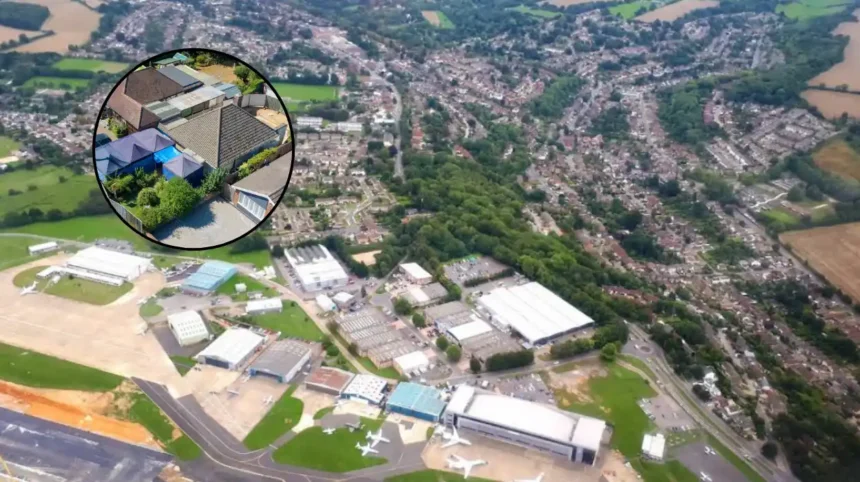
Biggin Hill (South London News) August 13, 2026 –Human bones discovered in the garden of a bungalow in south-east London are currently being examined by forensic experts from the Metropolitan Police to determine their age and origin.
Emergency services were initially alerted to the residential property on Aperfield Road in Biggin Hill at approximately 15:30 BST last Friday, following a call to police headquarters.
The discovery triggered an immediate response from law enforcement, resulting in the property being cordoned off for nearly a week while forensic specialists inspected the grounds.
Subsequent forensic testing officially confirmed that the recovered remains were human. Specialist teams are now subjecting the bones to advanced analysis to establish how long they have been buried and to identify whom they belonged to.
How Were the Bones Uncovered During Property Renovations?
The discovery occurred during routine building works on the quiet residential street.
As reported by The Sun, a local resident stated that
“the builders discovered something on Friday and of course they completely had to stop work”.
The witness explained that the bungalow was undergoing active renovation at the time the ground was disturbed.
Following the initial call to emergency services, police officers and forensic investigators established a extensive crime scene cordon surrounding the home.
According to reporting by The Sun, the cordon remained active for six days, temporarily halting all construction activity and restricting access around the site while officers conducted detailed ground searches.
What Statement Have the Metropolitan Police Issued Regarding the Investigation?
The Metropolitan Police have confirmed that while physical work at the property has concluded, the wider investigation remains active.
As reported by The Sun, a Metropolitan Police spokesperson stated that
“the crime scene is now closed and an investigation remains ongoing to establish the full circumstances”.
Detectives have not yet released details regarding the potential age of the remains or whether the case is currently being treated as a criminal enquiry or an archaeological find. Further scientific updates are expected once laboratory testing on the bones concludes.
Explore More South London Crime News
Police Appeal Following Attempted Sexual Assault on Train: South London 2026
Man dies after shooting near Clapham North pub as police launch murder investigation
Background of the Particular Development
In suburban residential areas across Greater London, the discovery of human remains during routine domestic groundworks is an uncommon but established occurrence. When unearthed, such finds generally fall into two distinct legal and scientific categories: modern forensic investigations or historical/archaeological discoveries.
Under standard Metropolitan Police protocols, any discovery of unidentified human remains is initially treated as a potential crime scene. Forensic anthropologists and carbon-dating specialists are routinely brought in to evaluate the bone structure, mineralisation, and soil context.
If the remains are determined to be historical (often defined as older than 70 to 100 years), the case is typically transferred from criminal homicide teams to local coroner authorities and archaeological officers. However, if testing indicates the remains are modern, a formal cold-case or missing-persons investigation is formally launched to cross-reference regional DNA and dental records.
Prediction: How This Development Can Affect Local Residents and Property Owners
The ongoing investigation and its ultimate scientific findings are likely to affect several key groups within the immediate Biggin Hill community:
- Neighbouring Residents: Until the Metropolitan Police publish the full forensic age of the remains, local residents may experience heightened anxiety regarding the security and historical context of their neighbourhood. A confirmed criminal investigation could lead to prolonged police presence and door-to-door enquiries, whereas an archaeological determination would quickly ease community safety concerns.
- Property Owners and Landlords: The incident serves as a prominent reminder of the legal obligations placed on homeowners and contractors during excavation works. Property owners in the surrounding area undertaking extensions or groundworks may face increased scrutiny or temporary operational halts if unexpected items are encountered, as protocols dictate an immediate cessation of work upon finding suspected osteological material.
- The Local Housing Market: Depending on the outcome of the police investigation—specifically whether the site is linked to recent criminal activity or ancient history—the specific address and immediate vicinity could experience temporary real estate stigma, a well-documented phenomenon following high-profile forensic investigations on private residential property.