Key Points
- First Cohort Recipient: Joseph Vambe was among the initial group of Black British students awarded the prestigious Stormzy Scholarship to study at the University of Cambridge.
- Overcoming Adversity: Vambe experienced significant personal hardship prior to his university entry, including exclusion during his first year of Sixth Form and heavy family bereavements.
- Notification Timeline: He received confirmation of his Stormzy Scholarship funding roughly four weeks prior to relocating from London to Cambridge.
- Faith and Resilience: Vambe credits his spiritual faith and Biblical figures—specifically Joseph—for providing the resilience needed to view personal setbacks as a process of transformation.
- Cultural Shift: Transitioning from South London to Cambridge represented a profound physical and social shift, as he had only visited the university city once before for his initial admissions interview.
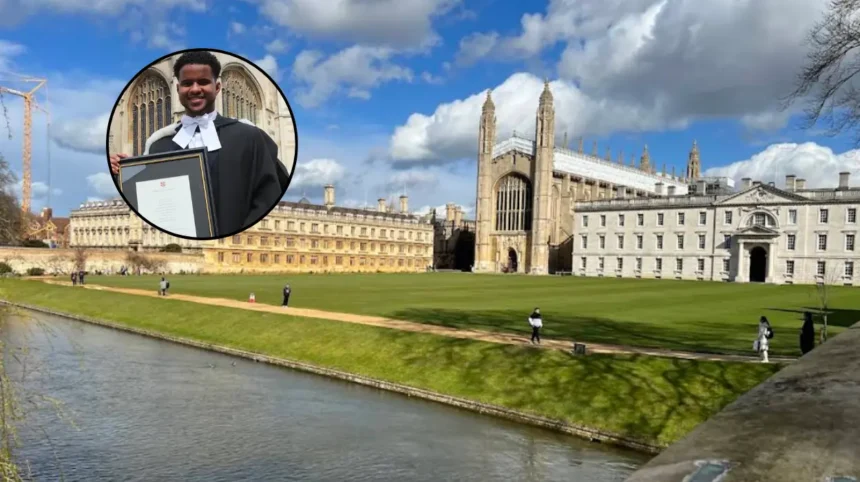
London, UK (South London News) August 17, 2026 – A personal reflective account has detailed how the Stormzy Scholarship provided a transformative path from South London to the University of Cambridge for one of its earliest beneficiaries. Joseph Vambe, who was selected as part of the initial cohort of scholars, shared details of his academic journey, personal background, and the role his Christian faith played during his time at higher education.
Vambe disclosed that his familiarity with Cambridge was virtually non-existent prior to his application, having only set foot in the city once for his official admissions interview. Growing up in South London, he explained that elite academic institutions felt geographically and culturally detached from his day-to-day life, making the prospect of attending the university appear unlikely during his youth.
Prior to securing his place at Cambridge, Vambe faced considerable personal challenges. During his first year of Sixth Form, he was excluded from school and simultaneously experienced multiple family bereavements alongside the deaths of close friends. He described this period as deeply challenging, stating that the sequence of events left him feeling broken and emotionally drained before his academic fortunes changed.
How did receiving the Stormzy Scholarship impact his life?
The academic trajectory changed approximately one month before the start of the university term, when Vambe received official confirmation that he had been selected for the Stormzy Scholarship. The scheme, launched by the British musician Stormzy to cover tuition fees and maintenance costs for Black British students at Cambridge, provided the financial and institutional backing required for his studies.
Reflecting on the offer and the funding, Vambe likened his personal hardships to the process of winemaking, noting that grapes must be crushed and broken down before a refined product is created. He stated that receiving the offer felt like a divine intervention that converted his past difficulties into a new sense of purpose, enabling him to step into higher education with renewed direction.
Throughout his time at the institution, Vambe drew personal strength from his religious convictions and scriptural figures who endured hardship. He drew a direct parallel to the Biblical account of Joseph, who experienced betrayal, imprisonment, and abandonment before achieving significant responsibility, noting that such narratives demonstrate that personal trauma does not mark the conclusion of an individual’s potential.
Background of the Stormzy Scholarship development
The Stormzy Scholarship was launched in August 2018 by the award-winning musician Michael Omari, known professionally as Stormzy, in partnership with the University of Cambridge. The initiative was established to address the historical underrepresentation of Black British students at top-tier UK universities by funding full tuition fees and providing a maintenance grant for undergraduate degree courses.
When the program was first announced, Cambridge was facing public scrutiny over its diversity metrics, with official data showing that in certain years, several colleges within the university had admitted zero Black students. The financial backing provided by the scheme aimed to remove socioeconomic barriers, encourage higher application rates from non-traditional academic backgrounds, and alter perceptions of elite higher education institutions among inner-city youth.
Since its inception, the scheme has expanded significantly with backing from external corporate sponsors and philanthropic donations, allowing dozens of Black British students to complete undergraduate degrees across various fields at Cambridge.
Explore More UK News
UK Course Record Warmest Summer Second Consecutive Year London 2026
UK Hiring Measure Hits Neutral Benchmark as Recruitment Recovers UK 2026
What is the prediction for how this development affects prospective students and higher education access?
The documented success of early Stormzy Scholarship recipients like Joseph Vambe is anticipated to have a measurable impact on secondary school students from low-income and underrepresented backgrounds across the United Kingdom.
Increased Application Rates from Non-Traditional Backgrounds
Visibility surrounding early beneficiaries is likely to encourage higher volumes of applications from state schools in urban centers such as London, Birmingham, and Manchester. Seeing peers from similar socioeconomic circumstances succeed at top-tier universities lowers the psychological barrier to entry, prompting candidates to apply to Russell Group institutions they might otherwise have dismissed.
Expansion of Targeted Philanthropic Funding
The demonstrated outcomes of the Cambridge model are projected to drive similar equity-focused funding initiatives at other major higher education institutions. Corporations and philanthropic entities are likely to increase funding for targeted bursaries, reducing reliance on traditional student debt models for underrepresented demographics.
Long-Term Career Diversification
As cohorts of scholarship recipients graduate and enter the workforce, executive sectors including law, finance, academia, and public policy will experience a influx of diverse talent. This shift is expected to alter institutional networks over the next decade, providing mentorship structures for future generations of non-traditional graduates.