Key Points
- The UK Met Office has confirmed that the nation is on track to record its warmest summer on record for mean temperatures for the second consecutive year.
- Provisional statistics show the mean temperature from 1 June to 10 August reached 16.48°C, which is 1.88°C above the 1991–2020 long-term average.
- Only average weather conditions are required for the remainder of August to exceed the previous record set just last year.
- The country is preparing for its fifth heatwave of the season, following the second-warmest June and second-warmest July on record.
- High temperatures and low rainfall have pushed wide areas across England and Wales into drought conditions.
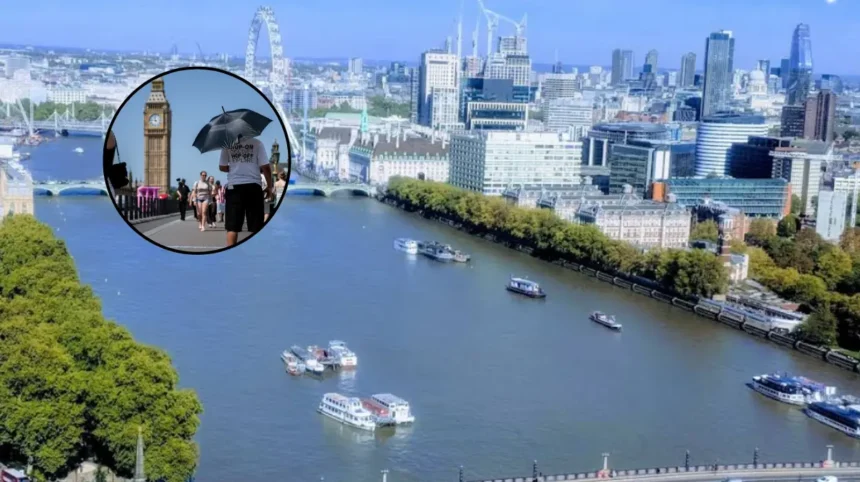
London, UK (South London News) August 11, 2026 – Britain is on course to record its warmest summer since official records began in 1884, marking the second consecutive year of unprecedented seasonal heat. Provisional figures released by the UK’s Met Office weather agency indicate that only average climatic conditions during the remainder of August will be required to surpass the mean temperature record set in 2025. The announcement comes as the country prepares for its fifth major heatwave of the summer season, with temperatures forecast to remain significantly above average across multiple regions.
- Key Points
- What Are the Latest Climate Statistics Released by the Met Office?
- Why Is the UK Experiencing Yet Another Heatwave This Season?
- How Are Regional Drought Conditions Affecting the Country?
- What Is the Background to This Unprecedented Heat Trend?
- What Do Predictions Suggest for the UK Public, Infrastructure, and Health Services?
What Are the Latest Climate Statistics Released by the Met Office?
According to official data published by the Met Office, the UK mean temperature for the meteorological summer so far—covering the period from 1 June to 10 August—stands at 16.48°C. This figure sits 1.88°C above the 1991–2020 baseline long-term average.
To equal the previous UK summer mean temperature record of 16.12°C established in 2025 (which surpassed the 2018 record of 15.76°C), temperatures across the remainder of August would need to fall to 0.21°C below the long-term seasonal average. Any condition matching or exceeding average seasonal levels will result in a new historical benchmark.
The figures are even more pronounced when examining specific nations within the UK. England has recorded a mean summer temperature of 18.19°C up to 10 August, placing it 2.46°C above the seasonal average. For England to avoid a new record, the rest of August would need to be 1.41°C cooler than the long-term average. Similarly, Wales has logged a mean summer temperature of 16.80°C (2.17°C above average), requiring the remaining days of the month to be 1.40°C below average to remain below the 2025 peak.
Furthermore, the record for the highest average maximum temperature, which has stood since the summer of 1976, is also under threat. The Met Office reported that the remainder of August needs to average just 0.72°C above the standard long-term mean to exceed the 1976 benchmark.
Why Is the UK Experiencing Yet Another Heatwave This Season?
The current meteorological assessment follows sustained high temperatures throughout early and mid-summer. Met Office senior scientist Mike Kendon stated that another record-breaking summer now looks increasingly likely for the UK following the second-warmest June and second-warmest July recorded in national history.
Temperatures reached 38°C during June and peaked at 35°C in both early and late July. Weather models project that similar thresholds of up to 35°C could be reached again during the incoming fifth heatwave. Kendon noted that these figures represent clear evidence of ongoing changes occurring within the UK climate system, adding that sustained periods of elevated temperatures rather than isolated spikes have driven the overall mean seasonal warmth.
How Are Regional Drought Conditions Affecting the Country?
The prolonged warmth has been accompanied by below-average rainfall across large parts of the country. England and Wales recorded their driest July on record earlier this summer, creating widespread water deficits.
The lack of precipitation combined with persistent heat has led environmental regulators to declare official drought status across nearly three-quarters of England and the entirety of Wales. Ground conditions in public parks, agricultural land, and residential landscapes remain dry, raising concerns regarding water resource management, agricultural yields, and wildfire risks.
What Is the Background to This Unprecedented Heat Trend?
The recent sequence of extreme summer temperatures in the United Kingdom highlights a broader shift in regional climate patterns. Historically, British summers have been defined by temperate oceanic weather, with extended periods above 30°C occurring relatively infrequently. However, climatological tracking over recent decades shows an increase in both the frequency and intensity of high-temperature events.
Prior to 2025, the summer of 2018 held the record for the UK’s warmest mean summer temperature at 15.76°C, while 1976 retained the record for highest average daily maximums. In 2025, the UK mean temperature reached 16.12°C, setting a new high. Should 2026 exceed this figure, it will mark the first instance in modern observational records that national seasonal temperature records have been broken in consecutive years. Climate scientists attribute the increasing frequency of heatwaves and moisture deficits to global atmospheric warming, which alters jet stream patterns and increases the likelihood of high-pressure blocking systems remaining stationary over Western Europe.
What Do Predictions Suggest for the UK Public, Infrastructure, and Health Services?
Looking ahead to the remainder of August and future summer seasons, sustained extreme heat presents distinct operational and societal challenges for the UK population and public services.
For the general public and healthcare systems, consecutive heatwaves increase health risks, particularly among vulnerable demographics such as the elderly and individuals with pre-existing cardiovascular or respiratory conditions. Previous heat events earlier in the season contributed to heightened hospital admissions and elevated excess mortality statistics. NHS services are likely to face continued seasonal pressure as ambient temperatures remain elevated in housing stock designed primarily for heat retention rather than cooling.
For domestic infrastructure, transport networks face ongoing risk of disruption. Railway tracks are subject to thermal expansion under prolonged solar exposure, necessitating speed restrictions to prevent buckled rails. Roads and tarmac surfaces also face degradation risks during extended heat spells. Furthermore, water utility companies may introduce additional temporary usage restrictions, such as hosepipe bans, to preserve dwindling reservoir levels while drought conditions persist across England and Wales.