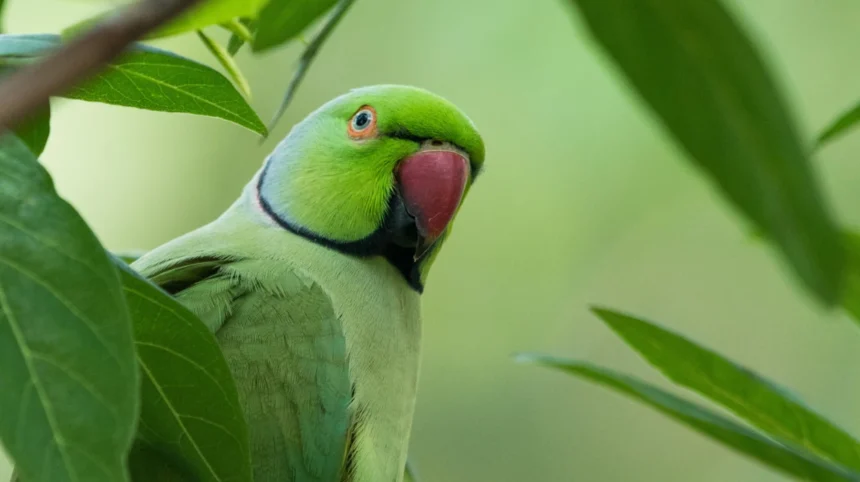
Key Points
- There has been a severe warning by a local rescue charity because of 43 deaths of ring-necked parakeets over three weeks in a South East London park.
- These birds were killed in Priory Gardens of Orpington in the London Borough of Bromley. Five dead parakeets were found during one Monday itself.
- It seems like groups of youths are resorting to a method called “lamping,” where they use bright light at night to stun sleeping parakeets huddled up in trees and kill them with catapults.
- According to the wildlife rescuers, the use of catapults to attack the birds in Priory Gardens dates back to 2020, when their targets included squirrels, pigeons, coots, and ducks.
- Bromley Council has clarified that the murder of the wild birds is indeed a matter of great concern for them, and they are helping the Metropolitan Police in their investigation.
Orpington (South London News) September 9, 2026 — A local animal welfare organisation has raised the alarm over a spate of violent attacks in a South East London park, where youth groups armed with catapults have been targeting and killing sleeping ring-necked parakeets. As reported by the BBC, Rae Gellel, director of the Greenwich Wildlife Network, confirmed that 43 dead ring-necked parakeets were recovered from Priory Gardens in Orpington over a three-week period, including five carcasses found on a single Monday.
How are the parakeets being targeted in Priory Gardens?
As stated by Rae Gellel, director of the Greenwich Wildlife Network, the perpetrators are engaging in a practice known as “lamping.” The parakeets gather in large numbers to roost together in trees at night, leaving them highly exposed. Culprits shine high-powered, bright lights up into the branches to temporarily blind and stun the birds, rendering them immobile before shooting them down with catapults.
Gellel noted that while the recent surge specifically targets the local parakeet population, catapult attacks within Priory Gardens are not a new phenomenon. According to Gellel, systematic catapult strikes at the public park date back to 2020. Over the past five years, the targets have encompassed a broad range of urban wildlife, including squirrels, pigeons, coots, and ducks.
What action are local authorities taking regarding the killings?
In a public statement regarding the ongoing killings, a spokesperson for Bromley Council stated that the deliberate destruction of wildlife “continues to be a concern” for the local authority. The council confirmed it is working alongside the Metropolitan Police Service to assist with their official investigation into the incidents.
All wild birds in the United Kingdom are granted legal protection under the Wildlife and Countryside Act 1981, which makes it an offence to intentionally kill, injure, or take any wild bird. Additionally, causing unnecessary suffering to animals is prohibited under the Animal Welfare Act 2006.
Explore More Orpington News
Welcome Takeaway Hit With Zero Food Hygiene Rating in Orpington 2026
New Casual Dining Venue Proposed for Walnuts Centre Orpington 2026
Background of the particular development
The wave of parakeet killings in Orpington represents a escalating chapter in a wider, long-running issue involving unregulated catapult weapons across London green spaces.
As reported by Jacqui Mitchell, founder of the Priory Gardens Wildlife Foundation, community-led efforts to monitor and protect local fauna began in March 2020 during the first COVID-19 lockdown. The foundation was initially established following a series of deliberate attacks on nesting swans within Priory Gardens. Local volunteers established safety rotas, held liaison meetings with local police officers, and distributed educational materials to park visitors. However, Mitchell noted that while incidents were once sporadic, catapult violence has since escalated significantly into a daily occurrence.
According to statements made by Rae Gellel in coverage by The Evening Standard, the Greenwich Wildlife Network has received near-daily reports of catapult-related animal injuries across the London Boroughs of Greenwich, Bexley, and Bromley. Rescuers and local residents have frequently reported finding spent ammunition—including steel ball bearings, marbles, and heavy metal nuts and bolts—scattered across public lawns and near waterfowl habitats.
Beyond parakeets, previous reported incidents in the region include waterbirds sustaining severe facial fractures, lost eyes, or severed beaks. Animal welfare charities, including the Royal Society for the Prevention of Cruelty to Animals (RSPCA) and the South Essex Wildlife Hospital, have similarly highlighted a regional rise in catapult-inflicted trauma among wildlife. Campaigners led by Gellel have organized community demonstrations and launched national petitions calling for legislative reform to restrict the public carrying and sale of catapults and heavy ammunition.
Prediction: How this development can affect local communities and wildlife protection
The ongoing catapult attacks in Priory Gardens and the wider South East London area are likely to have several distinct impacts on local residents, public space management, and wildlife conservation policies:
- Escalation of Law Enforcement and Council Controls: Given the public outrage and the direct involvement of Bromley Council with the Metropolitan Police, local authorities are likely to increase high-visibility patrols within Priory Gardens and surrounding parklands. This may lead to the implementation of targeted Public Spaces Protection Orders (PSPOs) or increased CCTV coverage to deter antisocial behavior and weapon possession in public parks.
- Increased Risks to Public Safety and Local Infrastructure: The continuous use of high-velocity catapult projectiles—such as metal ball bearings and bolts—presents an ongoing safety risk not only to wildlife, but also to park visitors, children, pets, and nearby private property. Continued unaddressed usage increases the likelihood of accidental injury to the public or damage to surrounding homes and vehicles.
- Impact on Local Eco-systems and Community Wellbeing: Ring-necked parakeets and native waterfowl form a prominent part of the biodiversity in suburban London parks. The systematic removal and killing of dozens of roosting birds disrupt local avian populations. Furthermore, the visible presence of injured or dead animals causes distress to park users, families, and volunteer groups dedicated to maintaining urban green spaces.
- Renewed Legislative Pressure on Catapult Regulation: Continued national media coverage of organized wildlife killings is expected to bolster ongoing political campaigns seeking tighter regulation of catapults. Unlike firearms or air weapons, catapults face minimal age restrictions or carriage prohibitions under current UK law. The accumulation of high-profile incidents may push lawmakers toward introducing restrictions on carrying catapults in public spaces without a lawful excuse.