Key Points
- Jeremiah Carnegie, a 17-year-old swimming competitor from Croydon, has organized an event that helped to teach 780 kids of different ethnicities how to swim for free.
- Carnegie used to train in the local pool in Crystal Palace until its closure deprived him of the chance to get to 50-metre pools.
- Carnegie, who was an accomplished young athlete, competed at the London Aquatics Centre in Queen Elizabeth Olympic Park and won several medals being a member of the Newham and UEL Swimming Club (NUEL).
- Noticing no interest of the community around him in the Olympic legacy venue, Jeremiah Carnegie organized a program aimed at making the sport more accessible.
- He received the financial support of the Mayor of London’s Sport Unlocked fund and some other local organizations.
- This program included the teaching of basic water confidence and lifesaving skills in water.
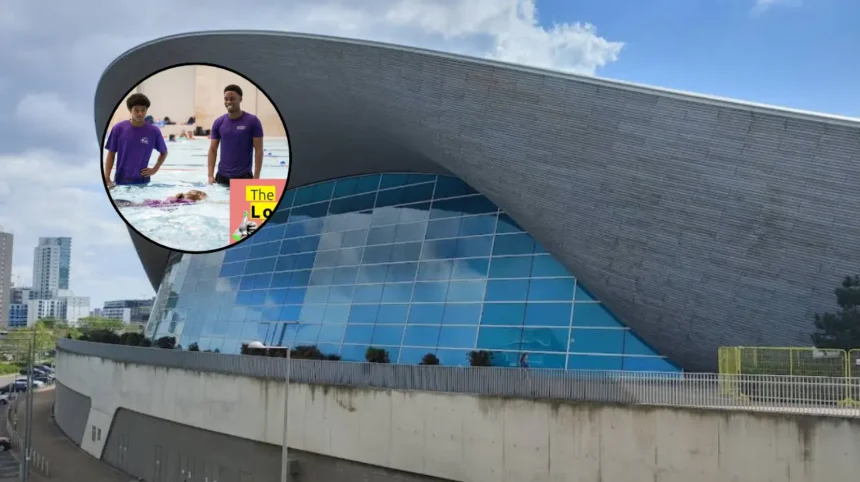
Croydon (South London News) September 14, 2026 – Jeremiah Carnegie, a 17-year-old competitive swimmer residing in Croydon, has successfully spearheaded a community-led aquatics program that has provided free swimming lessons to 780 local children at the London Aquatics Centre in Queen Elizabeth Olympic Park. The initiative was established after Carnegie, who has competed nationally since the age of eight, identified a marked disparity in pool usage among residents living adjacent to the historic 2012 Olympic legacy venue. Utilizing funding secured from municipal grants, the project delivered structured, cost-free aquatic education aimed at raising water safety awareness, lowering drowning risks, and expanding access to high-caliber sports infrastructure for historically underrepresented demographics.
- Key Points
- How Did a 17-Year-Old Athlete Identify the Need for Free Swimming Lessons in East London?
- What Steps Were Taken to Finance and Structure the Free Swim Program?
- How Did the Scheme Expand to Reach 780 Local Children?
- What Is the Background of London Aquatic Legacy Infrastructure and Community Access?
- How Will This Development Affect Local Youth and Community Aquatics in East London?
How Did a 17-Year-Old Athlete Identify the Need for Free Swimming Lessons in East London?
The origin of the program stems from Carnegie’s personal transition between training venues following infrastructure challenges in South London. Carnegie had routinely trained at the Crystal Palace National Sports Centre; however, structural closures and ongoing maintenance issues at the historic site severely restricted his access to 50-metre training facilities.
To maintain his competitive edge, Carnegie joined the Newham and UEL Swimming Club (NUEL), which utilizes the London Aquatics Centre in Stratford as its primary training hub. While attending early morning squad sessions and regional swim meets at the venue, Carnegie noted that the surrounding populace in Newham—one of London’s most culturally diverse and socio-economically complex boroughs—was largely absent from the pool lanes during elite and club training slots.
As documented by local sports reporters covering East London youth initiatives, Carnegie observed that while the facility hosted high-profile national events, nearby residents faced significant financial and cultural barriers preventing them from utilizing the world-class water features. Recognizing that drowning risks remain statistically higher among youth from ethnic minority backgrounds and lower-income households across Greater London, Carnegie initiated discussions with club coaches and administrative management to address the local participation deficit.
What Steps Were Taken to Finance and Structure the Free Swim Program?
To translate the concept into a sustainable public service, Carnegie collaborated with NUEL executives to draft grant applications targeting youth outreach and health integration funding. The primary financial backing was secured through the Mayor of London’s Sport Unlocked initiative, a scheme designed to leverage legacy sports venues for grassroots community access. Additional micro-grants were provided by local municipal health boards and regional sports charities to cover pool space rental, insurance, and professional coaching fees.
The structured curriculum was designed to remove financial constraints entirely for participating families. Equipment such as goggles, swim caps, and buoyancy aids were purchased and distributed without charge. The program prioritized elementary water safety, technical stroke mechanics, and emergency survival techniques over strict competitive conditioning, ensuring that complete non-swimmers could build baseline confidence within a multi-week modular course.
As reported by aquatic sports coordinators monitoring the project, the intake filled to maximum capacity within days of announcement, demonstrating a severe unmet demand for affordable aquatic instruction within the immediate catchment area of the Olympic Park.
How Did the Scheme Expand to Reach 780 Local Children?
The operational phase of the project utilized empty lane allocations during off-peak hours at the London Aquatics Centre. Under Carnegie’s direct involvement—combining his roles as an active assistant coach and youth mentor—the coaching staff delivered small-group instruction tailored to varying age brackets and proficiency levels.
By coordinating with local primary schools, community centers, and youth organizations across Newham, Tower Hamlets, and neighboring East London boroughs, the scheme identified children who had never previously accessed a public swimming pool. The structured sessions tackled common barriers to participation, including water anxiety, cultural modesty considerations, and lack of foundational swim attire.
According to statements from senior coaching staff at the Newham and UEL Swimming Club, Carnegie’s personal presence as a young coach from a minority background served as a key driver for participant retention. Carnegie actively assisted in teaching stroke mechanics, pool deck safety protocols, and deep-water acclimatization, ensuring that each of the 780 enrolled participants achieved basic national curriculum standards for swimming competency before graduating from the course.
What Is the Background of London Aquatic Legacy Infrastructure and Community Access?
The debate surrounding community access to elite Olympic legacy facilities has remained a central topic in UK sports policy since the conclusion of the 2012 London Olympic Games. Built at a cost exceeding £250 million, the London Aquatics Centre was designed to serve dual purposes: acting as a venue for international elite sports and providing a long-term public asset for the residents of East London.
While the venue successfully reopened to the public under the management of charitable social enterprise Greenwich Leisure Limited (GLL), public usage rates have frequently been subjected to scrutiny. Operational costs, high lane-hire fees for private clubs, and public session pricing have periodically drawn criticism from community advocacy groups, who argue that surrounding working-class neighborhoods encounter financial hurdles when attempting to access the pools.
Furthermore, national data published by Swim England highlights systemic gaps in aquatic literacy across the United Kingdom. Statistics indicate that a significant percentage of children leaving primary school are unable to swim a continuous distance of 25 metres or execute basic self-rescue maneuvers. These deficiencies are statistically pronounced in urban centers and low-income communities. Carnegie’s project represents one of the few youth-led interventions designed to directly bridge the gap between high-performance Olympic infrastructure and grassroots public health necessities.
Explore More Croydon News
Croydon Advances Updated Community Infrastructure Levy Charging Schedule Croydon 2026
Pregnant Leaseholder Left Without Heating in Croydon Gas Dispute 2026
How Will This Development Affect Local Youth and Community Aquatics in East London?
This successful intervention is expected to produce measurable long-term effects across multiple sectors within the local community:
Improved Public Health and Reduced Drowning Risks
By equipping 780 children with essential water safety skills, the initiative directly lowers the statistical risk of accidental drowning among local youth. Improved swimming proficiency also fosters long-term physical activity habits, helping to combat childhood health challenges such as obesity and sedentary lifestyle trends in urban areas.
Sustainable Models for Legacy Facility Usage
The practical success of Carnegie’s model provides a viable blueprint for municipal authorities, sports councils, and facility management operators across the United Kingdom. Demonstrating that targeted grant funding combined with club-led mentorship can successfully fill operational gaps at legacy venues may encourage similar partnerships at other major sports facilities nationwide.
Enhanced Representation and Pathways into Competitive Sport
The presence of a teenage leader organizing and executing a large-scale community program alters the traditional demographics of aquatic leadership. Beyond basic safety, the program serves as a feeder mechanism for local swimming clubs, creating clear, accessible pathways for underrepresented youth to transition from novice community sessions into structured, competitive aquatic sports programs.