Key Points
- Operation Initiated: The Royal Parks charity has officially begun its controlled annual deer culling operations across Bushy Park to manage herd density.
- Visitor Access Restricted: Temporary gate closures are now in effect, with pedestrian gates locked overnight from 10:30pm and vehicle gates locked at 7:00pm, reopening at 8:00am the following morning.
- Safety Precautions: Bright yellow warning placards displaying “DANGER NO ENTRY – Deer cull – firearms in Use” have been deployed to alert the public to active night-time humane culling.
- Population Dynamics: The park maintains a managed population of approximately 320 red and fallow deer to prevent severe overgrazing, disease outbreaks, and starvation.
- Historic Legacy: Fallow deer have inhabited Bushy Park since Tudor times under Henry VIII, whilst native red deer represent the largest land mammal species in the British Isles.
- Endorsed Practices: The culling strategy is fully supported by veterinary experts, the British Deer Society, and the Deer Initiative of England and Wales as an essential animal welfare measure.
Kingston Upon Thames (South London News) September 21, 2026 — The Royal Parks has announced the implementation of mandatory evening and early-morning gate closures at Bushy Park as the charity commences its essential annual deer culling program. As reported by local media correspondents including Stuart Higgins and Esme Agius-Kensell, the management authority has restricted public entry to safeguard visitors while trained marksmen conduct culling operations using firearms within the park boundaries.
Under the temporary schedule, vehicle access gates are locked at 7:00pm each evening, while pedestrian access gates are secured from 10:30pm. All access routes remain locked overnight before reopening at 8:00am every morning from Monday to Friday, allowing full, unrestricted public access throughout Saturdays and Sundays. The Royal Parks has erected prominent yellow notice boards across entry points warning members of the public of active shooting and advising that no unauthorized entry is permitted during the designated twilight and overnight hours.
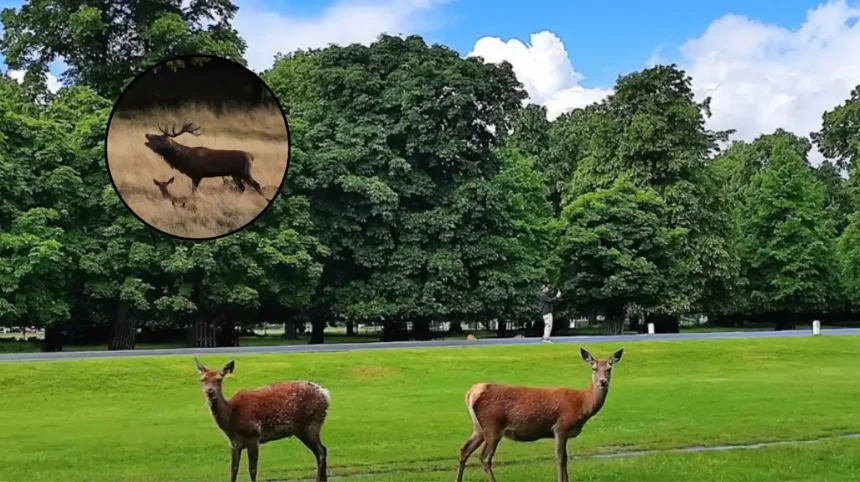
Bushy Park, located near Hampton Court Palace, spans 1,100 acres and currently accommodates a free-roaming population of approximately 320 red and fallow deer. As detailed by environmental reporters covering the region, fallow deer have continuously roamed the open expanses of Bushy Park since the reign of King Henry VIII in the Tudor era. The park’s red deer population—recognized as the largest native terrestrial mammal species in the British Isles—features distinctive coats that turn a glossy red during the summer months. Conversely, the fallow deer are smaller in stature, with summer coats ranging from pale cream to darkish brown, frequently marked by pale spots.
As reported by Stuart Higgins of Teddington Town, officials from The Royal Parks confirmed that public safety remains the fundamental driver for the altered operating hours. Representatives stated that “public safety during the deer cull is a key priority,” adding that “the park’s delayed opening ensures that all necessary safety measures and environmental checks are thoroughly completed before visitors arrive”.
How Do Conservation Authorities Justify the Requirement for Population Control?
As reported by Esme Agius-Kensell of Nub News, park authorities maintain that controlled culling is a non-negotiable veterinary necessity to ensure the long-term health and survival of the herds. In formal documentation released by the conservation body, officials emphasized that in an enclosed parkland environment lacking natural apex predators, wild deer populations naturally expand beyond the carrying capacity of the land.
As reported by Stuart Higgins, representatives from The Royal Parks explained that “if the herd size was not managed, food would become scarce, and more animals would ultimately suffer”. Park wildlife managers further detailed that “without population control, there would be other welfare issues such as low body fat, malnutrition, and high incidence of death from exposure to cold in winter”. Authorities also highlighted that allowing the population to expand unchecked within a fixed geographic boundary would result in a severe “build-up of parasites and other pathogens causing disease in the deer”.
The Royal Parks, which manages the herds under direct veterinary supervision, operates as an accredited member of the British Deer Society. As noted in municipal press coverage, both the British Deer Society and the Deer Initiative of England and Wales explicitly endorse humane culling as the most effective, stress-free method of managing wild deer numbers. Experts have repeatedly indicated that non-lethal alternatives, such as hormonal contraceptives or translocation, remain technically unviable and illegal for wild, free-living deer populations within the United Kingdom due to high stress mortality and the absence of licensed oral contraceptives.
Background of the Deer Management Program in Royal Parks
The presence of managed deer in London’s Royal Parks is an ecological tradition spanning over five centuries. Bushy Park was originally imparked by Cardinal Wolsey and subsequently seized by King Henry VIII as a private hunting ground stocked with fallow deer. Following the Second World War, forebears of the current red deer herd were re-established to complement the existing fallow stock, recreating a balanced biodiverse landscape that reflects historic English parkland.
Over centuries of continuous grazing, the deer have directly shaped the unique landscape of Bushy Park, which holds official designation as a Site of Special Scientific Interest (SSSI). The animals’ selective feeding on young tree saplings prevents scrubland encroachment, maintaining open vistas and protecting the park’s nationally important acid grassland habitat. Furthermore, natural grazing creates a structural mosaic in vegetation height without destroying the thousands of historic anthills that pepper the terrain—a preservation effect that mechanical mowing cannot replicate. The characteristic “browse line” visible across parkland trees, where all foliage below six feet has been neatly trimmed, remains a direct visual signature of this long-standing grazing pattern.
Despite periodic public opposition from animal rights advocates who periodically call for non-lethal population controls, the wildlife management framework applied across Bushy Park and neighboring Richmond Park has remained consistent for decades. By keeping the target herd size fixed at roughly 320 animals in Bushy Park, land managers balance landscape conservation with optimal animal welfare, preventing overgrazing that would otherwise decimate biodiversity and deplete winter forage like acorns and chestnuts.
Prediction: What Impact Will This Development Have on Park Visitors and the Local Community?
The implementation of the annual deer cull and the accompanying revised access schedule will directly influence several groups across the surrounding Borough of Richmond upon Thames and Kingston area:
- Early Morning Commuters and Walkers: Local residents who rely on Bushy Park as a pedestrian or cycling thoroughfare between Teddington, Hampton, and Kingston will experience localized disruption. The delayed 8:00am opening time for all pedestrian and vehicle gates during weekdays will force morning commuters, runners, and dog walkers to reroute onto surrounding perimeter roads (such as the A308 and A311) during peak travel times.
- Park Visitors and Dog Owners: Night-time visitors will face strict cut-offs, with vehicle gates shutting promptly at 7:00pm and footgates at 10:30pm. Additionally, as the autumn cull coincides with the annual deer rutting season (September through November), visitors during operational day hours are expected to exercise heightened caution. Dog owners in particular face increased risk, as male stags and bucks elevated on testosterone become fiercely territorial. Visitors will be urged to keep dogs strictly on leads or walk them outside the park to prevent dangerous encounters.
- Local Wildlife and Ecological Stability: Over the longer term, the local ecosystem will benefit from the controlled cull. By keeping the herd density at a sustainable baseline, grassland biodiversity will remain protected, ensuring that bird species relying on open habitats (such as skylarks) and native insect populations thrive without suffering habitat degradation from overgrazing.