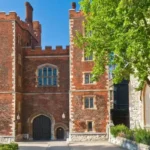
Lambeth’s industrial heritage is concentrated around the River Thames, Vauxhall, Lambeth High Street and Albert Embankment. Pottery, glassmaking, breweries, gasworks, timber yards, wharves, soap works and engineering shaped the borough before many industrial sites disappeared or changed use.
- What made Lambeth an important industrial area?
- Where can visitors explore Lambeth’s pottery heritage?
- Can visitors still see the former Doulton pottery site?
- What can visitors discover around Vauxhall’s industrial heritage?
- How did the River Thames shape Lambeth’s working history?
- What industrial buildings can visitors see around Albert Embankment?
- What role did glassmaking play in Lambeth’s industrial past?
- Where can visitors find evidence of Lambeth’s gasworks?
- How did railways change Lambeth’s industrial landscape?
- What evidence remains of Lambeth’s breweries and other industries?
- How can visitors use Lambeth’s surviving architecture to understand industrial history?
- Can visitors explore Lambeth’s industrial history through museums and archives?
- What happened to Lambeth’s industrial landscape?
- Which areas should visitors prioritise for Lambeth industrial heritage?
- Why does Lambeth’s industrial heritage remain relevant today?
For visitors, Lambeth’s industrial story is best understood through surviving buildings, streets, conservation areas, riverside landscapes, museum collections and historic records. Some former factories have disappeared completely, while others survive as listed buildings or as architectural details incorporated into later developments.
What made Lambeth an important industrial area?
Lambeth became an industrial centre because its position beside the River Thames provided transport, waterfront access and space for manufacturing. From the 17th century onwards, industries included glassmaking, pottery, munitions, breweries, vinegar production and other river-based trades.
The River Thames was the fundamental geographic factor. Waterfront sites connected manufacturers with incoming raw materials and outgoing finished products. Wharves, docks and riverside yards therefore became important parts of Lambeth’s working landscape.
The industrial expansion became particularly significant during the 18th and 19th centuries. Lambeth’s manufacturing economy included pottery and ceramics, which became one of its most recognisable industries.
Lambeth Council’s industrial heritage material records the transformation of Water Lambeth from marshy land into an area containing munitions factories, glassworks, vinegar works, potteries and breweries.
This history also explains why modern Lambeth contains architectural traces that do not immediately appear industrial. Decorative terracotta, glazed tiles, old warehouse buildings, railway arches and unusual street layouts often preserve connections with former manufacturing districts.
Visitors exploring Lambeth therefore gain more from looking at the relationship between buildings and the river than from searching for one surviving factory complex.
Where can visitors explore Lambeth’s pottery heritage?
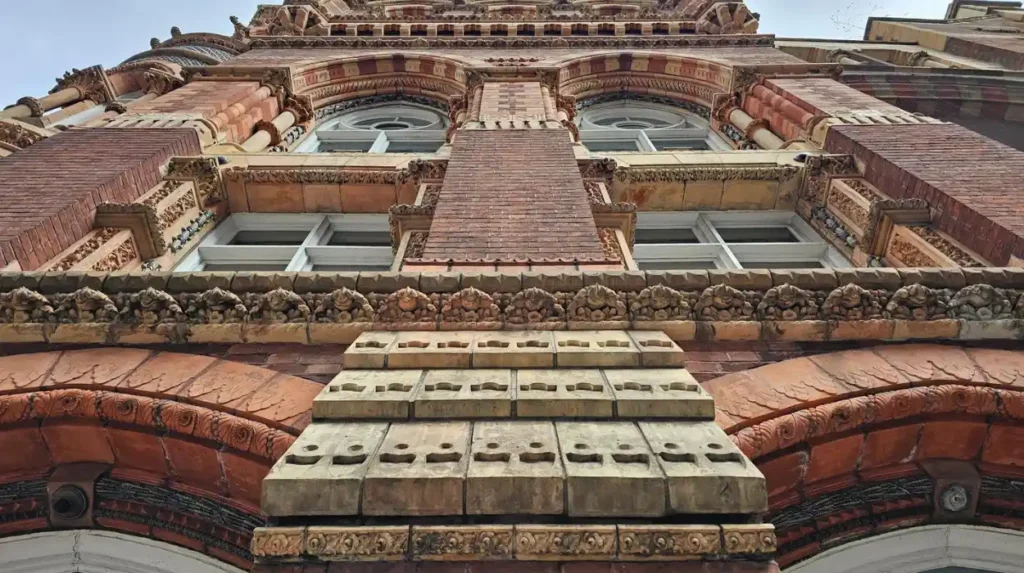
The strongest surviving evidence of Lambeth’s pottery heritage is around Lambeth High Street and Black Prince Road, where Southbank House survives as the former Lambeth Pottery associated with Doulton and Company. Its glazed terracotta decoration directly reflects the area’s ceramic manufacturing history.
Doulton became one of the defining industrial names in Lambeth. The company developed from the pottery business established in 1815 and became particularly important for industrial ceramics, including glazed stoneware pipes, sanitary products, architectural ceramics and decorative pottery.
The industrial importance of this production was practical as well as decorative. In 1846, Henry Doulton established works producing glazed stoneware pipes. These pipes supported improved sanitation and the expansion of piped water infrastructure.
What is Southbank House?
Southbank House at 28 Lambeth High Street was erected in 1878 and was designed by R Stark Wilkinson. Historic England lists it at Grade II. The building formed part of the former Lambeth Pottery of Messrs Doulton.
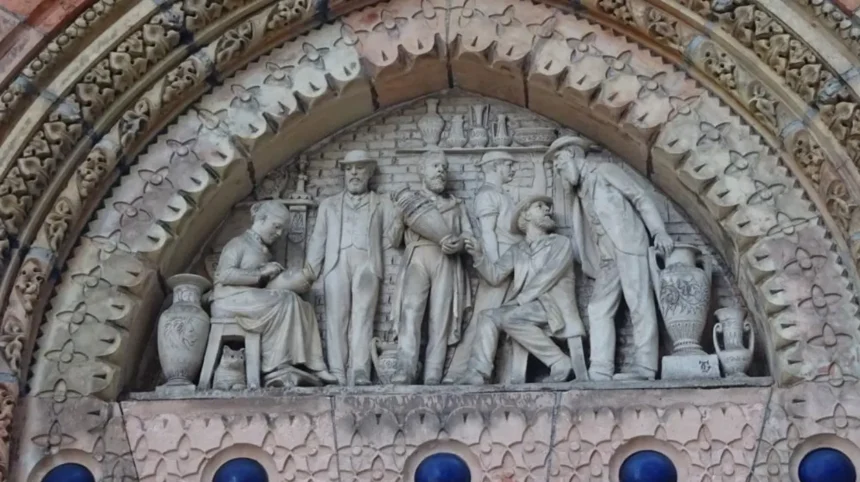
Its exterior provides unusually direct evidence of industrial production. The building uses red brick, pink and beige terracotta, glazed relief tiles and decorative ceramic details.
A relief on the building depicts craftsmen examining vases. This detail connected the architecture itself with the products manufactured by the company.
For visitors, the building is important because it demonstrates how an industrial manufacturer used its own materials in permanent architecture.
The pottery story also extends beyond the factory itself. Doulton’s ceramic work influenced public and commercial architecture across London, leaving examples of glazed architectural ceramics in entrances, façades, shopfronts and other buildings.
Lambeth Council identifies architectural ceramics as a particularly significant part of local distinctiveness because Doulton was based in Lambeth and mass-produced glazed bricks, tiles, mouldings and ornamental panels.
As you explore these surviving buildings, you are crossing land with a deep manufacturing heritage. Read the full [Insert Anchor Text for History Article Here] to understand its wider origins.
Can visitors still see the former Doulton pottery site?
Visitors can still identify important buildings associated with Doulton, although the original industrial complex no longer survives as a complete factory. Southbank House remains, while later buildings occupy other former pottery land along Albert Embankment and Lambeth High Street.
The scale of the original pottery industry becomes clearer through historic records.
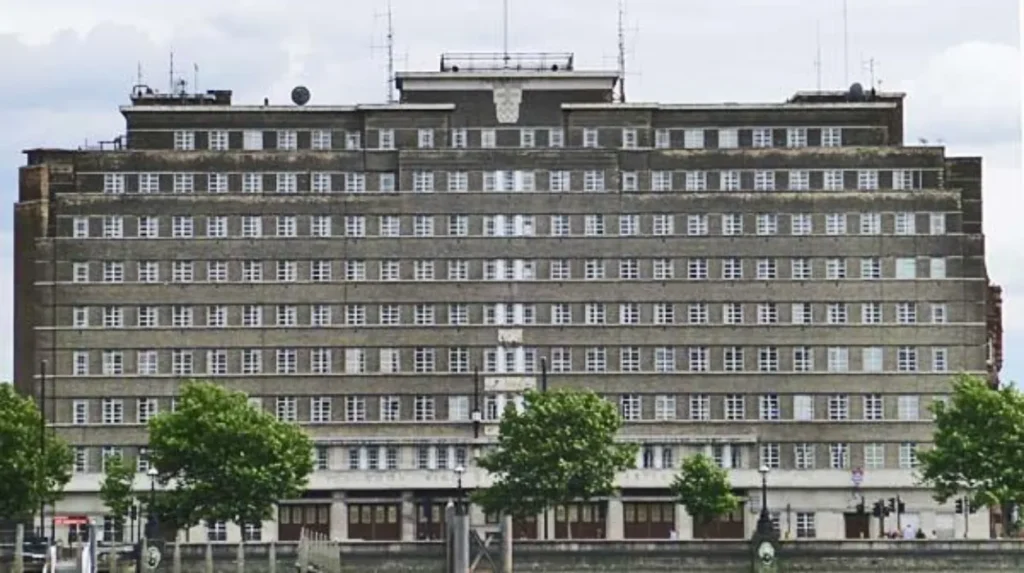
Historic England records that the London Fire Brigade headquarters was constructed on land formerly occupied by the London Pottery of Doulton & Co. The site was purchased for £85,000 in 1934 and included the disused Stiff’s Dock.
The later fire brigade complex therefore represents another layer of Lambeth’s working history. The site moved from pottery production to public-service infrastructure.
The surviving Lambeth Fire Station and its associated drill tower are listed historic structures. Their presence demonstrates how industrial land was repeatedly adapted as Lambeth’s economic and civic functions changed.
The original Doulton headquarters on Albert Embankment also disappeared. Lambeth’s conservation appraisal records that the headquarters was built in 1938 and demolished in 1980.
This creates an important distinction for visitors: Lambeth’s industrial heritage is not limited to surviving factories. Historic photographs, listed buildings, decorative ceramics and modern sites occupying former industrial land all contribute to the evidence.
What can visitors discover around Vauxhall’s industrial heritage?
Vauxhall contains some of Lambeth’s clearest surviving industrial character, particularly around Vauxhall Walk, Glasshouse Walk and Tinworth Street. Former factories, railway arches and industrial buildings show how manufacturing developed alongside residential streets and transport infrastructure.
Vauxhall’s industrial landscape developed strongly during the 19th century. Lambeth Council describes the conservation area as containing industrial and residential sub-areas dating from the late 19th and early 20th centuries.
The western side of the Vauxhall Gardens conservation area contains industrial development around Glasshouse Walk, Tinworth Street and Vauxhall Walk.
These streets provide useful places for visitors to observe the physical relationship between small-scale industrial buildings and later residential development.
What survives on Tinworth Street?
Tinworth Street contains one of the more significant industrial remnants in the area. Lambeth Council records that a former gasworks stood beside the railway arches, with three gasometers and a retort house shown on an 1875 map. Part of the retort house survives.
A retort house was a building where coal was heated to produce town gas. Gasworks therefore formed part of the infrastructure supporting Victorian urban life.
The surviving structure provides evidence of an industry that was essential to lighting and heating before modern energy systems replaced town gas.
Tinworth Street also contains an older industrial building at number 2 and other structures contributing to the historic industrial character of the street.
Visitors should examine building materials, roof forms, loading arrangements and the relationship with the railway arches. These details help distinguish former industrial premises from ordinary residential buildings.
How did the River Thames shape Lambeth’s working history?
The River Thames provided Lambeth with a transport corridor for raw materials, manufactured goods and commercial activity. Riverside wharves supported pottery, timber, coal, soap, lime, vinegar and other industries, making the waterfront central to Lambeth’s industrial development.
The Thames shaped both the location and character of industrial development.
Historic maps and conservation documents show a succession of commercial and manufacturing sites along the river. These included coal wharves, timber yards, pottery works, soap works, flour mills and gasworks.
The Albert Embankment area is particularly important because its modern appearance conceals a dense industrial past.
A Lambeth conservation report records a gin and vinegar distillery, coal wharf, London Pottery Works, Lambeth Soap Works, timber yards, a flour mill and an India Rubber Works in the area during the late 19th century. It also records Phoenix Gas Works near the site now associated with St George’s Wharf.
The construction of the Albert Embankment changed this landscape substantially. Earlier riverside settlements and industrial premises were replaced by new infrastructure and later commercial development.
Historic England records that the riverside before the embankment included industrial premises and poor housing. The construction of the Albert Embankment transformed the waterfront physically and environmentally.
For visitors, walking beside the Thames provides a direct way to understand this transformation.
What industrial buildings can visitors see around Albert Embankment?
Albert Embankment contains surviving buildings and landmarks connected with Lambeth’s industrial transformation, including the former Doulton site, Lambeth Fire Station and historic architectural ceramics. The area demonstrates how pottery, wharves and manufacturing land became modern commercial and civic space.
Albert Embankment is one of the most useful areas for understanding industrial change because several historical periods overlap.
The former Doulton pottery occupied important riverside land. Its products included industrial ceramics and architectural decoration. The company also manufactured ceramic pipes that supported Victorian sanitation.
The former Doulton headquarters stood beside the river until its demolition in 1980. The surviving Lambeth Fire Station complex occupies land that was previously part of the pottery site.
The fire station itself became part of Lambeth’s civic and technological history. The complex included workshops, garages, a training school and a drill tower, showing how the same land continued to support specialised work after pottery production ended.
The area is therefore valuable for visitors interested in industrial succession: manufacturing land became public infrastructure and later formed part of the modern riverside cityscape.
What role did glassmaking play in Lambeth’s industrial past?
Glassmaking was one of the industries established in Lambeth from the 17th century onwards. Its development formed part of a wider Thames-side manufacturing economy that also included pottery, munitions, breweries and other trades linked to transport and urban demand.
Glassmaking required fuel, raw materials, labour and transport. Lambeth’s location offered access to the Thames and the growing London market.
Although surviving glassmaking buildings are less prominent than the former Doulton structures, glass production forms an important part of Lambeth’s industrial chronology.
Lambeth Council’s industrial heritage material specifically identifies glassworks alongside munitions factories as part of the area’s mid-17th-century industrial development.
The industry demonstrates that Lambeth’s industrial identity did not begin with Victorian pottery. Manufacturing activity had already developed before the major industrial expansion of the 18th and 19th centuries.
Visitors studying Lambeth’s industrial history should therefore view pottery as one major component rather than the entire story.
Where can visitors find evidence of Lambeth’s gasworks?
Former gasworks evidence survives most clearly through historic maps, conservation records and surviving industrial fabric around Vauxhall. Tinworth Street preserves part of a former retort house, while historic records document gasworks around Albert Embankment and the wider Vauxhall riverside.
Gas production was a major urban industry because manufactured gas supplied lighting and other services before the modern energy system developed.
The former gasworks around Tinworth Street included three gasometers and a retort house. The 1875 Ordnance Survey map provides evidence of the site’s former arrangement.
A gasometer stored manufactured gas. A retort house contained equipment used during the production process.
The surviving section of the Tinworth Street retort house is therefore an industrial archaeological feature rather than simply an old building.
Other gas-related industrial evidence existed along the Albert Embankment. The former Phoenix Gas Works occupied a large riverside site recorded on late-19th-century mapping.
These locations demonstrate how energy production was physically embedded in Victorian neighbourhoods.
How did railways change Lambeth’s industrial landscape?
Railways strengthened Lambeth’s industrial economy by improving movement between the riverside, central London and wider markets. The railway extension from Nine Elms to Vauxhall in the 1840s intensified industrial activity beside the line and helped reshape Vauxhall’s urban geography.
The railway arrived during a period of rapid urbanisation.
Lambeth Council records that the railway was extended from Nine Elms to Vauxhall on a viaduct in the 1840s. Vauxhall Station opened in 1848.
The viaduct physically divided parts of Vauxhall while strengthening connections with other parts of London.
The riverside remained strongly industrial, while inland areas became increasingly residential. This created a mixed landscape where factories, warehouses, transport infrastructure and housing existed close together.
Visitors can still identify this historical pattern around Vauxhall’s railway arches and streets.
The arches themselves also provide evidence of how transport infrastructure became part of the built environment. Their proximity to former industrial buildings reinforces the connection between manufacturing and movement.
What evidence remains of Lambeth’s breweries and other industries?
Lambeth’s industrial economy extended beyond pottery and gas production. Historical records identify breweries, vinegar works, timber yards, soap works, flour mills, India Rubber Works, coal wharves and munitions production, creating a diverse manufacturing landscape along the Thames and around Vauxhall.
The variety of industries reflects Lambeth’s position within London’s wider commercial economy.
Vinegar production formed part of the food and chemical economy. Breweries served the expanding urban population. Timber yards handled construction materials. Coal wharves supported fuel distribution.
The Lambeth Soap Works occupied part of the Albert Embankment area, while an India Rubber Works operated nearby. A flour mill complex also appeared on late-19th-century mapping.
These industries depended on the same basic advantages: transport, labour, access to markets and proximity to the Thames.
Many of the original premises have disappeared, so historic maps are especially important for reconstructing their locations.
This makes Lambeth Archives and heritage collections valuable resources for visitors who want to investigate sites that no longer have visible industrial remains.
How can visitors use Lambeth’s surviving architecture to understand industrial history?
Visitors can read Lambeth’s industrial history through surviving façades, terracotta decoration, railway arches, former industrial buildings, street patterns and riverside landmarks. These physical details reveal where manufacturing took place even when factories, chimneys and workshops have disappeared.
Architectural ceramics provide one of the clearest examples.
Doulton manufactured decorative ceramic products as well as practical industrial goods. The company’s influence therefore remains visible in architectural details across Lambeth.
Lambeth Council identifies glazed bricks, tiles, mouldings, capitals and ornamental panels as important elements of the borough’s architectural character.
Southbank House offers the most concentrated example. Its façade incorporates the same ceramic manufacturing tradition that operated nearby.
Railway arches provide another clue. In Vauxhall, industrial buildings developed alongside railway infrastructure, producing a distinctive combination of transport and manufacturing architecture.
Street names and layouts also preserve historical associations. Lambeth Council’s Vauxhall heritage material notes that traces of the industrial past survive through historic buildings and evocative street names.
A heritage walk therefore works best when visitors examine the whole streetscape rather than isolated buildings.
Can visitors explore Lambeth’s industrial history through museums and archives?
Visitors can research Lambeth’s industrial past through museum collections, local archives, historic photographs, maps and conservation records. London Museum documents Lambeth’s pottery and glass industries, while Lambeth Archives preserves material relating to Doulton and the borough’s wider social and industrial history.
London Museum’s Lambeth collections provide an important starting point. The museum identifies the borough’s Thames-side location as a major factor in its industrial development and records pottery and glassmaking from the 18th century onwards.
Historic England also provides photographic and documentary evidence.
Its archive records industrial Lambeth before major redevelopment, including views of Doulton’s pottery works, riverside premises and former industrial buildings.
Lambeth Archives adds a local perspective. Its collections include Doulton material and evidence relating to pottery production. Historical material also documents the women who worked as artists at the Lambeth Doulton factory, decorating vases, pots and urns.
This evidence is important because industrial heritage includes workers and production processes as well as buildings.
Visitors who combine a physical walk with archive research gain a clearer understanding of how Lambeth functioned as a working district.
What happened to Lambeth’s industrial landscape?
Lambeth’s industrial landscape declined as manufacturing changed, pollution controls tightened, transport patterns evolved and large industrial premises disappeared. Former factory land was subsequently reused for housing, offices, public infrastructure and cultural institutions, leaving selected buildings and archaeological traces behind.
The decline was gradual rather than instantaneous.
Some industries relocated to larger sites outside central London. Doulton, for example, established a glazed stoneware pipe works at Erith in 1925 after production had moved from its Lambeth site.
Environmental regulation also affected traditional industries. Historic England records that many Lambeth potteries closed during the mid-20th century as a result of restrictions associated with clean-air regulations.
The Second World War also affected Lambeth. London Museum notes that heavy bombing contributed to the transition away from industry, followed by the construction of cultural institutions including the Southbank Centre, National Theatre and BFI Southbank.
The result is a layered urban landscape. Modern cultural, residential and commercial areas occupy land that previously supported manufacturing.
Explore More Area Guide
Best Modern Architecture in Lambeth: Top Places
Lambeth Victorian Architecture: Buildings and Heritage to Explore
Which areas should visitors prioritise for Lambeth industrial heritage?
Visitors should prioritise Albert Embankment, Lambeth High Street, Black Prince Road, Vauxhall Walk, Glasshouse Walk and Tinworth Street. Together these areas provide the clearest combination of former pottery, gasworks, riverside industry, railway infrastructure and surviving industrial architecture.
Albert Embankment provides the strongest connection with large-scale riverside industry and Doulton.
Lambeth High Street and Black Prince Road provide access to Southbank House, the former Lambeth Pottery building.
Vauxhall provides a broader industrial landscape. Vauxhall Walk and Glasshouse Walk contain historic industrial character, while Tinworth Street provides evidence of former gas production.
The railway infrastructure around Vauxhall helps explain why the district developed into a mixed industrial and residential area.
A practical heritage route can therefore connect the Thames with Lambeth High Street before continuing towards Vauxhall. Visitors should allow time to examine façades and conservation areas rather than treating the journey solely as a point-to-point walk.
Because some former industrial sites are privately occupied, redeveloped or no longer accessible, visitors should view heritage buildings from public areas and check access arrangements before entering any property.
Why does Lambeth’s industrial heritage remain relevant today?
Lambeth’s industrial heritage explains the borough’s modern architecture, transport routes, riverside development and cultural landscape. Surviving buildings and historic records show how manufacturing shaped local communities and infrastructure before former industrial land was converted to civic, residential and cultural uses.
The heritage has practical value for understanding the modern borough.
The Thames remains central to Lambeth’s identity, but its role has changed from an industrial transport corridor to a major public and cultural waterfront.
Vauxhall remains a transport hub, yet its surrounding buildings show the earlier relationship between railways, factories and housing.
Doulton’s legacy remains visible through surviving architecture and ceramic details. Its industrial products also demonstrate the connection between manufacturing and public health, particularly through glazed stoneware pipes and sanitation infrastructure.
For visitors, industrial heritage provides a different way to understand Lambeth. The borough’s history is not limited to palaces, churches, parks and cultural institutions. Its working landscape was equally important.
Exploring the surviving evidence reveals a Lambeth shaped by workers, manufacturers, engineers, transport networks, river trade and urban infrastructure.
That industrial past remains embedded in the streets visitors walk today.
What is Lambeth’s industrial heritage?
Lambeth’s industrial heritage covers the factories, workshops, wharves, gasworks, breweries, pottery works and transport infrastructure that shaped the borough’s working history, particularly along the River Thames.