Lambeth has one of the richest and most varied historical landscapes in South London. Its past is preserved in archives, churches, palaces, cemeteries, museums, parks, theatres and former entertainment sites. The borough’s history spans medieval religious power, Georgian entertainment, Victorian expansion, industrial development, migration, healthcare, wartime experience and modern cultural change.
- Which place gives the broadest introduction to Lambeth’s history?
- What does Lambeth Palace reveal about the medieval history of the borough?
- Why is the Florence Nightingale Museum important for understanding Lambeth’s past?
- How does Vauxhall Pleasure Gardens explain Lambeth’s entertainment history?
- What can West Norwood Cemetery teach visitors about Victorian Lambeth?
- How does Kennington Park help explain the transformation of Lambeth’s public spaces?
- Which places help explain Lambeth’s wartime history?
- How can visitors understand Lambeth’s social and cultural history through Brixton?
- Which historic places show Lambeth’s changing relationship with leisure and culture?
- How should visitors plan a Lambeth history itinerary?
- Why are Lambeth’s historic places still relevant today?
For visitors, learning about Lambeth’s past does not require a single museum visit. The strongest approach is to connect several locations across the borough. Lambeth Archives provides documentary evidence, Lambeth Palace represents medieval and ecclesiastical history, Vauxhall explains Georgian entertainment, West Norwood Cemetery reveals Victorian society, and the Florence Nightingale Museum explores nineteenth-century healthcare.
The borough itself also functions as a historical resource. Streets, parks, surviving buildings and public spaces reveal how Lambeth developed from rural and semi-rural settlements into a densely populated part of London. Lambeth Council describes its archive collections as covering local government, schools, estates, churches, businesses, societies, charities and other aspects of community life.
Which place gives the broadest introduction to Lambeth’s history?
Lambeth Archives provides the broadest introduction because its collections cover local government, communities, buildings, transport, businesses, archaeology, family history and social history. It connects individual neighbourhood stories with Lambeth’s wider development through documents, maps, photographs, artworks and artefacts.
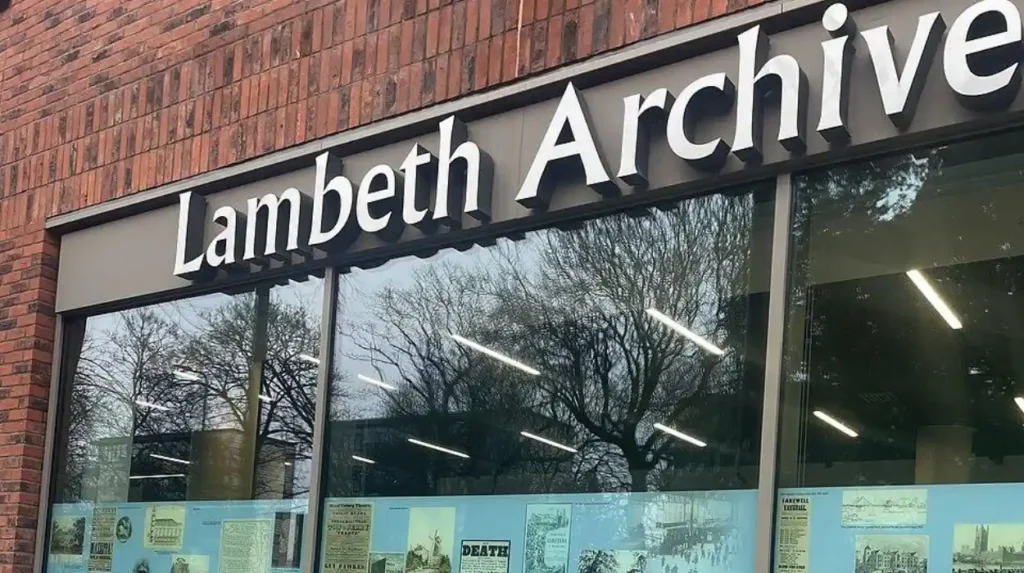
Lambeth Archives is the borough’s record office and local studies library. Its collections date back to the sixteenth century and document the development of Lambeth and its communities.
The archive is particularly useful because it does not concentrate on one historical period. Researchers can investigate different aspects of the borough, including architecture, biography, Black history, geography, LGBTQ+ history, social history, transport and women’s history.
The collections include records belonging to Lambeth Council and material deposited by local organisations. They also include local studies and museum collections. This makes the archive useful for understanding how official decisions, businesses, institutions and ordinary communities shaped the borough.
The present Lambeth Archives site is on Brixton Hill overlooking Rush Common. It includes a searchroom and exhibition, meeting and educational spaces. The service is open to residents as well as international researchers.
For visitors interested in specific streets or buildings, the archive is particularly valuable. Its resources support house history and neighbourhood research. A traveller exploring Brixton, Stockwell, Kennington, Vauxhall, Herne Hill, Tulse Hill or Norwood can use archival material to add historical context to what they see today.
Lambeth’s archive also helps explain why the borough cannot be understood through one historical theme. The modern borough incorporates areas with different former parishes, settlements and development patterns. Its records preserve those distinct histories.
What does Lambeth Palace reveal about the medieval history of the borough?
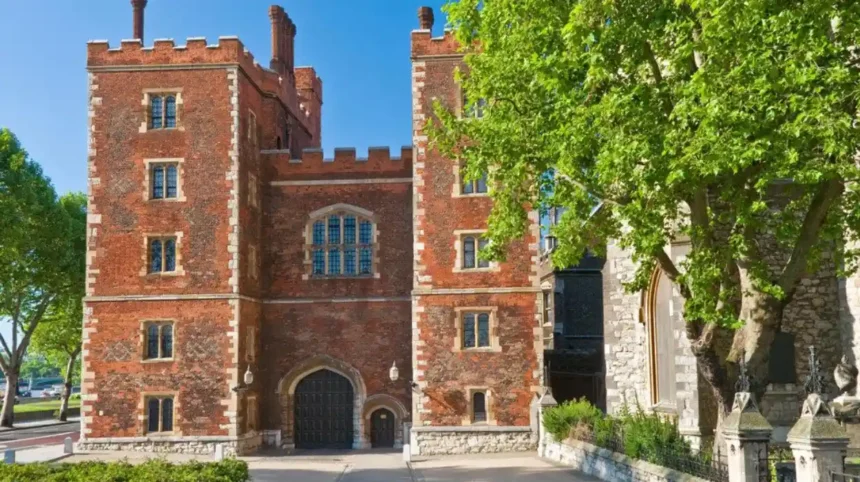
Lambeth Palace reveals Lambeth’s medieval importance as an ecclesiastical centre and the long relationship between the borough and the Archbishops of Canterbury. The archbishops occupied the site from 1197, creating a major religious and administrative presence beside the River Thames.
Lambeth Palace stands on the south bank of the Thames opposite Westminster. Its location explains much of its historical importance. The river placed Lambeth close to the political centre of medieval and later London.
Historic England records that the Archbishops of Canterbury first occupied the site in 1197. A Great Hall had been built before 1234, establishing the site as a substantial ecclesiastical residence.
The surviving complex contains important architectural evidence. Morton’s Tower dates from 1490 and provides the historic entrance from Lambeth Palace Road. The palace also contains the Lollards’ Tower and the Great Hall, alongside later buildings and restored structures.
The gardens are equally significant. Medieval gardens served practical functions, including food production and rabbit breeding. A water-powered flour mill also operated from a river running between the gardens and adjoining parkland. Later centuries changed the gardens into more formal and decorative spaces.
Lambeth Palace therefore demonstrates how religious institutions influenced land use, architecture and local development. It also provides a direct connection between Lambeth and national religious history.
The palace suffered severe damage during the Second World War. Restoration continued for more than a decade, with the chapel restored by 1955. Its surviving architecture therefore represents several historical periods rather than one unchanged medieval building.
Visitors should distinguish between Lambeth Palace itself and its wider surroundings. The palace is a working historic institution rather than an ordinary open museum. Access arrangements vary, so checking official visitor information before travelling is important.
As you explore the modern site, you are crossing land with a deep heritage. Read about the full [Insert Anchor Text for History Article Here] to understand its origins.
Why is the Florence Nightingale Museum important for understanding Lambeth’s past?
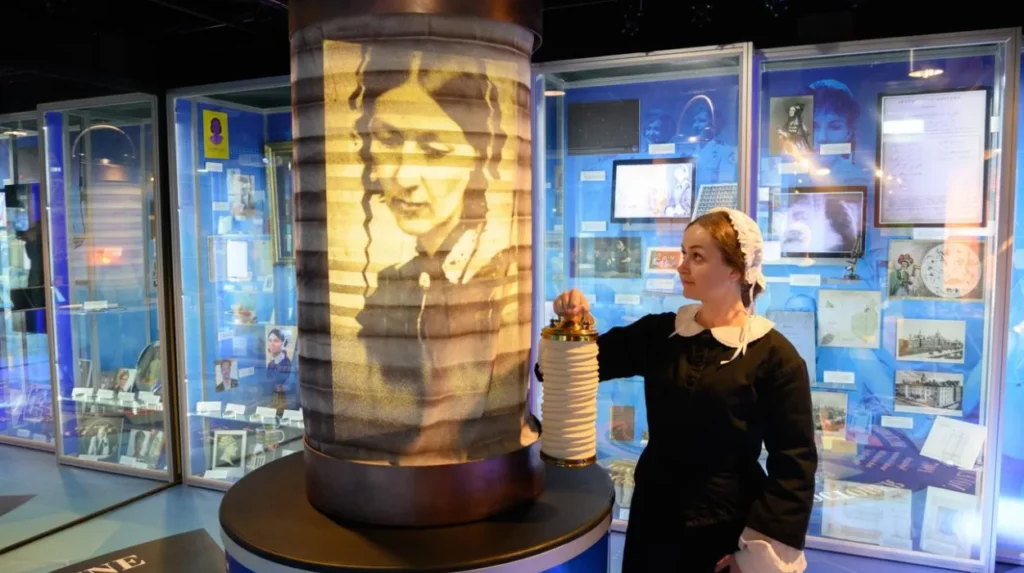
The Florence Nightingale Museum explains Lambeth’s role in the development of modern nursing and healthcare. Located at St Thomas’ Hospital, it preserves nearly 3,000 artefacts connected with Florence Nightingale, nursing education, healthcare reform and her international legacy.
The Florence Nightingale Museum is located within the grounds of St Thomas’ Hospital on Lambeth Palace Road. It focuses on Florence Nightingale, the nineteenth-century healthcare pioneer, statistician and social reformer.
Nightingale helped establish the Nightingale Training School at St Thomas’ Hospital in 1860. The first intake contained 15 probationer nurses. The training model subsequently expanded and influenced nursing education internationally.
The museum’s collection contains almost 3,000 artefacts. These include one of Nightingale’s lamps used during the Crimean War, her medicine chest, clothing, nursing material and objects connected with her life and work.
The collection has its own history. Dame Alicia Lloyd Still, a matron at St Thomas’ Hospital, collected objects associated with Nightingale during the early twentieth century. The material became known as the “Nightingalia” collection.
The collection was transferred to the Florence Nightingale Museum Trust in 1983. The museum opened on the site of the original Nightingale Training School in 1989.
This makes the museum especially relevant to visitors studying Lambeth’s institutional history. It demonstrates how a local hospital became connected to a major transformation in healthcare training.
The museum also provides a wider historical context. Nightingale’s work involved nursing, statistics, healthcare administration and campaigning for improvements in medical care. The museum therefore connects Lambeth with broader Victorian social and scientific developments.
The museum currently lists opening hours from Tuesday to Sunday, 10am to 5pm, with last entry at 4.30pm. It states that a typical visit lasts approximately 45 to 75 minutes.
How does Vauxhall Pleasure Gardens explain Lambeth’s entertainment history?
Vauxhall Pleasure Gardens explains how Lambeth became a major destination for leisure and entertainment between the seventeenth and nineteenth centuries. The original gardens opened in 1661 and combined landscaped walks, dining, music, visual spectacle and public entertainment.
The present Vauxhall Pleasure Gardens park occupies part of the historic site of the original Vauxhall Pleasure Gardens.
Lambeth Council records that the entertainment venue was first laid out in 1661. It became particularly successful during the early nineteenth century, attracting Londoners and visitors from different social backgrounds.
The gardens offered a combination of entertainment and commercial activity. Visitors encountered dining, music, visual arts and other spectacles. Historical references connect the venue with figures including George Frideric Handel, Giacomo Casanova and Samuel Pepys.
The gardens closed in 1859 after approximately two centuries of operation. The site subsequently changed to housing before being cleared after the Second World War and converted into public open space.
This sequence illustrates an important feature of Lambeth’s development: land uses changed repeatedly as London expanded.
Vauxhall was not simply an entertainment venue. It was part of the development of commercial leisure in London. Its location south of the Thames also demonstrates the growing importance of cross-river travel and attractions outside the traditional City and Westminster core.
The historic site can therefore be incorporated into a walking itinerary through Vauxhall. The present park does not reproduce the original pleasure gardens, but its location provides a direct geographical connection with that history.
What can West Norwood Cemetery teach visitors about Victorian Lambeth?
West Norwood Cemetery provides evidence of Victorian attitudes towards death, architecture, public health and urban expansion. Founded in 1837 as South Metropolitan Cemetery, it became one of London’s major nineteenth-century cemeteries and contains important monuments and surviving historic structures.
West Norwood Cemetery was established in 1837 when the surrounding area was still comparatively rural. It was originally called South Metropolitan Cemetery.
Historic England identifies it as the second of eight large London cemeteries established between 1832 and 1847. Architect William Tite designed the cemetery in a garden or pleasure-ground style.
The cemetery reflects the enormous population growth experienced by London during the nineteenth century. Traditional churchyards were increasingly unable to accommodate the expanding urban population, leading to the development of large suburban cemeteries.
West Norwood was designed with landscaping as an important component. Its historic monuments, paths, trees and architectural features formed a planned environment rather than a simple burial ground.
The cemetery also has an important connection with the development of cremation. A crematorium was installed in 1915, with the first cremations using gas furnaces taking place in May that year.
The site suffered extensive damage during the Second World War. Its chapels were damaged and subsequently demolished. A replacement crematorium was constructed in 1960.
Lambeth Council purchased the cemetery in 1966 and renamed it West Norwood Cemetery. Historic England lists the cemetery as Grade II* and identifies its collection of nineteenth- and early twentieth-century funerary monuments as an important part of its significance.
Recent conservation work has reinforced its heritage importance. Historic England reported in 2026 that a £7.2 million restoration programme funded by the National Lottery Heritage Fund and Lambeth Council had helped conserve the cemetery landscape and Grade II* St Stephen’s Chapel.
For visitors, the cemetery provides a different form of historical education from a conventional museum. Names, dates, monuments and architectural details provide evidence of individual lives and changing social structures.
How does Kennington Park help explain the transformation of Lambeth’s public spaces?
Kennington Park demonstrates how former common land became a planned Victorian public park. Much of Kennington Common was enclosed after an 1852 Act of Parliament, and Kennington Park opened to the public in 1854 as part of London’s expanding system of managed recreational spaces.
Kennington Common had previously been an open area used for public activities. Its transformation into Kennington Park reflected changing approaches to urban planning, public recreation and the management of open land.
Historic England records that an Act of Parliament passed in 1852 enabled approximately seven hectares of Kennington Common to be enclosed. Kennington Park opened in 1854.
The park was laid out by James Pennethorne, an important nineteenth-century landscape designer and architect. Its development formed part of the wider Victorian movement towards planned public parks.
The park subsequently expanded. About half a hectare was added in 1888, another two hectares in 1921 and approximately four hectares during the 1970s. Historic England records the total registered site at approximately 15 hectares.
Kennington Park therefore offers evidence of changing ideas about how densely populated urban areas should provide recreational space.
Its location also makes it useful for understanding Lambeth geographically. It sits close to Kennington, the Oval and Brixton, linking several historically important areas within a relatively compact part of South London.
Which places help explain Lambeth’s wartime history?
Lambeth’s wartime history is preserved through memorials, surviving buildings, archives and institutions across the borough. The Second World War caused significant damage and loss of life, while places such as Lambeth Palace, West Norwood Cemetery and the Imperial War Museum preserve different aspects of the period.
The Imperial War Museum London is located on Lambeth Road. Its current home occupies the central surviving part of the former Bethlem Royal Hospital site, historically associated with the institution popularly known as Bedlam. The museum moved to the site in 1936.
IWM London provides a national rather than exclusively Lambeth-focused interpretation of war. Its collections cover military conflict and civilian experience, allowing visitors to place Lambeth’s wartime history within wider British and international events.
Local evidence adds another dimension.
Historic England records that approximately 1,646 Lambeth civilians were killed during the Second World War. It also identifies the bombing of a shelter in Kennington Park in October 1940 as Lambeth’s greatest single wartime loss of life, with 104 people killed.
The Lambeth Civilian War Memorial commemorates civilians killed by aerial bombardment. The memorial was unveiled in 1952 and contains approximately 360 names associated with those buried in a mass grave at the site.
Lambeth Palace also suffered serious wartime damage. Its chapel was gutted and restoration continued after the war. This provides a direct example of how conflict affected historic buildings as well as residents.
Together, these sites allow visitors to examine military history, civilian experience, architectural damage and post-war restoration.
How can visitors understand Lambeth’s social and cultural history through Brixton?
Brixton is essential for understanding Lambeth’s modern social history because the area records major changes in migration, commerce, politics, music and community life. Its history includes Caribbean settlement after the Windrush arrival of 1948 and major political and social events in later decades.
Lambeth Archives provides the documentary foundation for researching Brixton and neighbouring districts. Its collections cover Black history, social history, transport, local organisations and community development.
The borough’s own historical timeline identifies the arrival of the Empire Windrush in 1948 as a significant point in Lambeth’s modern history. More than 1,000 Caribbean passengers arrived on the ship, and many subsequently settled in Lambeth.
Brixton also became an important location for political and social movements. The Lambeth historical timeline records the Brixton Uprising of 1981 and Nelson Mandela’s visit to Brixton in 1996.
These events form part of a wider history of migration and community formation in South London. They also demonstrate why Lambeth’s past cannot be reduced to medieval buildings and Victorian architecture.
Visitors exploring Brixton can therefore combine contemporary streets and markets with archival research. The physical environment contains evidence of changing businesses, transport connections, housing patterns and community institutions.
For a deeper study, Lambeth Archives is particularly useful because its collections include material concerning Black history and local organisations. This allows visitors and researchers to move beyond landmark-based tourism towards evidence-based local history.
Which historic places show Lambeth’s changing relationship with leisure and culture?
Lambeth’s cultural history can be traced through places such as Vauxhall, the Old Vic, the Oval and West Norwood Cemetery. These locations demonstrate successive changes in entertainment, sport, theatre, public recreation, architecture and community life from the eighteenth century onwards.
Vauxhall Pleasure Gardens provide the strongest example of early commercial leisure. The venue operated from the seventeenth century until 1859 and combined music, food, visual entertainment and landscaped spaces.
The Old Vic represents a later stage in Lambeth’s cultural development. The borough’s historical timeline records that Lilian Baylis relaunched the former Royal Coburg Theatre as the Old Vic in 1912.
Sport also forms part of Lambeth’s heritage. The same timeline records the first international cricket match at Kennington Oval in 1880.
These locations show how entertainment developed from landscaped pleasure gardens into theatres and organised spectator sport.
They also reveal how cultural institutions became embedded within ordinary urban neighbourhoods. Modern visitors encounter active venues rather than preserved museum exhibits, yet their locations retain strong historical associations.
Explore More Area Guide
Lambeth Industrial Heritage: Doulton, Vauxhall and Albert Embankment
Best Modern Architecture in Lambeth: Top Places
How should visitors plan a Lambeth history itinerary?
A Lambeth history itinerary works best when it follows the borough’s geographical and chronological development. Start with Lambeth Archives for documentary context, then connect medieval Lambeth Palace, Vauxhall’s entertainment heritage, Victorian sites such as West Norwood Cemetery and modern social history in Brixton.
A practical historical day can begin at Lambeth Archives, particularly for visitors with a specific research interest. Its collections provide the documentary framework needed to understand individual buildings, streets and communities.
Lambeth Palace provides the medieval and ecclesiastical context. Visitors can then move towards Vauxhall to understand the development of commercial leisure and the changing use of the Thames-side landscape.
The Florence Nightingale Museum adds an institutional and healthcare perspective. Its location at St Thomas’ Hospital connects directly with Nightingale’s work and the development of professional nursing from 1860 onwards.
Kennington Park provides an example of Victorian public-space planning. West Norwood Cemetery then offers evidence of nineteenth-century urban growth, burial practices, architecture and social history.
Brixton provides a route into twentieth-century and contemporary Lambeth. Its history connects migration, Black British communities, politics, commerce and culture.
This approach avoids treating Lambeth as a collection of isolated attractions. Each location contributes a different historical layer.
Why are Lambeth’s historic places still relevant today?
Lambeth’s historic places remain relevant because they explain how the borough’s current communities, institutions, landscapes and cultural identity developed. Archives preserve evidence, historic buildings retain physical records, and public spaces demonstrate how previous generations shaped modern South London.
Lambeth’s history is visible at different scales. Lambeth Palace represents centuries of ecclesiastical influence. Vauxhall records commercial entertainment. Kennington Park represents public planning. West Norwood Cemetery records Victorian urbanisation. The Florence Nightingale Museum preserves healthcare history. Brixton demonstrates migration and cultural change.
The borough’s official historical timeline extends from evidence of Ice Age activity at Clapham and Streatham Commons to twentieth-century migration, cultural development and contemporary memorialisation.
This long chronology explains why Lambeth is particularly suitable for historical walking and research. Different periods remain geographically close together.
Historic England’s local heritage work reinforces this depth. Its Lambeth material includes medieval, post-medieval and modern heritage, alongside sites such as Lambeth Palace, West Norwood Cemetery, Kennington Park and Pullman Court.
The most effective way to learn about Lambeth’s past is therefore to combine documentary sources with physical locations. Archives establish evidence. Buildings establish architectural context. Parks reveal changes in land use. Museums preserve objects. Streets and neighbourhoods demonstrate how historic developments continue to shape present-day Lambeth.
For tourists, this approach adds historical context to familiar South London destinations. For residents, it provides a way to investigate local places beyond their modern appearance. For visitors with limited time, combining two or three nearby sites creates a focused introduction to Lambeth’s development.
Lambeth’s past is not confined to a single museum or heritage attraction. It is distributed across the borough, making the landscape itself an important historical resource.
Where is the best place to learn about Lambeth’s history?
Lambeth Archives is the best starting point for detailed local research. Its collections cover Lambeth’s buildings, communities, businesses, transport, local government, social history, photographs, maps and other historical records.