Lambeth is one of London’s strongest areas for a culture-focused afternoon. The borough combines major art institutions, performance venues, historic buildings, specialist museums and riverside cultural spaces. A visitor can move from British art to war history, gardening, cinema, theatre and live music without leaving Lambeth.
- Which cultural places in Lambeth are best for an afternoon?
- Why is the Southbank Centre important for a cultural afternoon in Lambeth?
- What can visitors see at Tate Britain in Lambeth?
- Is Imperial War Museum London suitable for a cultural afternoon?
- What makes the Garden Museum different from other Lambeth museums?
- Where can you learn about Florence Nightingale in Lambeth?
- Where can you experience cinema culture during a Lambeth afternoon?
- Which Lambeth venues are best for theatre and live performance?
- How can you build a one-afternoon cultural itinerary in Lambeth?
- What should visitors know before planning a cultural afternoon in Lambeth?
- Why does Lambeth remain important to London’s cultural landscape?
- What is the best way to choose a cultural afternoon in Lambeth?
Its cultural geography is especially concentrated around the South Bank, Waterloo, Lambeth Palace Road, Millbank and the area around Lambeth North. This makes the borough suitable for a planned afternoon built around one subject or a mixed programme of museums and arts venues.
For visitors, the main cultural choices include Tate Britain, the Southbank Centre, Imperial War Museum London, the Garden Museum, Florence Nightingale Museum, BFI Southbank, the National Theatre and The Old Vic. Each institution represents a different part of London’s cultural landscape.
Which cultural places in Lambeth are best for an afternoon?
The strongest cultural afternoon in Lambeth combines Tate Britain, the Southbank Centre, Imperial War Museum London, the Garden Museum, BFI Southbank, National Theatre and specialist museums, depending on whether art, history, cinema, gardening or performance is the main interest.
Lambeth’s cultural offer is unusually broad for one London borough. The South Bank provides major institutions within a compact riverside area, while Lambeth Palace Road adds museums with specialised collections.
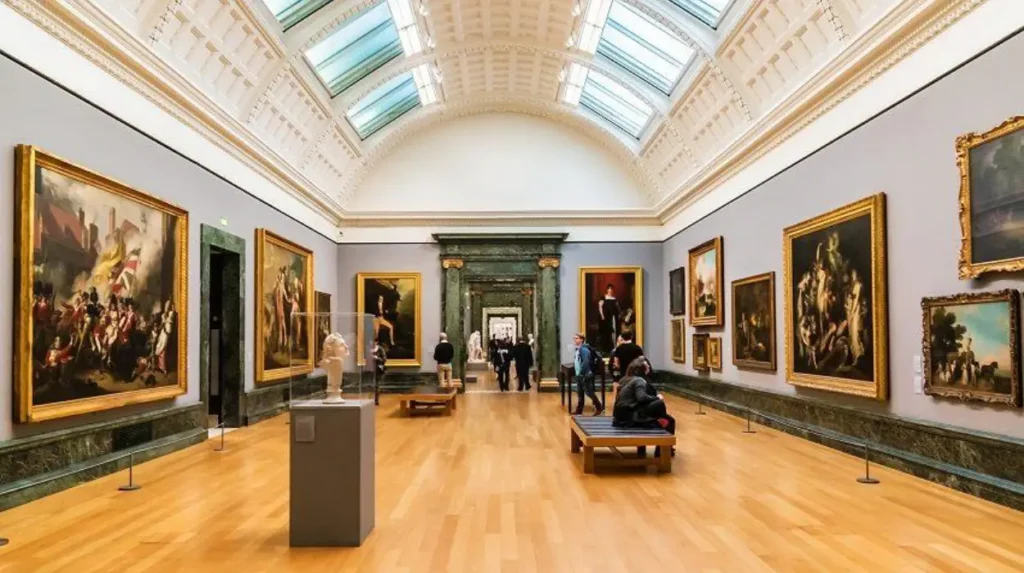
Tate Britain focuses on British art. Its collection spans centuries of British artistic production, while its galleries include dedicated displays covering historical and modern periods. Tate’s archive records the gallery’s opening in 1897 as the National Gallery of British Art.
Southbank Centre provides music, literature, visual art, dance, talks and performance. Its complex includes Royal Festival Hall, Queen Elizabeth Hall, Purcell Room and Hayward Gallery.
Imperial War Museum London provides a historical perspective centred on people’s experiences of war and conflict. Its collections cover the First World War through conflicts in the modern era.
The Garden Museum adds another dimension by connecting architecture, gardening, design and social history. The Florence Nightingale Museum focuses on nursing and healthcare history. BFI Southbank provides cinema and film culture, while the National Theatre and The Old Vic provide theatre.
This range means a cultural afternoon in Lambeth does not need to follow one definition of culture. Visitors can build an itinerary around visual art, historical interpretation, performing arts, cinema, architecture or specialist collections.
Why is the Southbank Centre important for a cultural afternoon in Lambeth?
The Southbank Centre is a major Lambeth cultural complex centred on Royal Festival Hall, Queen Elizabeth Hall, Purcell Room and Hayward Gallery, offering music, visual art, literature, talks, dance and contemporary performance beside the River Thames.
The Southbank Centre has operated from the South Bank since the 1951 Festival of Britain. Royal Festival Hall was built for that event and opened on 3 May 1951. The hall remains the only permanent building from the Festival of Britain site.
Royal Festival Hall has a 2,700-capacity auditorium. The Grade I listed building also has public foyer spaces. The Greater London Council’s Open Foyer policy introduced in 1983 established the building as a space open daily for people to visit without attending a ticketed performance.
The wider Southbank Centre contains several distinct cultural functions. Queen Elizabeth Hall hosts talks, gigs, dance, performance and classical music. Purcell Room focuses on literature, poetry, performance, classical music, jazz and electronic music. Hayward Gallery provides a major visual-art programme.
The centre’s history also connects directly with modern British cultural development. Its archives document major performances and exhibitions, including appearances by Ravi Shankar and early electronic music concerts. The Undercroft also became associated with the development of British skateboarding during the 1970s.
2026 is particularly significant because the Southbank Centre is marking the 75th anniversary of Royal Festival Hall. Its current programme includes major arts and cultural activity throughout the year.
For an afternoon itinerary, the Southbank Centre works as either the main destination or the final stop after a museum visit. Its riverside location also makes it easy to continue towards other South Bank cultural institutions.
What can visitors see at Tate Britain in Lambeth?
Tate Britain provides a major survey of British art, with displays covering historical and modern periods and dedicated galleries for artists including JMW Turner, alongside temporary exhibitions and architectural features at its Millbank home.
Tate Britain occupies the Millbank area of Lambeth. The gallery opened in 1897 as the National Gallery of British Art. Its development created a dedicated national institution for British art and established Millbank as an important cultural location.
The gallery’s current room structure demonstrates the chronological breadth of its collections. Displays cover periods including Tudor art, the seventeenth century, eighteenth-century Britain, the Industrial and Exhibition Age, Victorian art, modernism and contemporary British art. The gallery also has dedicated JMW Turner galleries.
JMW Turner is particularly relevant to a Lambeth cultural itinerary because Turner has a strong connection with the gallery and its British-art collection. Tate’s Millbank material includes works associated with Turner, including paintings depicting landscapes, maritime subjects and European locations.
Tate Britain is therefore suited to visitors who want a structured art-history afternoon. It provides a chronological framework rather than a single exhibition subject.
The building itself also forms part of the cultural experience. Its Millbank position places it within walking distance of the River Thames and Westminster. A visitor can therefore combine the gallery with a riverside walk before continuing towards another Lambeth venue.
The museum’s role extends beyond exhibitions. Tate’s wider organisation preserves and documents art collections and archives, making the institution significant for research as well as public viewing. Tate currently holds a large collection spanning British art from the sixteenth century to contemporary practice.
Is Imperial War Museum London suitable for a cultural afternoon?
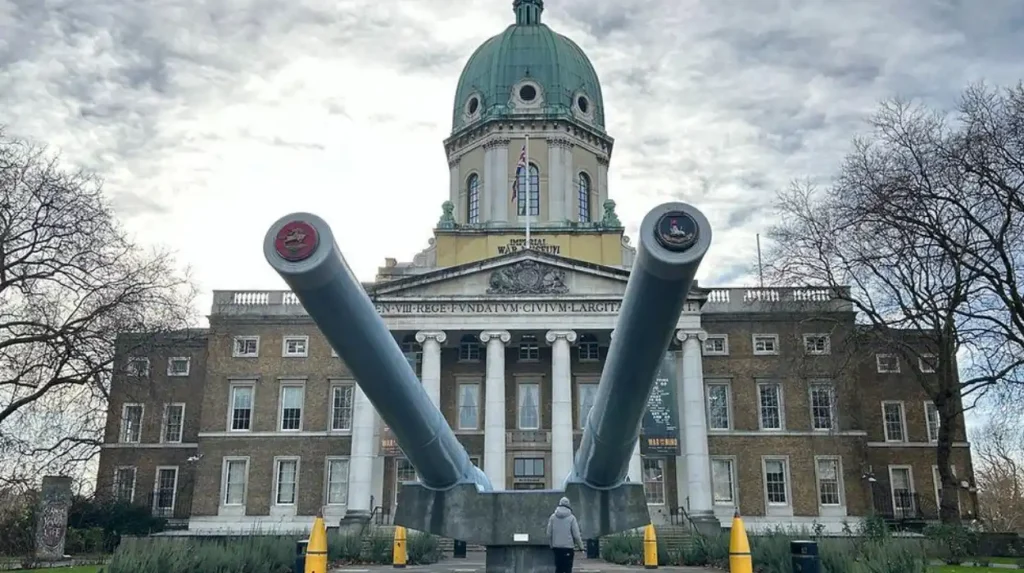
Imperial War Museum London is suitable for an afternoon focused on modern history, conflict, art and personal experience because its galleries examine warfare through objects, photographs, letters, films, sound recordings and individual stories from the First World War to contemporary conflicts.
Imperial War Museum London stands on Lambeth Road. The institution was established in 1917 during the First World War to record the experiences and events of the conflict. It opened at Crystal Palace in 1920 before moving to South Kensington and then to its present Lambeth Road location in 1936.
The museum’s Lambeth building occupies part of the former Bethlem Royal Hospital site. The present museum therefore combines the history of the institution with the wider history of the site.
Its collections provide multiple routes through twentieth-century history. Objects include military equipment, personal material, photographs, letters, film and sound recordings. The museum also functions as a national art gallery, archive and research centre.
IWM London is particularly useful for visitors who want cultural history rather than a conventional art-gallery experience. The displays connect military events with civilian life, social change and individual experiences.
The museum also provides practical accessibility facilities. Its access guide states that step-free entry is available through the West Entrance. Lambeth North is about seven minutes away on foot, Elephant & Castle about ten minutes away and Waterloo about fourteen minutes away.
The location also makes IWM London easy to combine with other cultural venues. A visitor can spend the earlier part of the afternoon at the museum and then walk towards the South Bank for theatre, cinema, music or riverside cultural activity.
As you explore modern Lambeth, you are also crossing land shaped by centuries of religious, industrial and civic development. Read about the full to understand its origins.
What makes the Garden Museum different from other Lambeth museums?
The Garden Museum is Britain’s only museum dedicated to the art, history and design of gardens, occupying the former St Mary-at-Lambeth Church beside Lambeth Palace and combining historic architecture, collections, exhibitions, gardening history and a courtyard garden.
The Garden Museum occupies the historic St Mary-at-Lambeth Church on Lambeth Palace Road. The museum was founded in 1977 after Rosemary and John Nicholson campaigned to save the redundant church from demolition.
The site has a long history. A wooden church stood here by 1062, and the Domesday survey recorded the church in 1086. The medieval tower dates from 1377 and is described by the museum as the oldest surviving structure in the borough of Lambeth.
The building has strong links with John Tradescant, the seventeenth-century gardener and plant collector. Tradescant was buried at St Mary-at-Lambeth in 1638. His tomb remains an important feature of the museum’s courtyard.
The museum’s permanent collection covers British gardening from the sixteenth century to the present. It explores garden designers, gardening tools, plant collecting and the development of garden culture. Displays include figures such as Gertrude Jekyll and Humphry Repton.
The Garden Museum also contains the Wolfson Ark Gallery, which explores Tradescant’s life and his collection of natural and man-made curiosities. His Lambeth home became an early public collection known as the Ark.
For a cultural afternoon, the museum offers a useful contrast with larger institutions. The focus is narrower, but the subject connects art, horticulture, architecture, science and social history.
The museum is next to Lambeth Palace and across the Thames from Parliament. It is around a ten-minute walk from Lambeth North, Vauxhall, Waterloo and Westminster according to the museum’s visitor information.
Where can you learn about Florence Nightingale in Lambeth?
The Florence Nightingale Museum at St Thomas’ Hospital explores Florence Nightingale’s life, nursing work and legacy through historical objects including her Crimean War lamp, medicine chest, writing and personal possessions.
The Florence Nightingale Museum is located within St Thomas’ Hospital on Lambeth Palace Road. It is close to the Houses of Parliament and the London Eye, making it practical for visitors already exploring the riverside cultural district.
Florence Nightingale was a nineteenth-century healthcare pioneer who became internationally associated with modern nursing. The museum interprets her career, the Crimean War, nursing practice and her continuing influence on healthcare.
The collection includes the lamp associated with her Crimean War work, her medicine chest, a copy of Notes on Nursing and her pet owl, Athena.
The museum is particularly relevant to visitors interested in social history, medical history, women’s history and the development of professional nursing.
Its position also allows it to form part of a Lambeth Palace Road itinerary. Visitors can combine it with the Garden Museum and then continue towards the South Bank.
Where can you experience cinema culture during a Lambeth afternoon?
BFI Southbank and The Cinema Museum provide two different routes into film culture: BFI Southbank focuses on screenings, repertory cinema and film programmes, while The Cinema Museum preserves cinema-going history, equipment, memorabilia and industry-related objects.
BFI Southbank sits within the South Bank cultural district. It provides a programme centred on cinema and film culture, making it suitable for visitors who want an afternoon based around screenings rather than museum galleries.
The Cinema Museum offers a more specialist historical experience. The museum is based in the former Lambeth Workhouse, a building connected with Charlie Chaplin’s childhood. Its collection covers cinema-going history from the 1890s to the present.
The collection includes cinema artefacts, memorabilia and equipment. The museum’s stated mission is to collect, preserve and share the history of cinema and cinema-going. It also runs guided tours and uses its building for screenings, exhibitions, events and film-related activities.
These venues demonstrate how Lambeth’s cultural identity extends beyond conventional museums. Film itself becomes the subject of cultural preservation.
The two institutions also suit different afternoon structures. BFI Southbank works well when the central activity is watching a film. The Cinema Museum works better when the aim is examining the technology, objects, people and social history surrounding cinema.
Which Lambeth venues are best for theatre and live performance?
The National Theatre, The Old Vic and Southbank Centre provide major performance options in Lambeth, covering theatre, music, dance, talks and other live productions across historic and modern venues around Waterloo and the South Bank.
The National Theatre is one of Britain’s major producing theatre institutions. Its South Bank location places it within the same cultural district as Royal Festival Hall and the wider Southbank Centre.
The Old Vic provides another major theatre destination near Waterloo. Its history and programming contribute to Lambeth’s long-standing connection with London theatre.
The Southbank Centre broadens the performance offer beyond theatre. Royal Festival Hall focuses strongly on music, while Queen Elizabeth Hall and Purcell Room support performance, talks, dance, literature and other genres.
This concentration makes Lambeth useful for visitors who want a cultural afternoon that continues into an evening performance. A museum visit can be followed by a theatre production or concert without requiring a journey across London.
Performance venues also strengthen Lambeth’s cultural diversity. Theatre, music, dance, spoken-word events and contemporary performance occupy different parts of the same riverside cultural district.
How can you build a one-afternoon cultural itinerary in Lambeth?
A practical Lambeth cultural afternoon should concentrate on one geographic cluster, such as Tate Britain and Millbank, Lambeth Palace Road, Lambeth Road or the South Bank, then finish with a performance, cinema screening or riverside cultural activity.
The most efficient approach is to avoid crossing the entire borough repeatedly. Lambeth contains several cultural clusters, so visitors can choose a route according to their interests.
A British art afternoon can centre on Tate Britain. Start with the permanent collection, focus on the historical period of greatest interest and allow time for temporary exhibitions. Continue towards the Thames after leaving the gallery.
A gardening and heritage afternoon can centre on the Garden Museum. Its former church, medieval tower, Tradescant collection and garden provide several layers of cultural interpretation in one building.
A modern history afternoon can focus on Imperial War Museum London. The museum’s extensive collections support a longer visit, particularly for visitors interested in the First World War, Second World War, twentieth-century conflict and personal experiences of war.
A South Bank arts afternoon can combine the Southbank Centre with BFI Southbank or a theatre venue. The Royal Festival Hall’s open public foyer spaces also make the building useful when visitors want to experience the architecture and cultural setting without attending a concert.
A specialist history afternoon can combine the Florence Nightingale Museum with the Garden Museum because both sit along Lambeth Palace Road. Their subjects differ, but both connect personal stories with wider British social history.
A film-focused afternoon can centre on BFI Southbank or The Cinema Museum. The choice depends on whether the priority is watching cinema or examining cinema history.
What should visitors know before planning a cultural afternoon in Lambeth?
Visitors should check each institution’s current opening hours, exhibition schedule, ticket requirements, accessibility information and performance times before travelling because Lambeth’s cultural venues operate different schedules and some exhibitions or events require advance booking.
Opening hours differ significantly between institutions. The Garden Museum, for example, publishes separate weekday and weekend hours and advises visitors to check for amended opening times because events can affect access.
The Florence Nightingale Museum currently lists Tuesday to Sunday opening from 10am to 5pm, with extended opening on the last Thursday of each month.
IWM London publishes accessibility information including step-free access and transport guidance. Visitors requiring specific facilities should consult the museum’s current access information before travelling.
The Garden Museum also publishes detailed sensory information. Its access guide identifies features such as gravel paths, uneven flooring, burial monuments and changes in lighting and sound.
Ticketing also varies. Some cultural experiences involve free public spaces, while exhibitions, museum entry, guided tours, cinema screenings and theatre performances use separate ticketing arrangements.
For a short afternoon, visitors should therefore prioritise one main venue and one secondary venue. For a longer afternoon extending into the evening, a museum followed by theatre, cinema or music provides a natural progression.
Explore More Area Guide
Best London Landmark Views From Lambeth
Lambeth Film Locations: Discover London’s TV and Movie Sites
Why does Lambeth remain important to London’s cultural landscape?
Lambeth remains culturally important because it combines national museums, major performing-arts institutions, historic buildings, specialist collections and riverside public spaces within a borough that connects Westminster, Waterloo, Vauxhall and the wider South Bank.
Lambeth’s cultural significance comes from the interaction between old and new institutions. The Garden Museum occupies a medieval church. Lambeth’s South Bank cultural institutions emerged strongly from the twentieth century. Tate Britain began in the nineteenth century. IWM London was established during the First World War.
The Southbank Centre demonstrates how cultural infrastructure can reshape an urban district. Its origins lie in the 1951 Festival of Britain, which used art, science, industry and design to create a national cultural programme after the Second World War.
The Royal Festival Hall became a permanent legacy of that event. Seventy-five years later, the Southbank Centre continues to operate as a major cultural complex and reported more than 3.7 million visitors through its doors in 2024.
The Garden Museum provides a different example of cultural preservation. A threatened historic church was rescued and converted into a specialist museum in 1977. The building now supports exhibitions, collections, education and community activity.
This combination gives Lambeth a distinctive cultural structure. Visitors do not need to choose between art, history and performance. The borough provides routes into all three.
For tourists, that makes Lambeth particularly effective for an afternoon built around cultural discovery. Residents gain access to specialist collections and regular programmes. Digital nomads and business travellers can also use the concentration of galleries, cafés, public spaces and cultural venues to structure limited free time.
What is the best way to choose a cultural afternoon in Lambeth?
Choose the venue according to your main cultural interest: Tate Britain for British art, IWM London for conflict history, the Garden Museum for gardening and heritage, Southbank Centre for performing arts, specialist museums for focused subjects, and BFI Southbank for cinema.
Lambeth does not require one universal cultural itinerary. Its venues serve different subjects and audiences.
Art-focused visitors have Tate Britain. History-focused visitors have Imperial War Museum London and the specialist museums. Garden and architectural history are central to the Garden Museum. Cinema is represented by BFI Southbank and The Cinema Museum. Theatre and music dominate the National Theatre, The Old Vic and Southbank Centre.
The geographic layout also supports efficient planning. Millbank works well for Tate Britain. Lambeth Palace Road connects the Garden Museum and Florence Nightingale Museum. Lambeth Road leads to IWM London. The South Bank concentrates Royal Festival Hall, Queen Elizabeth Hall, Purcell Room, Hayward Gallery, BFI Southbank and the National Theatre.
The result is a cultural afternoon with unusually strong thematic flexibility. Visitors can spend two or three hours inside one major institution or combine a museum with a performance, film or riverside cultural stop.
Lambeth’s cultural landscape also demonstrates how London’s heritage continues to evolve. Historic churches, national collections, post-war architecture, specialist museums and contemporary performance now operate within the same connected urban environment.
For visitors seeking museums, arts and cultural venues rather than a conventional sightseeing circuit, Lambeth provides a dense and varied afternoon destination.
What are the best cultural places to visit in Lambeth?
The best cultural places include Tate Britain, Southbank Centre, Imperial War Museum London, Garden Museum, Florence Nightingale Museum, BFI Southbank, National Theatre and The Old Vic. Each venue focuses on a different area of art, history, cinema or performance.