Key Points
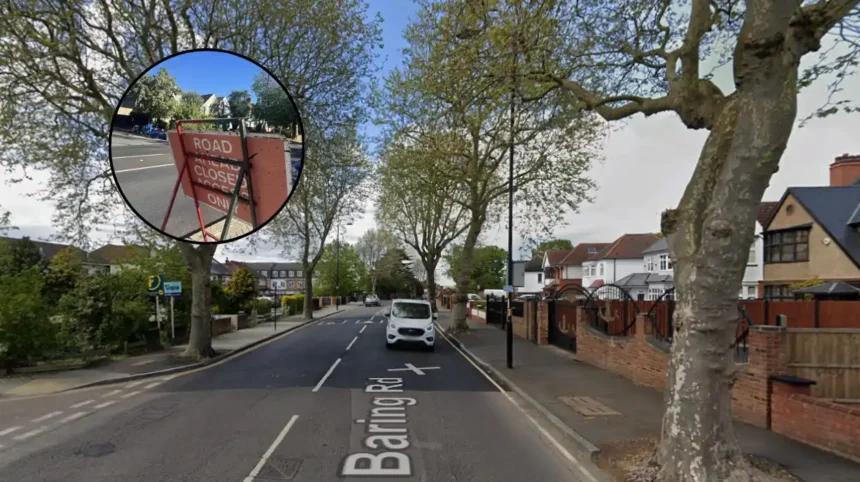
- Location and Duration: Baring Road will be closed overnight between Bramdean Crescent and Harland Road for two nights, running from Monday, 21 September to Wednesday, 23 September.
- Closure Timings: Operational hours for the carriageway restrictions are set between 8:00 pm and 5:30 am each evening.
- Reason for Works: Lewisham Council is undertaking essential carriageway resurfacing to repair long-standing surface damage including potholes, cracking, rutting, and fretting.
- Public Transport Impact: Transport for London (TfL) has confirmed diversions for both the 261 bus route and the SL4 Superloop service during working hours.
- Parking Restrictions: Temporary parking suspensions and Controlled Parking Zone (CPZ) enforcement will apply along the affected stretch, with vehicles required to be clear of the work area.
- Disabled Parking Impact: Informal disabled parking bays will not be automatically reinstated; residents must reapply through formal council application processes.
Lewisham (South London News) September 22, 2026 – A critical arterial route in South East London connecting Lee and Grove Park is undergoing overnight closures this week to facilitate essential carriageway resurfacing works. As reported by Emily Davison of the News Shopper, Lewisham Council has enacted temporary road closures along Baring Road between Bramdean Crescent and Harland Road to remediate extensive surface defects that have developed on the carriageway over time. The structural maintenance schedule will affect local traffic movements, public transport routes, and residential parking until Wednesday morning.
- Key Points
- Why is Baring Road Closing Between Lee and Grove Park?
- When will the Baring Road Closures Take Effect?
- How will Public Transport and Bus Routes Be Diverted?
- What Parking Restrictions Apply to Local Residents?
- How are Disabled Parking Bays Affected by the Resurfacing?
- Background of Road Resurfacing and Infrastructure Maintenance in Lewisham
- Prediction: How This Development Will Affect Local Residents and Commuters
Why is Baring Road Closing Between Lee and Grove Park?
As reported by Emily Davison of the News Shopper, Baring Road is closing to accommodate comprehensive resurfacing operations managed by Lewisham Council. The local authority identified severe carriageway degradation across the target stretch, necessitating full surface remediation. As stated by Lewisham Council, the primary objective of the work is to address structural defects including potholes, surface cracking, rutting, and fretting that have accumulated on the road surface through heavy daily usage.
The local authority confirmed that this structural maintenance initiative is designed to prolong the lifespan of the road infrastructure while minimizing the likelihood of requiring major, disruptive emergency interventions in the future. As reported by Emily Davison of the News Shopper, Lewisham Council highlighted that the newly resurfaced carriageway will significantly enhance general road safety standards across the corridor for all network users, including private motorists, cyclists, and pedestrians.
When will the Baring Road Closures Take Effect?
As reported by Emily Davison of the News Shopper, the overnight works schedule spans two consecutive nights, officially beginning on Monday, 21 September and concluding on Wednesday, 23 September. To limit traffic disruption along the busy connection between Lee and Grove Park, the council has restricted the road closures strictly to evening and early morning hours.
Vehicles will be prohibited from traversing the specified section of Baring Road between Bramdean Crescent and Harland Road from 8:00 pm until 5:30 am each night. As stated by Lewisham Council, all vehicular access along the target section will be entirely blocked during these operational windows, with the roadway safely re-opening to normal traffic flow during day-time periods once each overnight shift ends.
How will Public Transport and Bus Routes Be Diverted?
As reported by Emily Davison of the News Shopper, Transport for London (TfL) has issued travel advisories confirming that public transport services operating along Baring Road will undergo formal diversions throughout the duration of the overnight works.
The disruptions directly impact two primary bus services:
- Route 261: As stated by Transport for London, Route 261 buses will be diverted away from the closed section during the overnight operations. The service will be unable to serve bus stops situated between St Mildreds Road and St Augustine’s Church / Coopers Lane.
- SL4 Superloop: As reported by Emily Davison of the News Shopper, TfL confirmed that the express SL4 Superloop route will similarly follow alternative diversion paths, bypassing the exact same cluster of stops between St Mildreds Road and St Augustine’s Church / Coopers Lane while Baring Road remains closed to traffic.
Transport for London has advised passengers travelling through Lee, Lewisham, and Grove Park to utilize alternative operational bus stops in adjacent areas and budget extra travel time for their journeys.
What Parking Restrictions Apply to Local Residents?
As reported by Emily Davison of the News Shopper, Lewisham Council has issued explicit warnings to residents regarding vehicle parking within the designated work zone during the maintenance period. Temporary parking suspensions are being established along the target stretch of Baring Road to ensure resurfacing machinery can operate safely and without obstruction.
As stated by Lewisham Council, any private vehicles left parked within the active work boundary between Bramdean Crescent and Harland Road may need to be relocated prior to the 8:00 pm start time each evening. Furthermore, the local authority clarified that existing Controlled Parking Zone (CPZ) regulations will remain fully in force across the surrounding neighborhood, meaning standard parking restrictions and permit requirements continue to apply without interruption.
How are Disabled Parking Bays Affected by the Resurfacing?
As reported by Emily Davison of the News Shopper, Lewisham Council has provided specific operational guidance regarding marked disabled parking provisions affected by the resurfacing process.
As stated by Lewisham Council, informal disabled parking bays will not be automatically repainted or reinstated once the carriageway resurfacing is completed. The local authority explained that residents who currently rely on an informal marked bay must formally submit an application for a standard, formal disabled parking bay if they wish to maintain a designated space outside their properties. Lewisham Council acknowledged that applicants may experience a interim period without a marked bay while formal applications are reviewed and processed by highways officers.
Background of Road Resurfacing and Infrastructure Maintenance in Lewisham
Carriageway degradation in urban environments like the London Borough of Lewisham is primarily driven by continuous heavy vehicular traffic combined with weather-related wear and tear. Over time, moisture ingress beneath the asphalt layer leads to freeze-thaw cycles, creating structural voids beneath the road deck. This manifests on high-volume suburban corridors—such as Baring Road—in the form of surface pitting, longitudinal cracking, rutting along wheel tracks, and extensive pothole formation.
To manage municipal highway networks efficiently, local councils employ planned preventative resurfacing programs rather than relying on reactive spot repairs. Reactive patch repairs (such as filling individual potholes) often fail to address underlying sub-base erosion, leading to repeated road surface failure within short timescales. By carrying out full-depth surface planing and laying fresh asphalt wearing courses, highway authorities extend the overall structural integrity of the road network by decades.
In recent years, London borough councils have increasingly scheduled major resurfacing operations during overnight hours (20:00 to 05:30) to mitigate daytime gridlock along major residential and commercial trunk roads. However, managing infrastructure maintenance alongside public transit requirements presents complex operational challenges, particularly when coordinating route detours for high-frequency regional transport routes like TfL bus networks and express service lines.
Explore More Lewisham News
What is the Status of Historic Closed Pubs in Lewisham 2026?
Lewisham Approves Landmark Children’s Residential Care Home Plan 2026
Prediction: How This Development Will Affect Local Residents and Commuters
The temporary overnight closure of Baring Road between Bramdean Crescent and Harland Road will have direct short-term and medium-term impacts on local residents, public transport commuters, and commercial motorists navigating South East London.
Short-Term Transit and Commuter Disruption: During the operational windows of 8:00 pm to 5:30 am on Monday, Tuesday, and Wednesday nights, local motorists travelling between Lee and Grove Park will face localized traffic delays as vehicles are rerouted onto surrounding residential side streets. While overnight traffic volumes are significantly lower than peak daytime levels, late-shift workers, delivery drivers, and emergency vehicles will experience extended journey times. Users of the 261 and SL4 Superloop bus routes will need to plan for longer walks to alternative open stops along St Mildreds Road or past Coopers Lane, potentially causing minor inconveniences for late-night commuters.
Parking Availability and Access Constraints: Residents living directly on the affected section of Baring Road will experience temporary reductions in available curb-side parking during the two-night period. The temporary parking suspensions require residents to secure alternative parking in nearby CPZ areas or adjacent side streets, slightly increasing parking density in surrounding neighborhoods. Blue Badge holders who currently utilize informal disabled bays face a longer-term administrative task; because these bays will not be automatically restored upon project completion, affected individuals will need to undergo the official council application pipeline, leaving them without dedicated markings outside their homes during the processing period.
Long-Term Infrastructure and Safety Benefits: Once resurfacing operations conclude on Wednesday morning, the local community will immediately experience improved driving conditions along Baring Road. The elimination of surface defects such as deep potholes, rutting, and fretting will reduce vehicle wear and tear for local motorists, minimize tyre noise in the immediate residential vicinity, and create safer braking conditions for cyclists and drivers alike. Furthermore, the completed works reduce the probability of future unscheduled roadworks, providing a smoother and more reliable roadway for the Lewisham community moving forward.