Key Points
- Coalition Recommitment: The newly established Green-Liberal Democrat coalition leadership on Southwark Council has formally recommitted to the multibillion-pound Bakerloo Line Extension, aligning with momentum previously established by past council administrations.
- Economic & Housing Impact: Municipal leaders, Transport for London (TfL) officials, and regional policy groups assert that the extension represents a major infrastructure priority, capable of unlocking more than 100,000 new homes and 150,000 jobs across South London.
- Proposed Route: The proposed route expansion would stretch south from Elephant & Castle, creating new stations at Old Kent Road, New Cross Gate, Lewisham, Ladywell, Catford Bridge, and Lower Sydenham.
- Old Kent Road Priority: The project is directly linked to phase two of the Old Kent Road Area Action Plan, which depends on the tube line extension to deliver more than 10,000 new residential units.
- Cross-Borough Leadership: Southwark Council Leader James McAsh and Green Party Mayor of Lewisham Liam Shrivastava presented a united front alongside transport and regional planning executives at the London Real Estate Forum, describing the project as a critical policy goal.
Southwark (South London News) September 22, 2026 — The newly formed Green-Liberal Democrat coalition administration on Southwark Council has formally recommitted its support to the proposed Bakerloo Line Extension, reaffirming a major transport policy previously championed by the borough’s former Labour administration.
Speaking to an audience of property developers, urban planners, and infrastructure investors at this year’s London Real Estate Forum, Southwark Council Leader James McAsh and Green Mayor of Lewisham Liam Shrivastava stated that there is now “significant momentum” behind pushing the major infrastructure proposal into its next operational phase.
The panel of speakers—which also featured senior directors from Transport for London (TfL) and Central London Forward, a sub-regional partnership representing 12 inner London local authorities—framed the multi-billion-pound infrastructure scheme as an indispensable policy choice for the capital.
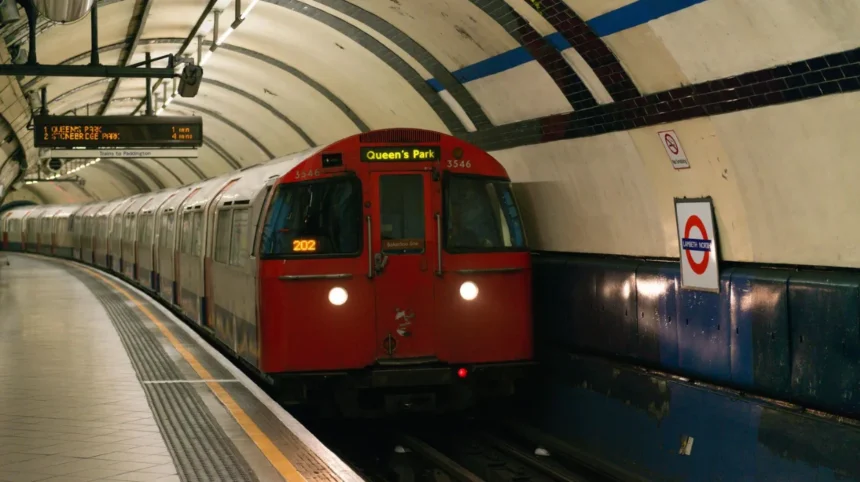
The extended tube route would run from the current southern terminus at Elephant & Castle through to southeast London, incorporating new station stops at Old Kent Road, New Cross Gate, Lewisham, Ladywell, Catford Bridge, and Lower Sydenham.
What Housing and Job Growth Does the Bakerloo Extension Support?
Local leaders and transport officials highlighted that the transport expansion remains the essential key to unlocking major high-density housing developments and commercial growth across South London.
Panel participants argued that the proposed line is a critical investment capable of supporting the construction of more than 100,000 new homes and facilitating 150,000 new jobs across the surrounding sub-region.
For Southwark Council specifically, the extension is directly tied to the execution of phase two of the Old Kent Road Area Action Plan. Municipal planning frameworks show that the delivery of more than 10,000 targeted homes along the historic thoroughfare depends heavily on high-capacity underground rail infrastructure to alleviate overburdened surface bus routes and local transport links.
Background of the Bakerloo Line Extension Project
The Bakerloo Line Extension has been a central fixture of London’s long-term transport planning for decades, driven by the stark contrast in Underground coverage between North and South London. While North London features an extensive suburban tube grid, large swathes of South-East London remain heavily reliant on National Rail and surface bus corridors that operate near full capacity.
Transport for London formally safeguards the proposed route alignment to protect the land above and below ground from conflicting developments. Initial public consultations conducted by TfL revealed overwhelmingly positive public responses, with overwhelming support from local residents, businesses, and borough authorities.
Despite wide cross-party support and strong backing from Mayor of London Sadiq Khan and individual London councils, the project encountered significant delays due to the severe financial shocks experienced by TfL during the COVID-19 pandemic. Capital constraints forced TfL to pause major new rail construction starts, leaving the scheme awaiting an agreed central government funding framework and private developer contributions to move forward into physical construction.
The recommitment by the Southwark Council administration alongside Lewisham Council signals a renewed, unified push by local municipal leaders to bring the capital scheme back to the forefront of national infrastructure priorities.
Prediction: How Will This Development Affect South London Residents and Businesses?
The recommitment by municipal leaders to the Bakerloo Line Extension carries direct long-term consequences for local residents, homeowners, commercial landlords, and businesses across Southwark and Lewisham.
- For Local Residents and Commuters: If full capital funding is secured and construction proceeds, residents in transit-desert areas like Old Kent Road, Ladywell, and Lower Sydenham will experience significantly reduced travel times into Central London. Direct access to the Underground network will ease congestion on local bus corridors and reduce overcrowding on existing mainline rail connections.
- For Property Owners and Renters: The guarantee of tube connectivity typically accelerates real estate demand. Homeowners along the proposed corridor are likely to see property valuations increase over the long term. Conversely, renters may face upward pressure on living costs and potential gentrification shifts as major new development schemes progress.
- For Property Developers and Local Businesses: Formal commitment from local authorities gives property investors the planning certainty required to unfreeze private capital. The implementation of phase two of the Old Kent Road Area Action Plan will trigger substantial construction activity, boosting local trades, commercial retail footfall, and job opportunities across the construction and service sectors.