Key Points
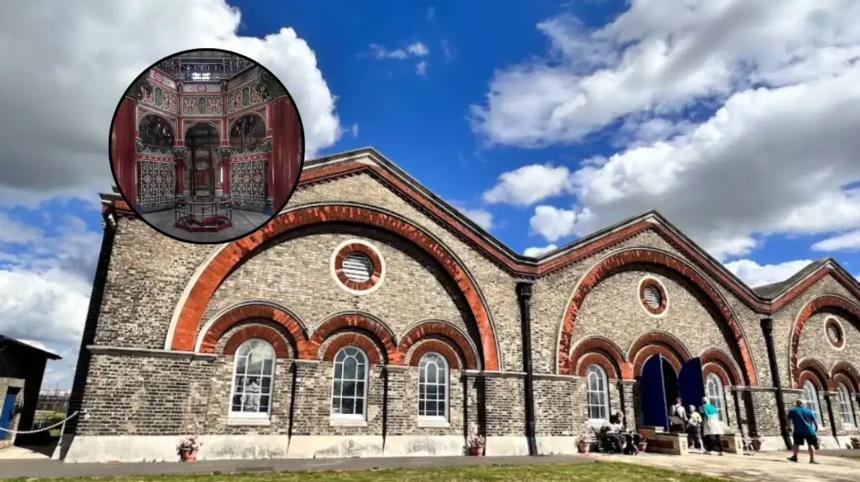
- Architectural Marvel: Crossness Pumping Station, located in Bexley, features an ornate Victorian interior that earned it the moniker “The Cathedral of Sewage”.
- Sanitation Breakthrough: Constructed more than 160 years ago, the facility played a pivotal role in revolutionising London’s sanitation infrastructure.
- Heritage Status: Despite its industrial function, the site holds Grade I-listed status due to its extraordinary structural and aesthetic significance.
Bexley (South London News) September 22, 2026 – One of London’s most spectacular Victorian interiors remains hidden inside an industrial building originally constructed to pump raw sewage away from the capital. Crossness Pumping Station, nestled in the London Borough of Bexley, played a central role in transforming London’s sanitation infrastructure more than 160 years ago. Whilst the Grade I-listed building presents a modest exterior akin to standard nineteenth-century industrial works, the internal architecture features extraordinarily detailed ironwork and decorative designs that contrast sharply with its functional purpose.
The site stands as an enduring monument to Victorian engineering, commissioned following the historic public health crises that plagued London during the mid-nineteenth century. Its development represented a major turning point in how municipal authorities managed urban growth, disease prevention, and waste disposal in large industrial cities.
Background of Crossness Pumping Station
The inception of Crossness Pumping Station was directly tied to the Great Stink of 1858, a severe environmental crisis in London caused by untreated human waste flowing directly into the River Thames. The resulting stench, intensified by high summer temperatures, brought activity in Parliament to a halt and forced government action.
Under the direction of Sir Joseph Bazalgette, Chief Engineer of the Metropolitan Board of Works, a comprehensive subterranean sewer network was designed to intercept effluent before it reached central London. Crossness Pumping Station, opened officially in 1865, was constructed at the eastern extremity of the network to lift waste into storage reservoirs before discharging it into the river during low tide. The station housed four massive beam engines—named Prince Consort, Victoria, Albert Edward, and Alexandra—which were among the largest single-cylinder rotative beam engines ever constructed.
Explore More Bexley News
CQC Rates Bexley Council Adult Social Care Services Requires Improvement: Bexley 2026
Bexley Council Hit With Requires Improvement CQC Rating London Borough 2026
Prediction: How will ongoing heritage preservation affect local communities and historians?
The continued preservation and public accessibility of Crossness Pumping Station will serve as a vital educational and cultural touchstone for historians, urban planners, and the local Bexley community. As modern cities face increasing pressures on infrastructure and waste management due to climate change and population growth, Crossness provides a historical reference point for public engineering solutions.
For local residents and heritage visitors, the maintenance of the Grade I-listed site sustains regional tourism and preserves industrial history. Educational outreach programs centered around the station will likely continue to inform future generations about the direct link between civil engineering projects and public health outcomes, ensuring the site remains recognized both as an architectural masterwork and a foundational element of modern London’s municipal system.