Key Points
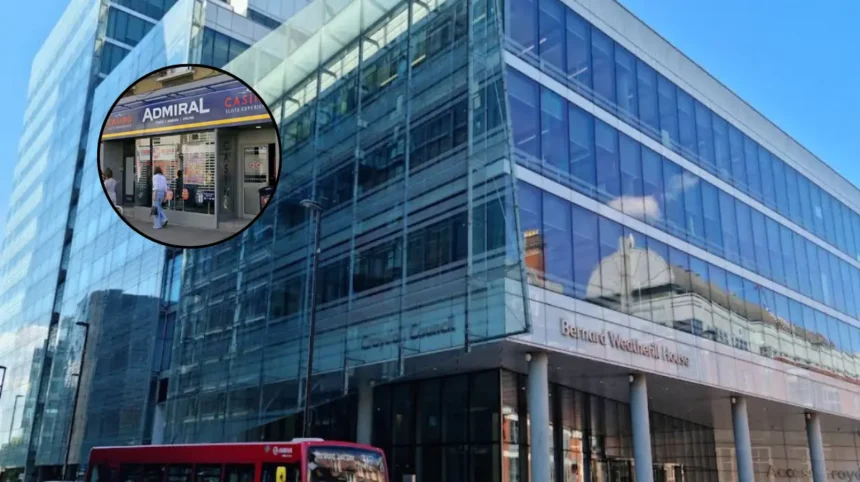
- Licence Extension Approved: Croydon Council has granted a 24/7 operating licence to the Admiral Adult Gaming Centre (AGC) located at 6 Westow Hill in the Crystal Palace Triangle shopping area.
- Significant Public Opposition: The decision comes despite widespread opposition, including petitions signed by thousands of residents across four neighbouring London boroughs (Croydon, Bromley, Lambeth, and Southwark).
- Political Resistance: Local Members of Parliament, including Steve Reed (MP for Streatham and Croydon North) and Liam Conlon (MP for Beckenham and Penge), alongside cross-borough ward councillors, formally opposed the 24-hour operation.
- Concerns Raised: Opponents argued that round-the-clock availability could push financially vulnerable residents further into debt, aggravate anti-social behaviour, and alter the character of the historic local shopping area.
- Legal Duty to Grant: Croydon Council’s decision was governed by the Gambling Act 2005’s ‘aim to permit’ statutory duty, which obliges licensing authorities to approve applications unless specific statutory licensing objectives are proven to be breached.
- Operator Safety Commitments: Operator Luxury Leisure stated the facility maintains robust management standards, including a minimum of two staff members on duty between 8pm and 8am, CCTV surveillance, and a Challenge 25 policy.
Croydon (South London News) September 23, 2026 – Croydon Council has officially approved a premises licence variation allowing an adult gaming centre to operate 24 hours a day, seven days a week, despite extensive public pushback from local residents, community groups, and politicians. As reported by Harrison Galliven of the Local Democracy Reporting Service (LDRS), the decision grants slot machine operator Admiral—managed by parent firm Luxury Leisure—permission to extend its opening hours at 6 Westow Hill, Upper Norwood, from its previous trading schedule of 8:00am to midnight.
The venue sits squarely within the jurisdiction of Croydon Council, yet it is situated merely metres from the boundary lines of three other London boroughs: Bromley, Lambeth, and Southwark. The geographic position of the Crystal Palace Triangle shopping district meant that the licensing application triggered widespread engagement across municipal borders. As detailed by Harrison Galliven of the LDRS, petitions organised by political and community factions across the neighbouring boroughs amassed thousands of signatures from residents pleading with the council to reject the 24-hour extension.
The licensing sub-committee meeting held on September 10 heard structured arguments from both sides. Opponents highlighted potential public nuisance, late-night anti-social behaviour, and the risk of exploitation regarding local residents experiencing financial hardship. However, under current national legislation, local councils operate under a statutory principle known as the ‘aim to permit’ clause within the Gambling Act 2005. This framework instructs licensing authorities to grant application variations provided they do not directly conflict with four core licensing objectives: preventing crime and disorder, ensuring public safety, preventing public nuisance, and protecting children and vulnerable individuals from harm or exploitation.
Why Did Local Residents and Politicians Fight Against the 24-Hour Plan?
Community pushback was spearheaded by local residents alongside local political figures. As documented by Harrison Galliven of the LDRS, Claire Bonham, the Liberal Democrat Councillor for Crystal Palace and Upper Norwood, represented local objectors at the committee hearing, stating that the extension to operating hours would “bring a significant change to the local environment”. Councillor Bonham emphasised that “addiction is a social disease with huge consequences for some of the most vulnerable people in our community,” adding that “there is simply no need for this venue to be open for 24 hours a day on Westow Hill”.
Similar objections were voiced by parliamentary representatives. As recorded by Harrison Galliven of the LDRS, Steve Reed, Labour MP for Streatham and Croydon North, expressed deep concerns regarding the potential impact on the neighbourhood, highlighting fears over how the change could influence “anti-social behaviour and the character and identity of the Triangle”. Liam Conlon, Labour MP for Beckenham and Penge, also lodged formal opposition against the application.
Opponents voiced explicit concern for individuals living in nearby sheltered accommodation, hostels, and temporary housing facilities within the immediate vicinity of Westow Hill. They argued that continuous, round-the-clock access to automated high-stake slot machines provides an unchecked environment for individuals suffering from severe gambling dependencies, potentially exacerbating personal financial distress. Following the decision, one Crystal Palace resident remarked to the LDRS that proposed governmental reforms granting communities greater powers to oppose unwanted gambling hubs “can’t come fast enough”.
How Did Operator Luxury Leisure and Council Legal Frameworks Justify the Extension?
In response to local objections, representatives for Luxury Leisure argued that the application satisfied every legal and technical requirement established under the Gambling Act 2005. As reported by Harrison Galliven of the LDRS, legal counsel Paul Greaney KC, representing Luxury Leisure, reminded the licensing committee that decisions could not legally be grounded in broader social or moral debates regarding the ethics of gambling. Mr Greaney KC urged the panel to restrict its evaluation strictly to whether concrete evidence demonstrated that the four licensing objectives would be compromised.
Addressing safety and operational management, Mr Greaney KC noted that the Metropolitan Police had not submitted any formal objections to the licence extension. Furthermore, as covered by Harrison Galliven of the LDRS, Mark Thompson, the Risk and Compliance Director for Luxury Leisure, testified before the sub-committee that, based on extensive operational monitoring across their national footprint, there was no empirical correlation between extending opening hours and an increase in local crime, anti-social behaviour, or late-night street disturbances.
According to official planning and licensing documents submitted by Luxury Leisure to Croydon Council, the venue will incorporate enhanced risk-mitigation measures during night-time trading. The venue will be staffed by a minimum of two employees between the hours of 8:00pm and 8:00am. Additional security protocols include a remotely monitored hold-up alarm system, staff-issued personal emergency activators, continuous high-definition CCTV recording, and an access-controlled maglock entrance door system activated during late-night hours. The operator also highlighted its accreditation by the Global Gambling Guidance Group (G4) and its enforcement of a strict Challenge 25 policy alongside multi-operator self-exclusion frameworks.
Background of the Development
The approval of the 24/7 licence at 6 Westow Hill comes amidst evolving local licensing precedents and shifting national policy surrounding high-street gambling operations.
At a local authority level, Croydon Council’s licensing sub-committee previously demonstrated a willingness to reject adult gaming centre proposals. Earlier in the year, as revealed by the LDRS, Croydon Council turned down an application for a new AGC in the nearby district of Norbury. In that instance, the council determined that approving the facility would fail to meet the mandatory objective of protecting children and vulnerable local residents from harm. However, because the Crystal Palace site represented an existing venue seeking an extension of trading hours rather than a brand-new premises establishment, the legal burden of proof required to establish a direct threat to licensing objectives differed significantly under prevailing law.
At the national level, the regulatory ecosystem governing high-street gambling venues is currently undergoing significant structural reform. In August, the Department for Culture, Media and Sport announced comprehensive legislative proposals designed to overhaul the Gambling Act 2005. A central pillar of the government’s legislative overhaul includes the formal removal of the controversial ‘aim to permit’ principle.
Under the proposed legal framework scheduled to take effect at the beginning of next year, local authorities will be granted enhanced statutory autonomy to reject applications for betting shops and 24-hour adult gaming centres based on local community density and resident feedback. Furthermore, the upcoming changes will introduce mandatory ‘Gambling Impact Assessments’ to analyze the cumulative risk of gambling premises concentrations and mandate full planning permission requirements for all new adult gaming facilities.
Explore More Croydon Council News
Croydon Council To Tag Prolific Shoplifters In Retail Crackdown Croydon 2026
TfL Freezes £2m Funding for Croydon Council Over Cycle Lane Wands Croydon 2026
Prediction: How This Development May Affect the Local Community and Retail Landscape
The implementation of a 24-hour operating model at the Admiral venue in the Crystal Palace Triangle is anticipated to create immediate and long-term ripple effects for local residents, business owners, and local authority administrative bodies.
Impact on Vulnerable Residents and Social Services
For local residents, particularly those categorized as financially or socially vulnerable, the availability of 24-hour electronic gambling facilities presents an increased risk of gambling-related harm. Local outreach groups and housing providers operating near Westow Hill may observe an intensified demand for support services, debt advice, and mental health counseling. Because the venue operates throughout late-night and early-morning hours without interruption, individuals suffering from severe addiction lose the natural friction created by forced overnight venue closures.
Impact on the Night-time Economy and High Street Character
Local shopkeepers, restaurateurs, and amenity societies within the historic Crystal Palace Triangle may experience a subtle shift in the late-night street dynamic. While the operator maintains that internal security and double-staffing will prevent public nuisance, neighbouring residents across Croydon, Lambeth, Bromley, and Southwark may report increased footfall, sporadic noise, or minor late-night disruptions during hours when the rest of the commercial shopping district is inactive. Over time, the presence of round-the-clock gaming hubs can influence broader retail rental trends and shape public perception regarding the commercial character of the high street.
Precedential Impact on Future Planning and Licensing Applications
For local councils and commercial gaming operators, this decision highlights the ongoing tension between existing statutory duties and impending national policy overhauls. Until the UK Government officially enacts the repeal of the ‘aim to permit’ clause and enforces mandatory Gambling Impact Assessments, commercial operators may accelerate efforts to secure 24/7 variations across urban high streets before local authorities receive the statutory authority to deny them. Conversely, once the new national laws take full effect, Croydon Council and neighbouring boroughs are likely to face an influx of community petitions requesting the review or restriction of newly established 24-hour licences.