Key Points
- Public litter bins have been reinstalled along Clapham High Street and Wandsworth Road following a period of absence that began in late June.
- Residents and local businesses reported an accumulation of street litter during the seven-week period without public waste receptacles.
- Lambeth Labour launched a “Bring Back Our Bins!” petition in August, criticising the local authority for removing bins without sufficient public explanation.
- Lambeth Council attributes the temporary absence to a borough-wide upgrade project designed to install modern recycling bins and improve high street aesthetics.
- The Lambeth Green Party rejected Labour’s claims, stating delays were caused by contractors under a street cleansing contract originally signed by a Labour administration in 2021.
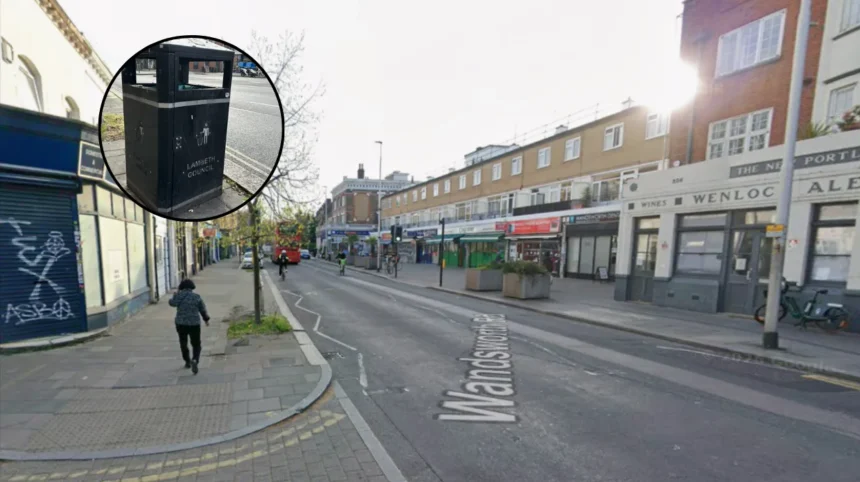
Clapham (South London News) September 28, 2026 – Residents across Clapham have reported a noticeable improvement in local cleanliness following the reinstallation of public litter bins along major thoroughfares, ending a multi-week dispute involving local community members and political representatives. The street bins were originally removed toward the end of June, affecting primary commercial routes including Clapham High Street and Wandsworth Road. The temporary removal formed part of a broader borough-wide street-cleaning initiative managed by Lambeth Council, aimed at modernising waste infrastructure, increasing municipal recycling rates, and enhancing the visual presentation of local high streets.
The absence of public waste receptacles led to immediate concerns regarding street sanitation and public amenity. Local resident Lara Koppel noted the practical impact on daily pedestrian activity, stating:
“I was upset when there was nowhere to put my rubbish along the high street. I first noticed the bins had been removed after going on a walk and having nowhere to put my coffee cup. The streets were disgusting and the area looked unkempt.”
Addressing the recent restoration of the infrastructure, Koppel added:
“But now that the bins are back, Clapham High Street feels a lot cleaner and there is less rubbish on the streets.”
How Did Political Groups Respond to the Bin Removals?
The infrastructure changes prompted political mobilization within the borough, leading Lambeth Labour to launch a formal petition titled “Bring Back Our Bins!” in August. Campaigners called on the local authority to restore public waste facilities to prevent further accumulation of refuse in commercial and residential zones.
Patrick O’Donnell, a Labour councillor involved in the campaign, highlighted the community response to the initiative, stating:
“The positive response to our litter bin campaign shows residents clearly want the council to focus on getting the basics right so they can play their part to keep our communities clean.”
O’Donnell further detailed the feedback received from the public during the period:
“Residents and businesses told us that rubbish had accumulated since public bins were removed from a number of locations. Yet they were left without a clear explanation for seven weeks while local Labour councillors repeatedly pressed for the bins to be returned.”
Critiquing the administration’s handling of the transition, O’Donnell stated:
“There is no excuse for the Green-run council removing bins, keeping communities in the dark and allowing rubbish to accumulate on our streets. We will continue pushing the Lambeth Green-run council to reinstate all our missing bins to keep our neighbourhood clean and welcoming for all.”
What Is Lambeth Council’s Position on the Infrastructure Contract?
The Lambeth Green Party challenged the narrative presented by opposition councillors, attributing the temporary operational gaps to third-party contractor execution rather than policy oversight. Representatives stated that the council-wide project was designed as a direct upgrade to existing waste facilities rather than a permanent reduction in services.
A spokesperson for the Lambeth Green Party explained the operational timeline, stating:
“Lambeth Council upgraded all the bins across Clapham to new ones. A few replacements were delayed by contractors and weren’t put back in the right place.”
The spokesperson further pointed to historical administrative decisions governing the current waste management framework, stating:
“These replacements were scheduled under a waste and street cleansing contract signed in 2021 by a Labour administration. So, the Labour councillors know very well that they’re misinforming residents.”
While the newly installed bins are now operational across primary sites in Clapham, debate remains regarding contractor oversight and communication protocols for future borough infrastructure projects.
Background of the Development
Public waste management and street cleansing in the London Borough of Lambeth operate under multi-year municipal contracts designed to maintain environmental health standards across diverse urban centers. High-density commercial corridors such as Clapham High Street require continuous waste management capacity to handle daily footfall from shoppers, commuters, and local hospitality trade.
In 2021, the local authority entered into a comprehensive waste and street cleansing contract aimed at managing municipal refuse, recycling collection, and public bin infrastructure. Subsequent administrative transitions placed the implementation of these long-term contractual terms under current council leadership. The recent borough-wide bin replacement program was initiated to update legacy street furniture with multi-stream units designed to segregate recyclable materials from general waste at the point of disposal, aligning with broader regional environmental targets. Operational delays during the physical swap-out phase resulted in a seven-week period where several high-street locations lacked active waste receptacles, triggering local community complaints and political debate regarding municipal oversight.
Prediction: How This Development May Affect Local Stakeholders
The resolution of the bin replacement scheme and the ongoing dialogue surrounding municipal service delivery are expected to influence local operations and governance in several ways:
- High Street Pedestrians and Residents: The reintroduction of functional, higher-capacity public bins is likely to reduce surface litter along Clapham High Street and Wandsworth Road. Restoring accessible disposal options supports public health standards and maintains civic amenities for daily users.
- Local Businesses and Commercial Operators: Clearer streetscapes reduce the burden on local shopfronts and food service establishments, which frequently contend with windblown litter accumulating outside commercial premises. Improved street aesthetics generally support local footfall and commercial trade.
- Council Governance and Contractor Management: The public friction caused by the seven-week service gap will likely lead to stricter performance monitoring for third-party waste contractors. Future infrastructure rollouts across Lambeth may incorporate mandatory public notification periods and staggered installation schedules to ensure continuous service availability.
- Local Political Dynamics: Waste management and fundamental municipal services remain central issues in local government accountability. The debate between party factions over contract execution versus administrative oversight highlights how routine infrastructure upgrades can become key reference points for local electoral campaigning.