Key Points
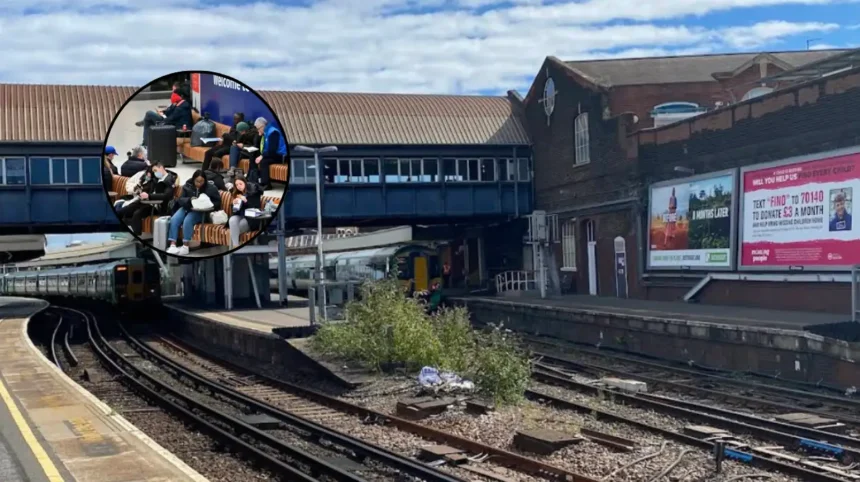
- Trackside Fire Direct Impact: A trackside fire occurring on Sunday, 27 September in the Clapham Junction area severely damaged core signalling equipment on the major railway line into London.
- Ongoing Commuter Chaos: Disruption to key rail routes across Sussex, Surrey, and Greater London will continue throughout Monday, 28 September, with normal operations significantly impacted until at least 4:00pm.
- Severe Service Reductions: Rail operators have implemented an “extremely reduced service” to and from London Victoria until at least 2:00pm. Passengers face cancellations, diversions, and delays of up to 60 minutes.
- Routes Affected: Major rail links connected to Sussex and Surrey destinations—including Brighton, Gatwick Airport, East Grinstead, Littlehampton, and Ore—face extensive delays and itinerary revisions.
- Ticket Mutual Acceptance: Southern Railway and Gatwick Express tickets are being accepted at no additional cost across Thameslink services, London Underground lines, London Overground routes, and local bus routes.
- Compounding Underground Delays: Travel difficulties across the capital have been further heightened by concurrent delays across TfL networks, notably including severe delays on the Victoria line caused by a signal failure at Brixton.
Clapham (South London News) September 28, 2026 – Major rail disruption connecting Sussex, Surrey, and South London to London Victoria is set to stretch well into Monday afternoon following significant trackside fire damage incurred near Clapham Junction over the weekend.
- Key Points
- What is the extent of the rail disruption affecting London Victoria and Southern lines?
- What alternative travel arrangements and ticket acceptance schemes are in place for passengers?
- Why are capital travel conditions compounding for Monday commuters?
- Background of the Clapham Junction signalling development
- Predictions: How will this development affect commuters, airport passengers, and regional businesses?
As reported by National Rail and Southern Railway communications teams, emergency service crews and Network Rail engineering specialists were called to the trackside near Clapham Junction shortly before 2:30pm on Sunday afternoon after a fire broke out. The blaze severely compromised essential signalling infrastructure along the primary line. Network Rail technicians worked continuously throughout the night and into Monday morning to conduct emergency engineering repairs, but service capability remains heavily restricted.
An updated bulletin issued by Southern Railway at 8:15am confirmed that an “extremely reduced service” will operate into London Victoria until at least 2:00pm, with wider journey disruptions, train cancellations, and delays reaching up to 60 minutes expected to persist until at least 4:00pm.
What is the extent of the rail disruption affecting London Victoria and Southern lines?
According to service updates published by Southern Railway, trains operating between London Victoria and key commuter routes across Sussex and Surrey are suffering widespread cancellations, timetable revisions, and lengthier travel times. Specific corridors suffering heavy disruption include line links between London Victoria and Brighton, Gatwick Airport, East Grinstead, Littlehampton, and Ore.
As detailed by National Rail service controllers, rail operators are currently running a restricted half-hourly train shuttle between East Croydon and London Victoria. Commuters have been cautioned that these remaining services will be exceptionally crowded and should be avoided unless travel is entirely unavoidable. Northbound services originating from East Croydon towards London Bridge via Tulse Hill are being re-routed via Crystal Palace, while overnight engineering schedules around the Sussex coast have added further replacement bus measures between Brighton, Hove, and Worthing.
What alternative travel arrangements and ticket acceptance schemes are in place for passengers?
As outlined by transport journalists at The Independent, rail authorities are strongly advising passengers to completely avoid travel to London Victoria where possible and to utilize alternative London rail terminals instead.
To mitigate the passenger fallout, Southern Railway and Gatwick Express have established comprehensive ticket acceptance agreements. Passengers holding valid rail tickets for the affected routes can use their tickets at no extra charge on:
- Thameslink services operating into London Bridge, Blackfriars, Farringdon, and St Pancras International.
- London Underground services across central zones to complete journeys.
- London Overground network routes.
- London Buses traveling on routes connecting London Victoria, London Bridge, and East Croydon.
South Western Railway and London Overground services through Clapham Junction itself continue to run as normal, helping isolate the core constraint to the lines running specifically into Victoria. However, travelers redirecting via alternative routes have been warned to budget at least an additional 60 minutes onto their total journey time.
Why are capital travel conditions compounding for Monday commuters?
Reporting by transport correspondents highlights that the trackside incident near Clapham Junction coincides with broader operational hurdles across London’s municipal transport network. Transport for London (TfL) recorded simultaneous difficulties across the London Underground network on Monday morning.
Most notably, a separate signal failure at Brixton triggered severe delays along the Victoria line—the primary Underground connection used by disembarking rail passengers at Victoria station. Minor delays due to train cancellations were also registered across both the Circle and Northern lines, reducing overall public transport contingency capacity across the capital during peak rush-hour demand.
Background of the Clapham Junction signalling development
How crucial is Clapham Junction infrastructure to the Southern rail network?
Clapham Junction stands as one of the busiest railway junctions in Europe by train density, serving as the core bottleneck and arterial conduit for millions of passenger movements into central London terminals, including London Victoria and London Waterloo.
The signalling architecture surrounding Clapham Junction governs complex multi-track interlockings that route high-frequency suburban and main-line passenger trains coming from the southern counties. Trackside fires in dense rail corridors pose severe technical challenges: modern railway signalling relies heavily on intricate copper cabling, digital track circuits, fiber-optic telemetry, and computerized interlocking equipment located in lineside cabinets.
When intense thermal damage occurs along the trackside, cabling insulation melts and signal control telemetry short-circuits. Repairing such damage requires Network Rail engineers not merely to clear physical debris, but to manually splice hundreds of complex control cables, systematically test signal relay logic, and ensure rigorous safety compliance before lines can be reopened for commercial passenger traffic. Historical incidents along major London approaches have shown that even localized trackside fires regularly trigger multi-day service ripples while equipment integrity is restored and verified.
Predictions: How will this development affect commuters, airport passengers, and regional businesses?
How will commuters and daily workforce mobility be impacted?
The persistent disruption will disproportionately affect thousands of daily commuters traveling from suburban residential belts in Surrey and Sussex into central London’s business districts. With reduced capacity and delays reaching an hour, many workers face lost productivity, missed business engagements, and severe overcrowded transit conditions. The disruption is likely to push many hybrid workers to shift unexpectedly to working from home, temporarily depressing footfall and casual spend across commercial districts surrounding London Victoria.
What are the operational consequences for air travelers and Gatwick Airport connections?
Passengers using the Gatwick Express and Southern main-line routes to access Gatwick Airport face heightened risks of missed flights and severe travel anxiety. Although Thameslink connections via London Bridge offer a viable alternative, many international travelers unfamiliar with London’s multi-terminal transit options are likely to experience confusion and delays. Airlines and airport operators may experience higher volumes of delayed check-ins and late passenger arrivals at security checkpoints throughout the afternoon.
How will this influence rail infrastructure management and policy debates?
In the longer term, this incident will likely amplify calls from passenger user groups and transport advocacy bodies for enhanced network resilience and faster redundancy deployment along critical London arteries. Network Rail and train operating companies will face heightened public and regulatory scrutiny regarding lineside vegetation management, fire prevention protocols, and the rate of modernizing aging signalling infrastructure to prevent single-point trackside incidents from paralyzing major regional commuter lines.