Key Points:
- Impending Closure: Waterloo Bridge could be forced to close to vehicular traffic within three years unless strict weight restrictions or extensive repair works are implemented.
- Structural Degradation: A council inspection revealed water ingress and structural cracking up to 2 millimetres wide throughout the concrete framework.
- Capital-Wide Network Strain: Waterloo Bridge becomes the latest major Thames crossing facing severe structural issues, following existing vehicle prohibitions on Hammersmith Bridge and Albert Bridge.
- Post-War Infrastructure Stress: Built in 1942 to replace the original 19th-century structure, the bridge was not engineered to withstand modern traffic volumes and heavy commercial vehicle weights.
- Implications for Transport Network: Local authorities face critical decisions regarding structural preservation, potential traffic diversions, and significant funding requirements.
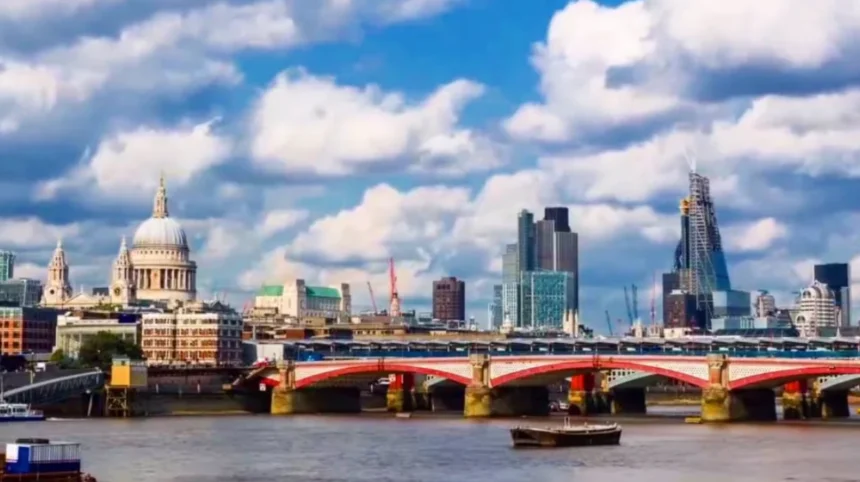
Central London, UK (South London News) September 28, 2026 — The Waterloo Bridge faces potential closure to vehicular traffic within three years if weight limits or structural repairs are not implemented, according to documents provided to Bloomberg by Westminster Council. The inspection report revealed water damage and cracks measuring up to 2 millimetres wide within the crossing’s concrete structure. Built in 1942 to replace the original Georgian bridge demolished in the 1930s, the landmark central London river crossing has experienced decades of wear and tear, compounded by continuous increases in vehicular weight and traffic volume. Waterloo Bridge is the latest major Thames crossing to raise engineering concerns, following structural issues that led to vehicle restrictions on Hammersmith Bridge and Albert Bridge.
- Key Points:
- What did the Westminster Council inspection discover regarding Waterloo Bridge’s condition?
- How does Waterloo Bridge fit into London’s historic crossing network?
- How widespread are bridge deterioration issues across the River Thames?
- Background of London bridge maintenance and structural degradation
- Prediction: How could vehicle restrictions on Waterloo Bridge impact London transport and businesses?
What did the Westminster Council inspection discover regarding Waterloo Bridge’s condition?
The condition assessment details specific forms of degradation across the bridge’s load-bearing components. As reported by dynamic investigative reporting based on council disclosure documents, engineering inspectors identified persistent water ingress and surface cracking ranging up to 2 millimetres in width across structural spans. These physical indicators suggest that moisture has penetrated the outer layers of reinforced concrete, creating potential risks of internal steel reinforcement corrosion over prolonged periods.
The documents indicate that without immediate interventions—such as imposing lower gross vehicle weight limits or executing targeted structural remediation—the rate of degradation will accelerate. Westminster Council records confirm that the three-year timeline represents a critical threshold before structural integrity compromises safety standards required for unrestricted vehicular passage.
How does Waterloo Bridge fit into London’s historic crossing network?
The present Waterloo Bridge holds a distinct position in London’s architectural and transport history. Designed by Sir Giles Gilbert Scott and constructed during the Second World War, it officially opened to traffic in 1942, replacing the original stone structure designed by John Rennie in 1817. The 1940s design incorporated reinforced concrete clad in Portland stone, engineered primarily for the traffic loads typical of the mid-20th century.
Over the subsequent eight decades, the volume of daily commuters and the average weight of private, public, and commercial vehicles have expanded substantially. Heavy goods vehicles, double-decker buses, and modern electric vehicles exert static and dynamic forces significantly higher than the baseline loads anticipated during the original engineering phase in the late 1930s.
How widespread are bridge deterioration issues across the River Thames?
Waterloo Bridge’s structural findings highlight broader infrastructure challenges across London’s river crossings. Hammersmith Bridge, managed by the London Borough of Hammersmith and Fulham, was closed to motor vehicles in April 2019 after micro-fractures were discovered in its cast-iron pedestals. Similarly, Albert Bridge, connecting Chelsea and Battersea, operates under strict 3-tonne weight restrictions and traffic-calming measures to prevent structural overload on its historic suspension mechanism.
Local highway authorities and Transport for London maintain continuous monitoring regimes across all capital bridges. However, aging infrastructure, environmental weathering, and budgetary constraints have collectively complicated long-term maintenance and major refurbishment schedules across the capital’s municipal jurisdictions.
Background of London bridge maintenance and structural degradation
The maintenance of Thames river crossings in central London involves a divided governance structure split between Transport for London, individual London borough councils, and historical charitable bodies such as Bridge House Estates. Waterloo Bridge falls under the civic responsibility of Westminster Council for structural maintenance, while Transport for London oversees the red-route highway operations crossing over it.
Over the past two decades, structural monitoring of post-war reinforced concrete structures across the United Kingdom has intensified. Concrete structures built in the mid-20th century are particularly susceptible to carbonation and chloride-induced corrosion. When water enters fine surface cracks, it reaches the internal steel rebar, causing the metal to oxidize and expand. This expansion exerts internal pressure, leading to further cracking and concrete spalling.
Recent inspections across London’s road network have been heightened following high-profile infrastructure issues across the country. Local authorities have increasingly utilized non-destructive testing, acoustic monitoring, and core sampling to detect internal vulnerabilities before catastrophic failures occur. The disclosure of Westminster Council’s inspection details reflects this standardized risk-assessment protocol, which categorizes structural degradation into actionable timelines for highway engineers and municipal policy directors.
Prediction: How could vehicle restrictions on Waterloo Bridge impact London transport and businesses?
If Westminster Council and Transport for London institute strict weight limits or a full vehicle closure on Waterloo Bridge over the next three years, the operational impact will center primarily on central London commuters, public transport operators, emergency services, and local commercial enterprise.
1. Re-routing of public transport and traffic congestion
Waterloo Bridge serves as a primary north-south artery connecting the South Bank and Waterloo Station with the West End, Strand, and Aldwych. Numerous key London bus routes cross the bridge daily. If weight restrictions exclude heavy double-decker buses, Transport for London would be required to re-route service lines across Blackfriars Bridge to the east or Westminster Bridge to the west. This diversion would inevitably increase journey times, create bus queuing along the Strand and Stamford Street, and heighten congestion on adjacent crossings that are already operating near maximum capacity during peak hours.
2. Commercial logistics and freight delays
Commercial delivery services, light goods vehicles, and heavy freight servicing central London retail and hospitality sectors would face extended transit times. Drivers diverted away from Waterloo Bridge would encounter increased driving distances within the Congestion Charge and Ultra Low Emission Zone (ULEZ) boundaries, raising operating costs for logistics firms and local businesses relying on timely deliveries.
3. Impact on local emergency service response times
Emergency services, including the Metropolitan Police Service, London Fire Brigade, and London Ambulance Service, regularly use Waterloo Bridge for rapid cross-river deployments between central command bases and southern boroughs. Access restrictions or lane closures would require emergency dispatch algorithms to adjust routing options, potentially increasing response times during peak traffic periods.
4. Financial strain on municipal budgets
Addressing the structural issues of Waterloo Bridge will require substantial capital expenditure. Remediation work on major river crossings typically involves million-pound budgets for structural strengthening, concrete repair, waterproofing membrane replacement, and surface resurfacing. Securing public funding between local councils, Transport for London, and the Department for Transport will require complex inter-agency negotiations, potentially drawing resources away from other scheduled capital infrastructure projects across the capital.