Key Points
- Dedicated Police Posts: Wandsworth Council has unveiled detailed proposals to fund 25 dedicated Metropolitan Police officers, comprising 22 constables and three sergeants.
- Funding Mechanism: The posts would be financed through a Section 92 agreement with the Mayor’s Office for Policing and Crime (MOPAC) to ensure they remain focused strictly on local priorities.
- Integrated Enforcement Model: The plan introduces a borough-wide Integrated Enforcement Team, combining council enforcement functions to work directly alongside the dedicated police officers.
- Targeted Issues: The unified team will focus on anti-social behaviour, drug-related activity, illegal e-bikes and mopeds, environmental crime, and public safety initiatives, including violence against women and girls.
- Governance Timeline: The proposal goes to the Enforcement Overview and Scrutiny Committee on 5 October, with a final decision expected from the Cabinet on 12 October.
- Current Status: The measures remain a proposal subject to democratic approval, meaning no additional officers or enforcement teams have yet been deployed on the ground.
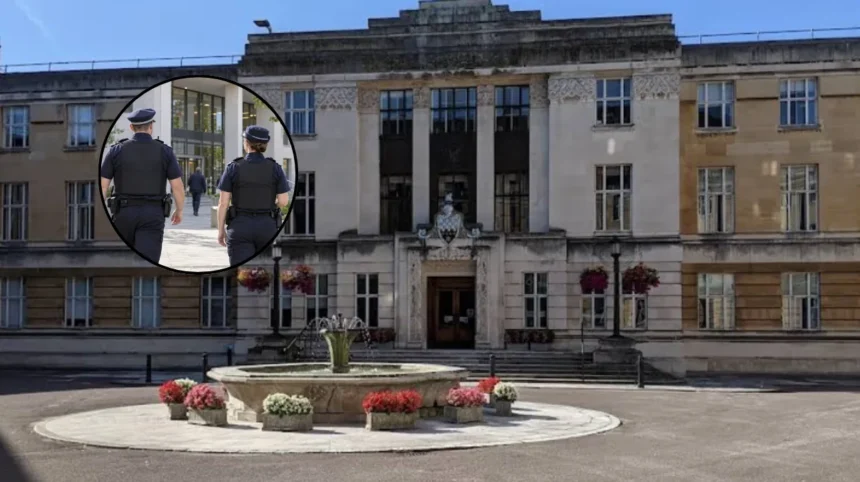
Wandsworth (South London News) September 30, 2026 – Wandsworth Council has formally published plans to fund 25 dedicated Metropolitan Police officers and launch a borough-wide Integrated Enforcement Team to address persistent neighbourhood crime and safety concerns. The proposals, which set out a defined structure following an initial announcement earlier this summer, will be subject to formal scrutiny and decision-making by elected members in October. Under the scheme, the council intends to establish a Section 92 agreement with the Mayor’s Office for Policing and Crime (MOPAC) to secure 22 constables and three sergeants whose duties would be tied directly to locally identified priorities across the borough.
- Key Points
- How will the proposed Wandsworth police package be structured and funded?
- What is the Integrated Enforcement Team and how will it operate?
- Which specific neighbourhood issues will the new enforcement model target?
- What are the governance steps and decision-making timeline for the proposal?
- Background of the development
- Prediction: How this development can affect local residents, businesses, and public services
How will the proposed Wandsworth police package be structured and funded?
The detailed package represents a distinct expansion from initial outline plans disclosed by the local authority in July. At that stage, the council expressed its intention to seek additional police capacity but had not established the specific number of officers or the exact structure of the team. The revised proposals confirm a operational requirement for 25 posts, split between 22 constables and three sergeants.
Rather than absorbing these personnel into general police duties, the council intends to fund the posts via a Section 92 agreement with MOPAC. This legal framework enables local authorities to pay for additional Metropolitan Police officers tasked with targeted duties within specific municipal boundaries.
The council has stated that the dedicated officers will concentrate on issues highlighted through community feedback and local intelligence, rather than functioning as a non-specific addition to general local policing.
What is the Integrated Enforcement Team and how will it operate?
Alongside the dedicated police personnel, the proposal sets out the creation of an Integrated Enforcement Team. This unit is designed not as a stand-alone police team, but as a joined-up model bringing together the council’s existing internal enforcement functions to operate directly alongside the MOPAC-funded police officers.
The local authority has outlined an intelligence-led operational framework. Rather than allocating fixed numbers of staff permanently to specific geographical wards, resources will be deployed fluidly across the entire borough to areas where persistent anti-social behaviour or newly emerging issues are identified. The council notes that this flexible arrangement will allow the team to adapt as local priorities shift over time.
Which specific neighbourhood issues will the new enforcement model target?
The council has highlighted several core areas of community concern that the joint initiative will aim to resolve. These primary issues include:
- Anti-social behaviour in residential areas and commercial centres
- Drug-related criminal activity
- The illegal use of e-bikes and mopeds
- Environmental crime, including fly-tipping and littering
- Broader neighbourhood safety concerns raised directly by local residents
Operational activities and hotspot identification will be driven by a combination of crime data, resident reports, and local intelligence.
Furthermore, the council has stressed that this initiative will sit alongside and complement its ongoing community safety strategies. This includes the continued use of CCTV coverage to deter criminal activity, gather evidence, and support investigations. The integrated model is also intended to enhance existing strategies tackling violence against women and girls by improving public space safety, responding to resident concerns, and enabling partner agencies to identify vulnerable locations more effectively.
What are the governance steps and decision-making timeline for the proposal?
The public position at this stage remains a proposal for decision, and the council has emphasized that no additional officers have yet been deployed to local streets.
The formal approval process follows a strict committee timeline:
- Scrutiny Stage: The package will be examined by the Enforcement Overview and Scrutiny Committee on 5 October.
- Executive Decision: The proposal will proceed to the Cabinet for a final decision on 12 October.
Independent local reporting has confirmed that governance and operational arrangements remain strictly subject to these upcoming council processes. Residents will receive definitive confirmation regarding the timeline and implementation of the enforcement package only after the Cabinet reaches its decision.
Background of the development
Local authority funding for dedicated police officers via Section 92 of the Police Act 1996 has been utilized by various London boroughs seeking to supplement core Metropolitan Police numbers in areas facing high demand. Under these arrangements, local councils enter into commercial contracts with MOPAC to purchase dedicated police capacity that cannot be routinely abstracted to cover central Met operations or events outside the borough, except under exceptional emergency circumstances.
In Wandsworth, community safety and neighbourhood policing have remained prominent items on the council’s policy agenda. In July, the administration signalled its ambition to bolster local policing capacity to address public concerns regarding street crime, anti-social behaviour, and anti-social vehicle use. The July announcement established the principle of purchasing additional police capacity, but left the specific unit composition, financial metrics, and operational alignment open pending further design work.
The transition from the July outline to the current September proposals reflects the development of a structured strategy. By combining 25 dedicated Metropolitan Police officers with internal council enforcement officers under a unified, intelligence-led umbrella, the council aims to create a joint framework capable of addressing low-level criminality, regulatory breaches, and environmental offences simultaneously.
Explore More Wandsworth Council News
Wandsworth Council Proposes Moving Putney Bridge Crossing: Putney 2026
Wandsworth Council Penalised Over Homeless Tenant Heating Delay South London 2026
Prediction: How this development can affect local residents, businesses, and public services
If approved by the Cabinet on 12 October, this proposal will have distinct operational and practical implications for key stakeholders across the borough.
Local residents and community groups
For local residents, the deployment of 25 dedicated officers alongside council enforcement staff is expected to result in a noticeably higher visual police presence in identified crime hotspots. Because the personnel will operate under aSection 92 agreement, residents in affected areas should see more consistent focus on hyper-local issues—such as illegal e-bike usage, open drug dealing, and persistent anti-social behaviour—without officers being routinely pulled away to cover central London demonstrations or wider Met commitments. However, because resources will be allocated flexibly based on data rather than spread evenly across every ward, some quieter neighbourhoods may see little to no change in day-to-day patrols.
Local businesses and high street traders
Town centres and commercial corridors across Wandsworth could benefit from targeted interventions against shoplifting, anti-social behaviour, and street-level drug activity. A dedicated enforcement presence can help create a safer environment for shoppers, potentially reducing stock loss for retailers and improving footfall in commercial zones that have previously reported concerns over anti-social behaviour and reckless moped driving.
The Metropolitan Police and local council operations
Operationally, the model creates a formal bridge between municipal enforcement—such as trading standards, environmental health, and community safety officers—and sworn police officers. This integration allows for faster joint action; for example, combining council powers regarding licensing or environmental breaches with police powers of arrest. For the Metropolitan Police’s South West Basic Command Unit (BCU), the injection of council-funded officers provides ring-fenced capacity to address chronic neighbourhood issues that might otherwise receive lower priority under standard emergency response triage.