Key Points
- Extended Timeline: More than 400 displaced tenants from The Filigree development in Lewisham are facing a revised return target of October 2027 following a catastrophic flood in early 2025.
- Incident Cause: A burst mains water pipe inundated the underground energy centre in February 2025, completely severing power and water supplies to the newly occupied complex.
- Reconstruction Underway: On-site construction work has officially begun to rebuild the critical below-ground infrastructure, following extensive planning, technical reviews, and material procurement.
- Regulatory Exemption: The reconstruction programme will not require formal approval from the Government’s Building Safety Regulator, removing a potential procedural delay from the schedule.
- Tenant Support Provisions: Operator Get Living has provided alternative housing options, rent-matching guarantees for London Living Rent tenants, tenancy termination choices, and council tax relief arrangements.
- Broader Community Impact: Delay in restoring the centralized energy infrastructure continues to stall the completion and fit-out of planned ground-floor commercial spaces, retail units, and leisure facilities.
Lewisham (South London News) October 5, 2026 – More than 400 residents displaced from The Filigree build-to-rent development in Lewisham have been informed of a revised target return date of October 2027, as contractor teams officially initiate the complex structural rebuild of the scheme’s destroyed underground energy centre. The updated operational schedule pushes the potential repopulation of the residential complex well past earlier estimates, which had tentatively targeted an October 2026 completion, extending a period of prolonged displacement for households who were forced to evacuate their properties following a major infrastructure failure in February 2025.
- Key Points
- Why Has The Filigree Return Date Been Delayed to October 2027?
- What Relocation Options Were Made Available to Affected Residents?
- How Does the Energy-Centre Rebuild Impact the Wider Lewisham Gateway Development?
- What Regulatory Approval Requirements Apply to the Reconstruction Works?
- Background of the Lewisham Gateway Energy Centre Development
- Prediction: How This Development Will Affect Displaced Tenants and the Local Community
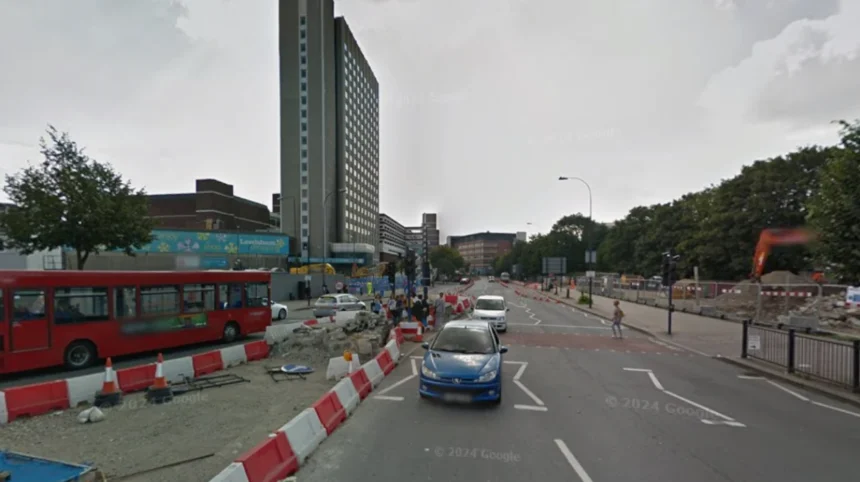
The Filigree forms the second major phase of the multi-million-pound Lewisham Gateway regeneration masterplan situated adjacent to Lewisham transport interchange. Comprising 649 rental homes, including 106 designated London Living Rent properties alongside co-living spaces and ground-floor commercial premises intended for retail, leisure, and a cinema, the site had only recently begun accepting initial residents when a burst high-pressure mains water pipe flooded the subterranean plant rooms. The resulting deluge inundated mechanical and electrical installations, rendering heating, ventilation, power, and potable water distribution systems completely non-operational across the affected residential blocks.
The physical loss of centralized power and water generation equipment immediately rendered the living accommodation uninhabitable and halted fit-out operations across the scheme’s commercial units. In the immediate aftermath, emergency accommodation was arranged for all impacted residents, followed by longer-term interim housing arrangements. Managed options provided to affected households by build-to-rent operator Get Living included transfers to alternative residential developments within their portfolio at matched rental rates, permission to reside in alternative private accommodation while suspending current rent payments, or the unconditional termination of existing tenancy agreements. Households occupying London Living Rent units were accommodated under the rent-matching provisions despite a clear absence of directly equivalent sub-market homes across alternative sites, while local authority council tax relief was secured for individuals retaining active leases while unable to physically occupy their homes.
Initial technical assessments conducted shortly after the February 2025 incident suggested that full remediation, equipment extraction, and plant restoration could be achieved within a six-to-twelve-month timeframe. However, complex engineering constraints and procurement requirements pushed expected completion back to October 2026 by January 2026. The latest project master programme confirms that active reconstruction has commenced, though project managers caution that the current October 2027 target remains a provisional benchmark dependent on technical execution within a constrained below-ground environment, rather than an absolute commercial guarantee.
Physical remediation of the damaged incoming water main was successfully completed during the preliminary recovery phase, enabling the gradual, controlled reintroduction of mains water across non-critical parts of the estate. However, the comprehensive replacement of main switchgear, transformers, boiler systems, and environmental control units within the underground plant vault remains the critical path dependency for full site reopening. Unregistered project adjustments reveal that the rebuilding works will not be required to pass through the Government’s Building Safety Regulator gateway process—a regulatory exemption that eliminates a significant administrative step previously expected to add months to the reconstruction timeline. Official document releases indicate that this procedural exemption does not constitute a legal finding regarding ultimate financial or civil liability for the initial 2025 pipe failure.
The continuation of the site remediation programme holds critical implications for both displaced households and the economic viability of the broader Lewisham Gateway commercial hub. Because the subterranean energy centre serves as the central utility engine for the entire phase, the physical reoccupation of residential flats, the commercial fit-out of ground-floor retail units, and the opening of public-facing leisure spaces remain intrinsically linked to the successful commissioning of the subterranean infrastructure. While the commencement of physical works marks a tangible step toward site recovery, individual staging milestones for public domain access or commercial openings remain unspecified within the updated master schedule.
Why Has The Filigree Return Date Been Delayed to October 2027?
The revision of the target reopening date from October 2026 to October 2027 stems from the sheer technical complexity involved in replacing specialized mechanical and electrical equipment within a subterranean environment. Following the initial pipe rupture in February 2025, extensive pumping operations were required before structural engineers could safely access the underground vault to conduct comprehensive damage surveys. Subsequent phases required bespoke engineering redesigns, procurement of specialized industrial equipment, and careful structural preparation to ensure the below-ground plant room could safely receive heavy replacement machinery. The extended timeframe reflects the realities of working within a restricted basement footprint beneath fully built residential structures, where sequence management and rigorous testing protocols must precede any safe restoration of high-voltage electrical and water systems.
What Relocation Options Were Made Available to Affected Residents?
Following the immediate emergency evacuation of the complex, property management implemented a multi-track support package for displaced households. Residents were offered direct transfers to alternative housing options within the operator’s property portfolio, with binding agreements that original rent rates would be matched regardless of higher market valuations at alternative locations. This matched-rent policy was specifically extended to tenants residing in London Living Rent units, ensuring that sub-market rent protections were maintained despite the lack of equivalent affordable housing stock elsewhere. Alternatively, tenants were granted the option to suspend their tenancy agreements without penalty while sourcing private interim accommodation, or to dissolve their lease contracts entirely with full return of deposits. For those retaining their Filigree tenancies during the displacement period, management coordinated directly with local authorities to secure official council tax relief.
How Does the Energy-Centre Rebuild Impact the Wider Lewisham Gateway Development?
The operational failure and ongoing reconstruction of the underground energy centre exerts a direct holding effect on the broader commercial and public integration of the Lewisham Gateway scheme. Designed as a mixed-use urban village, Phase 2 relies entirely on the subterranean plant vault to supply basic thermal, electrical, and water services to non-residential spaces. Consequently, prospective retail tenants, restaurant operators, and cinema chains have been unable to proceed with internal fit-out works or open to the public. The delay in repopulating the 649 residential units also deprives local commercial operators of their primary footfall base, temporarily stalling the planned economic integration between the newly constructed development and the surrounding Lewisham town centre.
What Regulatory Approval Requirements Apply to the Reconstruction Works?
A significant procedural development in the current reconstruction strategy is the determination that the energy-centre rebuild does not require formal submission through the Government’s Building Safety Regulator. Under standard post-Grenfell safety legislation, major structural or service alterations in high-rise residential buildings often require rigorous multi-stage gateway approvals prior to execution. The exemption of this specific mechanical replacement project removes a major administrative layer that would have added substantial time to the delivery schedule. However, technical management confirms that the absence of Building Safety Regulator jurisdiction does not alter statutory compliance with core building regulations, nor does it bear any legal weight in determining civil liability or insurance responsibility for the original 2025 main line breach.
Background of the Lewisham Gateway Energy Centre Development
The Filigree represents a flagship component of the £375 million Lewisham Gateway regeneration project, one of the largest single-phase urban renewal initiatives undertaken in South East London. Jointly delivered through public-private partnerships involving the London Borough of Lewisham, Transport for London, and private development partners, the overarching masterplan was conceived to transform a former major road roundabout complex into a high-density, pedestrian-focused town centre hub.
Phase 2 of the development, anchored by The Filigree, was specifically engineered around a centralized energy efficiency model. In alignment with London Plan sustainability requirements, the scheme abandoned traditional individual gas boiler arrangements in favor of a centralized subterranean energy centre. This below-ground facility was designed to house high-efficiency heat exchangers, hot water storage vessels, central pumping stations, and primary electrical distribution transformers. Designed to serve as a unified utility engine, the underground vault distributes hot water, space heating, and electrical power through a network of vertical risers and corridors directly into each individual apartment and commercial unit.
The development officially began welcoming its first residential tenants and co-living occupants shortly before the February 2025 infrastructure failure. Because the scheme’s architectural and mechanical footprint relied entirely on a centralized infrastructure model without redundant surface-level backup systems, the sudden breach of a main incoming water pipe directly above or adjacent to the subterranean vault resulted in catastrophic, multi-system failure. The subsequent complete flooding of the electrical switchgear and thermal plant highlighted the structural vulnerability of centralized underground utility designs in modern high-density residential developments, ultimately necessitating a complete re-engineering and replacement of the core infrastructure.
Explore More Lewisham News
Lewisham Market and Library Revamp Bill Reaches £30m Lewisham 2026
Lewisham Shopping Centre Redevelopment Petition Debated by Council: Lewisham 2026
Prediction: How This Development Will Affect Displaced Tenants and the Local Community
The extension of the completion target to October 2027 carries substantial long-term ramifications for displaced tenants, commercial stakeholders, and the wider Lewisham housing market.
Impact on Displaced Tenants: For the 400-plus displaced households, the pushed-back timeline converts what was initially framed as an interim, temporary relocation into a multi-year period of residential instability. Although financial mitigations such as rent-matching and council tax exemptions significantly soften the immediate economic blow, the psychological strain of living in temporary or secondary accommodation until late 2027 remains substantial. Tenants who chose to maintain their tenancies under rent-matched agreements at alternative developments now face an additional 12 to 24 months of uncertainty before they can permanently settle, potentially prompting a second wave of lease terminations among residents unwilling to wait over two and a half years to return to their original homes.
Impact on London Living Rent and Affordable Housing Delivery: The prolonged closure of the 106 London Living Rent units at The Filigree removes critical sub-market rental stock from the Lewisham housing pool during an acute regional housing shortage. While current occupants retain sub-market rent protections at temporary locations, the local authority loses access to these designated units for new applicants until late 2027. This constraint further exacerbates the severe shortage of intermediate affordable housing options across South East London.
Impact on Commercial Business and Local Regeneration: The extended delay directly undermines the commercial viability of the retail, leisure, and entertainment components of Lewisham Gateway. Ground-floor commercial tenants face a prolonged suspension of footfall, high financial holding costs, and uncertainty regarding fit-out schedules. Anchor amenities, including the planned multi-screen cinema and high-street retail units, will remain dark until utility supply is fully restored and certified. This leaves a central precinct of Lewisham town centre physically incomplete, delaying the economic returns projected for the surrounding local economy and diminishing overall footfall around the transit hub.